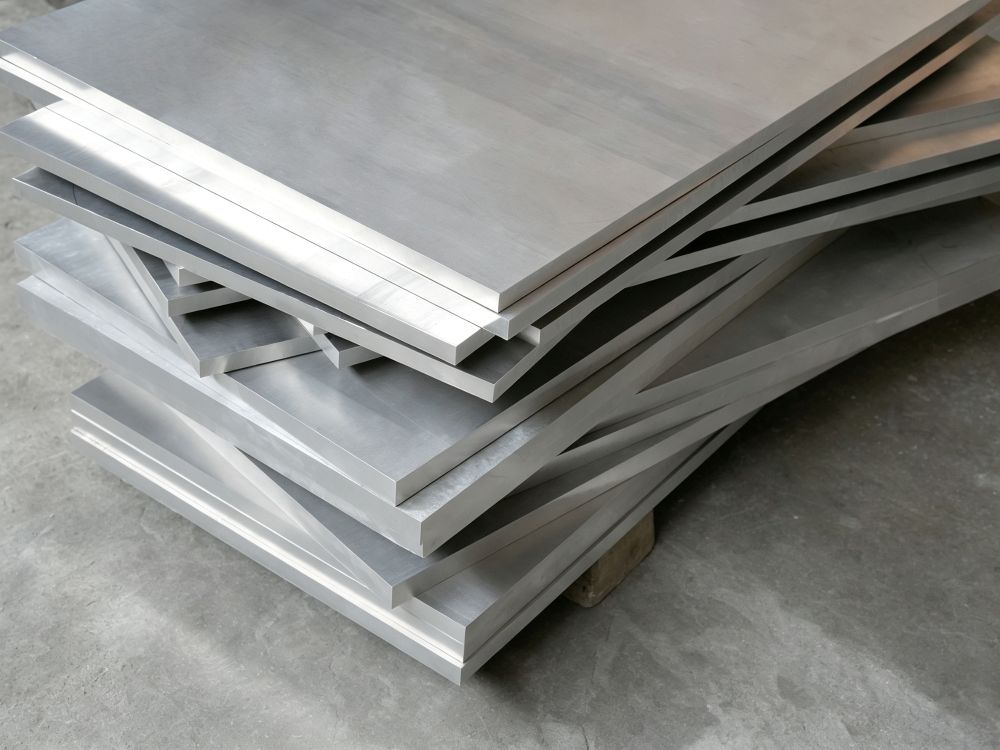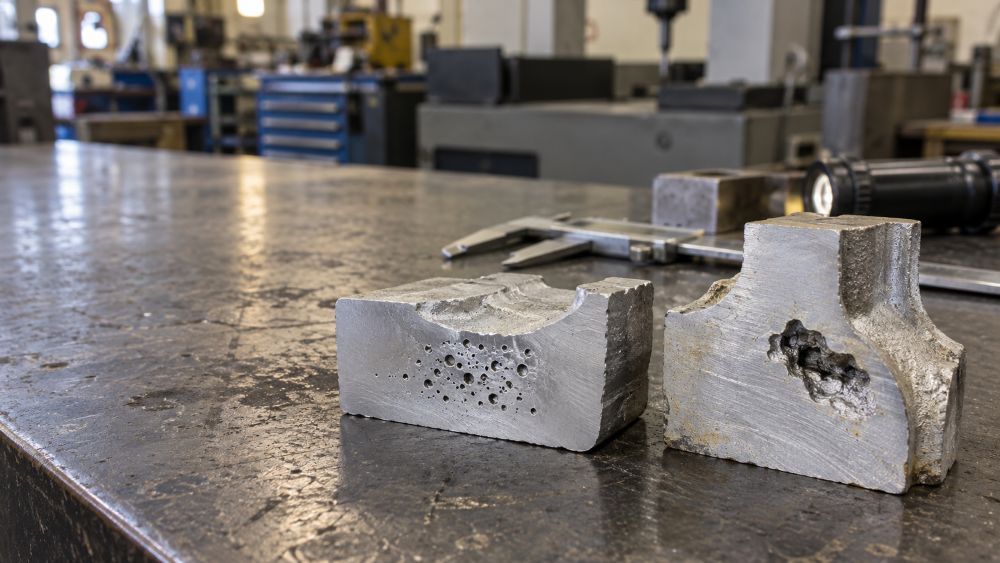

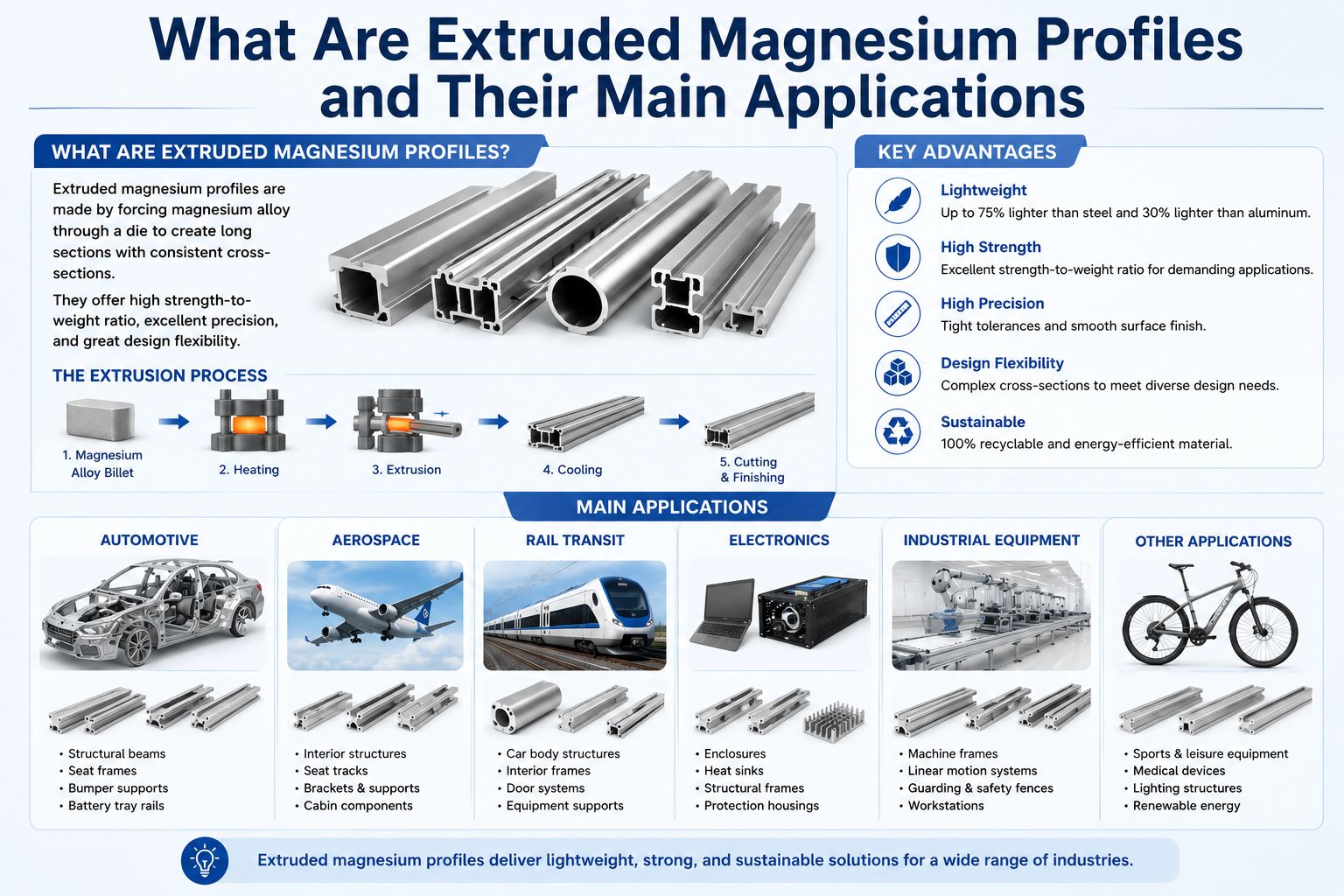
Extruded magnesium profiles help make things lighter and stronger. Magnesium is one of the lightest metals used for building. Its density is 1.74 g/cm³. This means it is about 35% lighter than aluminum. It is also much lighter than steel. Magnesium alloys give strength without adding much weight. Many industries use these profiles now. Engineers want to make products that are strong but not heavy. The global market for these profiles keeps getting bigger, as shown below:
| Region | Consumption Growth Rate (2020-2031) | Market Share by Country (2020-2031) |
|---|---|---|
| North America | Data available in figures | Data available in figures |
| Europe | Data available in figures | Data available in figures |
| Asia Pacific | Data available in figures | Data available in figures |
| Latin America | Data available in figures | Data available in figures |
You can see why more companies pick extruded magnesium profiles. They want to make things lighter and work better.
Key Takeaways
- Extruded magnesium profiles are much lighter than aluminum. This makes them great for jobs where less weight is important.
- These profiles are strong for how light they are. They help make tough products that do not weigh too much.
- The extrusion process lets people make special shapes and sizes. This gives more choices for different uses in factories.
- Magnesium profiles need protective coatings to stop rust. This helps them last longer and work well in hard places.
- Using magnesium in cars and planes can save fuel. It can also help them work better.
Extruded Magnesium Profiles Overview
Definition and Key Features
You see extruded magnesium profiles in many new products. These profiles are made by pushing magnesium alloys through a shaped die. This process makes bars, tubes, strips, and special shapes. They are very light, so they are good for things that need to be less heavy. Magnesium is the lightest structural metal. Its density is only 1.74 g/cm³. This helps in cars, planes, and electronics.
Extruded magnesium profiles are strong for their weight. They give support without making things heavy. Engineers pick magnesium alloys because they are strong, stiff, and resist rust. These profiles can work better than other metals in some uses. The extrusion process lets you make tricky shapes and change properties for your needs.
Tip: When you pick extruded magnesium profiles, you get many magnesium alloys. Each alloy has its own mechanical properties and chemical makeup. For example, Mg-1Zn-0.4Gd-0.2Ca-0.5Zr bends well at room temperature. Mg-3.0Al-0.5Mn-0.2Zn has a yield strength of 150 MPa and stretches over 12%. You can see more details in the table below:
| Alloy Composition | Key Characteristics |
|---|---|
| Mg-1Zn-0.4Gd-0.2Ca-0.5Zr | Exceptional stretch formability at room temperature, Erichsen index > 7 mm |
| Mg-3.0Al-0.5Mn-0.2Zn | Yield strength of 150 MPa, elongation > 12% at room temperature |
| Mg-2.0–8.0Bi-0.5–6.5Al | Ultimate tensile strength of 280–320 MPa, elongation of 15–18% |
| Mg-0.8Ca-0.4Zn-0.1Sr-0.4Gd-0.5Zr | Yield strength > 250 MPa, corrosion rate < 1 mm/year in 3.5% NaCl solution |
The extrusion process lets you control the mechanical properties. You can change the alloy mix and how you make it. This helps you get the strength, stretch, and rust resistance you want. This makes extruded magnesium profiles a smart pick for tough projects.
Common Forms and EN Standards
You can find extruded magnesium profiles in many shapes. Companies make bars, rods, tubes, strips, channels, and special shapes. You can pick the shape that fits your project. The extrusion process helps make profiles with exact sizes and good quality.
You need to follow industry standards when picking extruded magnesium profiles. The European Norm (EN) standards give rules for magnesium alloys and their products. These rules make sure you get profiles with good mechanical properties, chemical makeup, and surface finish. For example, EN 1759 gives rules for magnesium and magnesium alloy extruded products used in building things.
Note: Good suppliers like mijimg.com follow EN standards and give you technical data for their extruded magnesium profiles. You can trust their products to meet industry rules and work well.
EN standards help you get safe and good quality profiles. You do not have to worry about bad material or rough surfaces. If you pick profiles that follow EN standards, your project will meet the rules and work as planned.
You also find extruded magnesium profiles in semi-finished forms. You can cut, weld, or put these profiles together to make finished products. This means you can use them in car frames, airplane parts, medical tools, and electronic cases.
Comparison with Other Metals
You often look at extruded magnesium profiles next to other metals like aluminum and steel. Magnesium has some benefits that make it a good choice. Magnesium is 35% lighter than aluminum. This helps you make your products lighter. Sometimes, magnesium alloys are up to 20% stronger than aluminum.
The table below shows the main differences between extruded magnesium profiles and extruded aluminum profiles:
| Property | Magnesium | Aluminum |
|---|---|---|
| Weight | 35% lighter than aluminum | Heavier than magnesium |
| Strength | 20% stronger than aluminum | Higher overall strength |
| Ductility | Lower ductility | Better ductility |
| Formability | More challenging to form | Easier to form into shapes |
| Strength-to-weight ratio | Better performance | Lower performance |
You get a better strength-to-weight ratio with magnesium. This means you can build lighter things without losing strength. But magnesium is less bendy and harder to shape than aluminum. You need special extrusion methods to make hard shapes.
You also check things like tensile strength, stretch, yield strength, stiffness, and how well it handles hits. These things change with the alloy and how you make it. For example, the extruded AZ31B magnesium alloy acts differently in different directions. It is strongest in the extruded direction, but stretches less because of how it slips. In double directions, it is not as strong but stretches more because it slips easier.
- Tensile strength changes with alloy and how you make it.
- Stretch is different for cast and wrought magnesium alloys.
- Yield strength depends on the extrusion direction.
- Stiffness tells you how hard it is to bend.
- How well it handles hits changes with temperature.
You need to think about these things when you pick extruded magnesium profiles for your project. Magnesium saves weight and is strong, but it is harder to shape and less bendy. You can ask good sources like mijimg.com for help and quality checks.
Callout: When you use extruded magnesium profiles, you can make lighter products. These products are easier to move and put together. You can also save fuel in cars and use less energy in planes.
Magnesium alloys and the extrusion process give you special properties. You can change profiles to fit what you need, like high strength, rust resistance, or exact sizes. You learn a lot by knowing how magnesium is different from other metals.
Magnesium Extrusion Process
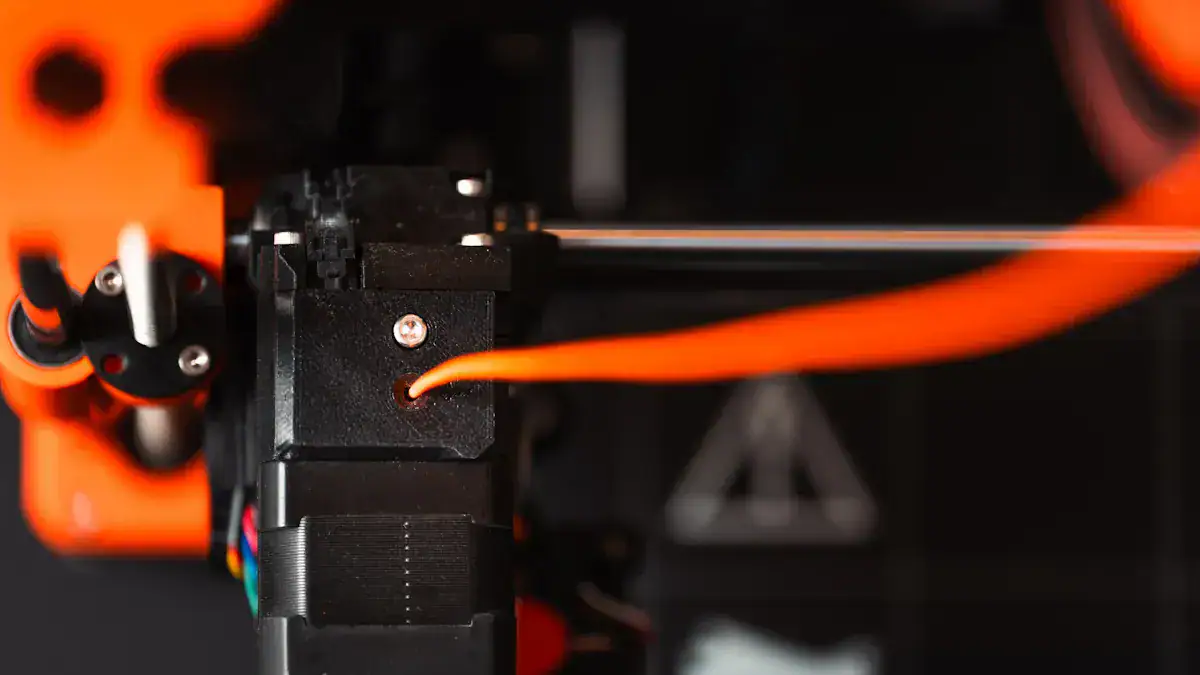
How Extrusion Shapes Magnesium Profiles
You make magnesium profiles with magnesium extrusion. This process pushes hot magnesium alloy through a die. It forms bars, tubes, or special shapes. You control heat and pressure for good results. Each alloy needs its own settings. Mg-Al alloys need higher heat. Mg-Zn-RE alloys use lower heat to keep their special features.
| Alloy Type | Temperature Range (°C) | Notes |
|---|---|---|
| Mg-Al alloys | 350–400 | Commonly extruded at higher temperatures. |
| Mg-Zn-RE alloys | 230–280 | Lower temperatures to retain quasicrystal dispersions. |
Magnesium extrusion needs careful control. The right heat makes strong and smooth profiles. The process changes the grain inside the metal. Using the right speed and ratio can make grains bigger or smaller. This changes how strong and bendy your profiles are.
Tip: Magnesium extrusion can make profiles stronger and more bendy. It does this by making a special grain structure called bimodal grain structure.
Quality and Precision Factors
You want magnesium extrusion profiles to fit your project well. Quality checks help you get the right size and shape. You measure length, width, and wall thickness. You also check the diameter and hole position. These checks make sure profiles work in assembly.
| Inspection Dimension | Description |
|---|---|
| Linear dimensions | Includes length, width, height, and wall thickness; critical for assembly and structural stability. |
| Diameter and Hole Diameter | Ensures accuracy in perforated profiles to avoid assembly issues. |
| Geometric tolerances | Detects flatness, straightness, and parallelism, affecting overall assembly accuracy. |
| Positional accuracy | Ensures key features are positioned correctly relative to the datum to prevent assembly failure. |
| Contour accuracy | Verifies conformity of complex profiles with design geometry for functional performance. |
| Common Inspection Tools | Vernier calipers, micrometers, CMM, and auxiliary instruments for precise measurement and verification. |
You use calipers and micrometers to check these details. Sometimes, you use a coordinate measuring machine for extra accuracy. Good quality control in magnesium extrusion means your profiles will be safe and reliable.
Properties of Extruded Magnesium Profiles
Lightweight and Strength
Magnesium is the lightest structural metal. Its density is 1.74 g/cm³. This makes it 35% lighter than aluminum. It is also 70% lighter than steel. Extrusion creates profiles that save a lot of weight. In cars, you can cut weight by 30–50%. This is better than using steel or aluminum. Saving weight helps cars use less fuel. It also helps meet emission rules. Magnesium is at least 20% stronger than regular aluminum. You get a better strength-to-weight ratio. This is important in planes and sports gear. High-strength magnesium can handle big stress. It stays light at the same time. You can build faster vehicles and efficient machines.
Tip: Magnesium extrusion lets you make seat frames, beams, and door panels that are strong and light.
Stiffness and Durability
Magnesium profiles are stiff and durable. Extrusion shapes magnesium into bars, tubes, and custom forms. These shapes resist bending and breaking. Stiffness keeps your structures stable under load. Magnesium’s durability means it works well in tough places. You can use these profiles in car frames or airplane parts. They last a long time, even with vibration or repeated stress. The extrusion process changes the grain structure. This makes profiles stronger and tougher.
- Magnesium extrusion makes profiles with steady stiffness.
- Magnesium keeps its shape and works well in hard conditions.
Corrosion Resistance and Surface Finish
Corrosion is a worry when using metals. Magnesium can react to moisture and chemicals. Surface treatments help protect it. Chemical conversion coatings make a shield on magnesium alloys. This keeps them safe from corrosion. Chromate conversion coatings give great corrosion resistance. They also heal themselves in humid places. These treatments make the alloy surface passive. This stops corrosion and helps profiles last longer. You also get a smooth surface finish. This looks good and makes cleaning easier.
| Surface Treatment | Benefit |
|---|---|
| Chemical conversion coating | Keeps magnesium safe from corrosion |
| Chromate conversion coating | Heals itself, protects in humid places |
Note: You can improve magnesium extrusion profiles with surface treatments. This makes them good for medical devices, electronics, and outdoor structures.
Applications of Extruded Magnesium Profiles
Extruded magnesium profiles are used in many industries. You see them in cars, planes, electronics, medical devices, and buildings. Each industry uses these profiles for different reasons. You can pick bars, tubes, strips, or special shapes. The extrusion process makes strong, light, and exact parts. Using magnesium gives you many benefits in your projects.
Automotive and Mobility
Extruded magnesium profiles are found in many car parts. Magnesium helps make cars lighter and more efficient. The extrusion process shapes magnesium into bars, tubes, and special forms. You can build strong parts without adding much weight. This helps cars use less fuel and meet emission rules.
Automakers use magnesium in many parts. You see it in:
- Instrument panels
- Steering wheel armatures
- Dashboard crossbeams
- Seat structures
- Reduction cover materials for automotive engines
These parts need to be strong and light. Magnesium gives you both. You can make seat frames that support people and keep the car light. Dashboard crossbeams hold the dashboard and add safety. Steering wheel armatures help drivers steer the car. Reduction cover materials protect engine parts and cut weight.
Magnesium is also used in electric vehicles and light mobility products. Bikes, scooters, and e-mobility devices use magnesium profiles to cut weight and boost performance. You can ride farther and faster with lighter frames. The extrusion process lets you make custom shapes for each product.
Tip: Using magnesium in cars and mobility products improves fuel efficiency and reduces emissions. It also makes vehicles easier to handle and safer.
Aerospace and Defense
Extruded magnesium profiles are used in many aerospace structures. Magnesium helps planes fly farther and carry more cargo. The extrusion process shapes magnesium into beams, tubes, and custom parts. You can build strong wings, frames, and supports.
The table below shows the main benefits of using magnesium in aerospace:
| Benefit | Description |
|---|---|
| Increased flight range | Magnesium saves about 25% weight compared to aluminum, helping planes use less fuel and fly farther. |
| Increased cargo capacity | Lighter magnesium parts let planes carry more cargo. |
| Significant fuel savings | Saving weight means saving fuel. Each pound saved can save 14,000 gallons of fuel each year. |
Magnesium is used in helicopter frames, airplane seats, and cargo hold structures. The extrusion process lets you make parts with exact shapes and tight tolerances. You can build lighter planes that use less fuel and carry more goods.
In defense, magnesium profiles help make tough and durable equipment. You see them in military vehicles, shelters, and weapon systems. Magnesium is up to 33% lighter than aluminum. You can machine magnesium faster and with less power. The table below shows why defense engineers pick magnesium:
| Benefit | Description |
|---|---|
| Weight Savings | Magnesium is up to 33% lighter than aluminum. |
| Machinability | Needs 45% less power to machine than aluminum. |
| Higher Productivity | Lets you machine faster and spend less time. |
| High Precision | Can hold very tight tolerances with machined extrusions. |
| Coating Options | Offers coatings for corrosion and wear resistance. |
| Heat Dissipation | High thermal conductivity for good heat management. |
| Thermal Expansion | Similar to aluminum, better than polymers. |
| Durability | More tough and durable than polymers, good for defense uses. |
You can make parts that last longer and work in hard conditions. Magnesium handles heat well and resists wear. You can add coatings to protect against corrosion. The extrusion process lets you make parts that fit exactly and work well.
Note: Magnesium profiles help you build lighter, stronger, and more efficient aerospace and defense products. You save fuel, carry more cargo, and improve durability.
Electronics and Medical
Extruded magnesium profiles are used in many electronic devices. Magnesium protects important parts and helps manage heat. The extrusion process shapes magnesium into housings, frames, and covers. You can make laptops, tablets, and phones lighter and stronger.
Magnesium is light and resists corrosion. It helps keep devices cool by moving heat away from chips and batteries. You can use magnesium in device housings to protect against bumps and drops. The extrusion process lets you make thin, exact parts that fit tight spaces.
Magnesium is also used in medical devices. Magnesium alloys are used in MRI machines because they do not attract magnets. Portable X-ray devices use magnesium for its radiation transparency. You can make lighter and safer medical tools. Bioabsorbable magnesium sheets are being developed for temporary bone fracture plates. These plates dissolve safely in the body after healing.
- Magnesium alloys are used in MRI machine parts because they are not magnetic.
- Portable X-ray devices use magnesium because it lets radiation pass through.
- Bioabsorbable magnesium sheets are being made for bone fracture plates that dissolve safely in the body.
You can trust magnesium to be safe and effective in medical uses. The extrusion process lets you make parts that meet strict health standards.
Callout: Magnesium profiles help you build lighter, safer, and more reliable electronics and medical devices. You protect important parts and improve performance.
Construction and Other Uses
Extruded magnesium profiles are used in many construction projects. Magnesium helps builders make strong and light structures. The extrusion process shapes magnesium into beams, channels, and strips. You can use magnesium in window frames, door panels, and supports.
Magnesium resists corrosion and lasts a long time. You can use it in outdoor structures and tough places. The extrusion process lets you make custom shapes for each project. You can build bridges, stadiums, and towers with magnesium profiles.
Magnesium is also used in sports equipment, furniture, and machines. Bikes, rackets, and wheelchairs use magnesium to cut weight and boost performance. The extrusion process lets you make parts that fit each product and meet safety rules.
- Magnesium profiles are used in window frames, door panels, and supports.
- Sports equipment and furniture are lighter and stronger with magnesium parts.
- Industrial machines use magnesium for precision and durability.
You can use magnesium in many ways. The extrusion process gives you flexibility and control. You can build products that are lighter, stronger, and more efficient.
Tip: Magnesium profiles help you save weight, improve durability, and meet industry standards in construction and other fields.
Summary
Extruded magnesium profiles are used in many industries. The extrusion process lets you make bars, tubes, strips, and custom shapes. Magnesium gives you strength, lightness, and corrosion resistance. You can build cars, planes, electronics, medical devices, and buildings that work better and last longer. You save fuel, work faster, and improve safety. Magnesium and extrusion help you reach your project goals.
Benefits and Limitations
Advantages of Magnesium Profiles
When you pick magnesium profiles, you get many good things. The biggest benefit is that they are much lighter. Magnesium profiles are about 25–30% lighter than aluminum ones. This makes products easier to move, carry, and put together. In cars and trucks, lighter parts help save fuel and make them work better.
Magnesium profiles are strong for their weight. They give support without being heavy or bulky. This is why people use them in planes, cars, and electronics. You can make tricky shapes with extrusion, so you have more design choices. These profiles also move heat well, which helps cool down electronics.
Tip: Magnesium profiles help you follow tough rules for light and energy-saving designs.
Limitations and Considerations
Magnesium profiles have some downsides you should know. Magnesium has a special structure called hexagonal closed-packed. Because of this, it is not very bendy and can break more easily. So, magnesium profiles might crack sooner if they get hit hard, especially where safety is important.
The extrusion process can change how magnesium handles rust. It can make the metal more likely to corrode in some places. Sometimes, magnesium profiles rust faster than you think. You need to use coatings or treatments to keep them safe.
Cutting or shaping magnesium needs extra care. Magnesium can catch fire if it turns into powder or small chips, so you must be careful. Not every supplier follows EN standards, so you should always check before you start your project.
| Challenge | What You Should Know |
|---|---|
| Lower ductility | Might crack or break if hit |
| Corrosion risk | Needs a coating to stop rust in tough places |
| Machining precautions | Needs careful work and safety steps |
| Standards compliance | Always check if suppliers follow EN rules |
Note: Knowing the good and bad sides of magnesium profiles helps you choose the best option for your project.
You get real benefits when you pick extruded magnesium profiles for your projects. These profiles help make cars, planes, and electronics lighter and work better. You can shape them for many uses, like strong frames or custom covers. Magnesium profiles help protect against crashes and control shaking. They also help manage heat and let you change designs easily. If you want products that are lighter, safer, and work well, think about using magnesium profiles. You should ask experts to help you find the best choice for your next project.
FAQ
What makes extruded magnesium profiles better than aluminum profiles?
Magnesium profiles are lighter than aluminum ones. They weigh about 25–30% less. This means you can make products that are not heavy. Magnesium also has a better strength-to-weight ratio. Your products can use less energy and work better.
How do you protect magnesium profiles from corrosion?
You can add special coatings to magnesium profiles. Chemical conversion coatings make a shield that stops rust. Chromate conversion coatings work well in wet places. Always ask your supplier how they protect the profiles.
Where can you use extruded magnesium profiles in modern industries?
Magnesium profiles are used in many things. You see them in cars, planes, electronics, medical devices, and buildings. Engineers use them for seat frames, beams, housings, and supports. Magnesium helps make products lighter and work better.
Why should you choose a reputable supplier like mijimg.com?
Good suppliers follow EN standards and check quality. They give you technical data and help you with questions. This means your project will use safe and strong magnesium profiles.
Are magnesium profiles safe to machine and assemble?
You need to be careful when working with magnesium. It can catch fire if you make powder or small chips. Use the right tools and work with trained people. Good suppliers tell you how to handle magnesium safely.