
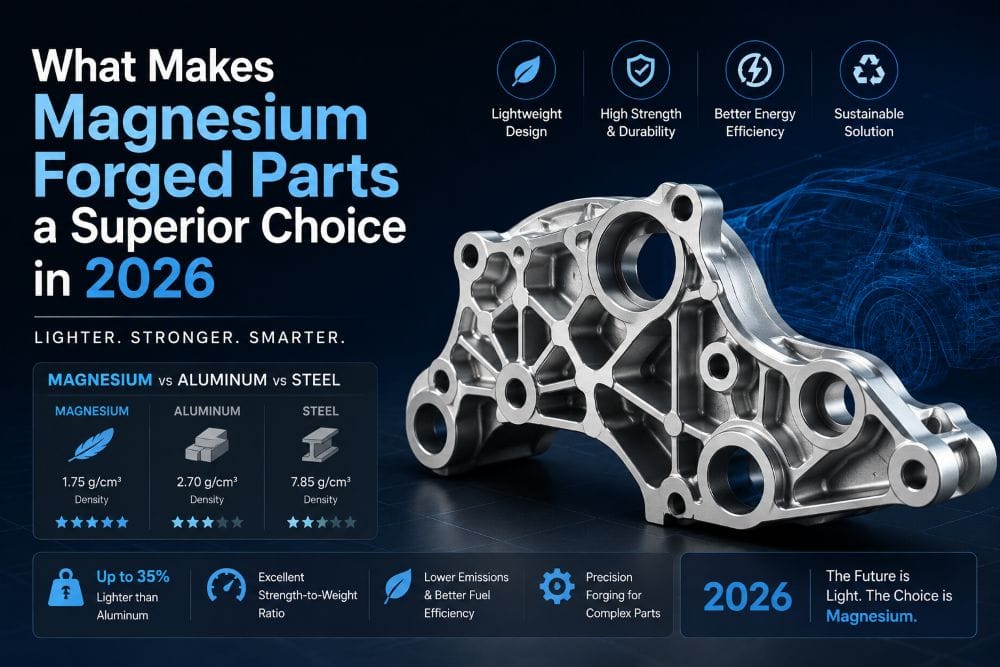
Imagine you are holding the future of engineering. Magnesium forged parts give you great strength and are very light. You can see magnesium alloys changing many industries. Car and airplane makers pick magnesium forged parts for better efficiency and long-lasting use. Magnesium forged parts have a density of only 1.74 g/cm³, which is much lighter than aluminum. You get a higher strength-to-weight ratio. This makes magnesium forged parts a smart choice for tough jobs. Magnesium forged parts help companies make things easier to handle, save fuel, and design in a greener way.
Magnesium forged parts are the top choice as more people want lighter materials.
| Property | Magnesium Alloy | Aluminum Alloy | Unit | Significance |
|---|---|---|---|---|
| Density | 1.74 | 2.7 | g/cm³ | Weight Reduction |
| Strength-to-Weight | 158 | 130 | kN·m/kg | Performance Efficiency |
Key Takeaways
- Magnesium forged parts weigh less but are stronger than aluminum. This makes them great for cars and airplanes.
- The forging process lowers porosity. This means the parts are tougher. They do not wear out fast and last longer.
- Using magnesium forged wheels helps cars handle better. It also makes them respond faster. This gives better performance.
- Magnesium alloys help save fuel. They also cut down on emissions. This makes vehicles better for the environment.
- These parts are simple to recycle. This helps the planet and cuts down on waste.
Strength Of Magnesium Forged Parts
Forging Process Advantages
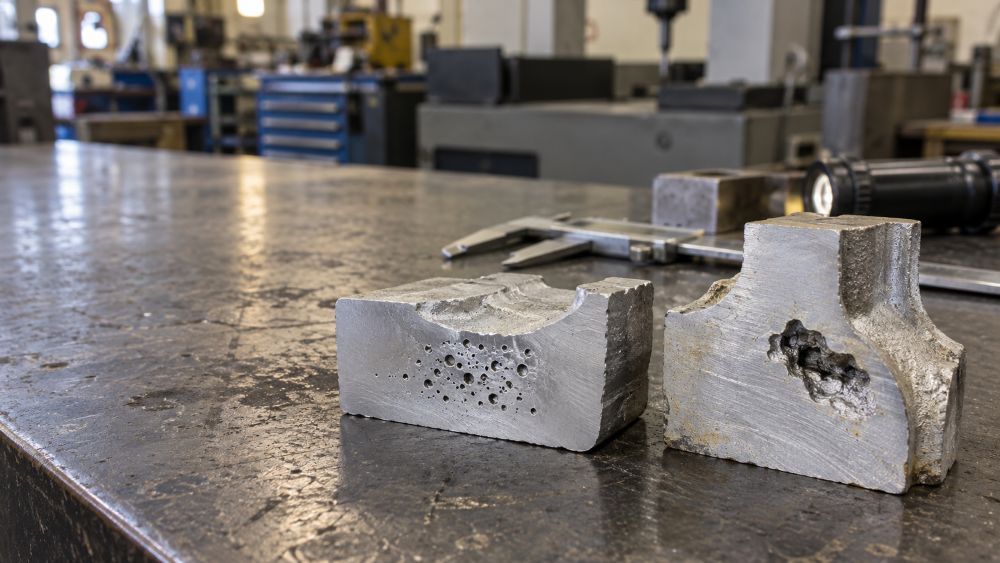
You want parts that last and work well. The forging process makes magnesium parts stronger. Forging squeezes the metal and packs it tight. This makes the parts tough and hard to break. There are fewer weak spots because forging lowers porosity. Porosity means tiny holes inside the metal. These holes can make parts break or wear out faster. Forged magnesium parts have almost no porosity. This gives them better impact resistance and longer life.
Forged magnesium parts handle heavy loads and shocks better than cast parts. Forging lines up the grains inside the metal. This grain alignment makes the part strong in every direction. You can use forged magnesium where safety matters, like car wheels or airplane parts. Forging lets you make parts in many sizes and thicknesses. You can design parts for tough jobs and know they will stay strong.
Tip: If you need strong parts, forged magnesium is a good choice.
Comparison With Castings And Aluminum
You may wonder how forged magnesium compares to cast magnesium and aluminum. Cast magnesium parts have more porosity. This means they can crack or wear out over time. Cast parts fail sooner, especially in high-stress places. Forged magnesium parts resist fatigue because they are packed tighter. You can trust them to perform well.
Aluminum is also popular. Forged aluminum parts are stronger than cast aluminum. Forging packs the metal fibers closer together. Magnesium forged parts are lighter and have a higher strength-to-weight ratio. You can make parts that weigh less but still work hard. This is important in cars and airplanes, where weight matters.
Here is a simple table to help you compare:
| Property | Forged Magnesium | Cast Magnesium | Forged Aluminum | Cast Aluminum |
|---|---|---|---|---|
| Porosity | Very Low | High | Very Low | High |
| Impact Resistance | Excellent | Moderate | Excellent | Moderate |
| Strength-to-Weight | Highest | Lower | High | Lower |
| Fatigue Resistance | Superior | Moderate | Superior | Moderate |
Forged magnesium stands out in every category. You can use these parts where you need strength and light weight. You get better handling and performance in vehicles. You also get safer and more reliable parts in airplanes.
- Forged magnesium parts have less porosity than cast magnesium parts. This makes them more durable and better at handling impacts.
- Cast magnesium parts may get weak over time because of porosity.
- Forged aluminum parts are stronger and tougher than cast aluminum. This is because forging makes the fibers denser.
You can pick forged magnesium for thick or thin parts. You can make big parts or small ones. Forging lets you shape magnesium to fit your needs. You get parts that work well in tough conditions. Forged magnesium keeps its strength for many years.
Note: Forged magnesium parts give you strength, light weight, and reliability. You can use them for hard jobs and expect them to last.
Forged magnesium is not just strong. It is also flexible in design. You can make parts for many uses. You get high strength and low weight. You can make your products work better and safer.
If you want to build something that lasts, choose forged magnesium. You get parts that resist impacts, handle heavy loads, and stay strong over time. Forged magnesium is good for the toughest jobs.
Lightweight Performance Benefits

Reduced Mass In Automotive And Aerospace
You want your car or plane to be lighter. Magnesium forged parts help make this happen. These parts weigh much less than other metals. Magnesium alloys are 33% lighter than aluminum. They are 50% lighter than titanium. They are 75% lighter than steel. Using magnesium lowers the total weight of your vehicle. This helps your car or plane perform better.
You can see these benefits in wheels and moving parts. Magnesium wheels can be up to 40% lighter than other alloys. This means you lower unsprung mass and rotational mass. Lighter wheels help your car or plane respond faster. You also get better fuel efficiency. You produce fewer greenhouse gases. Using magnesium helps you build powerful and eco-friendly vehicles.
- Magnesium wheels lower unsprung mass. Your suspension reacts quickly to bumps.
- Lower rotational mass means your vehicle uses less energy to speed up or slow down.
- You get a smoother ride and better control.
Impact On Handling And Responsiveness
Magnesium forged parts improve how your vehicle handles. Lighter wheels and parts change how your car or plane feels. You notice quicker launches and shorter stops. Magnesium parts make your vehicle more agile.
- Reduced wheel weight leads to sharper handling. You can change direction easily.
- Lighter wheels minimize gyroscopic effects. You steer with less effort.
- Lower rotational inertia means your vehicle speeds up and slows down faster.
You also get more tire contact with the road. This gives you better grip and safety. Magnesium forged parts help you enjoy a smoother ride. You can trust your vehicle to perform well.
Tip: If you want better handling and faster response, magnesium forged parts are a smart choice.
Forged Magnesium Wheels And Their Advantages
3.1 Benefits Of Forged Magnesium Wheels
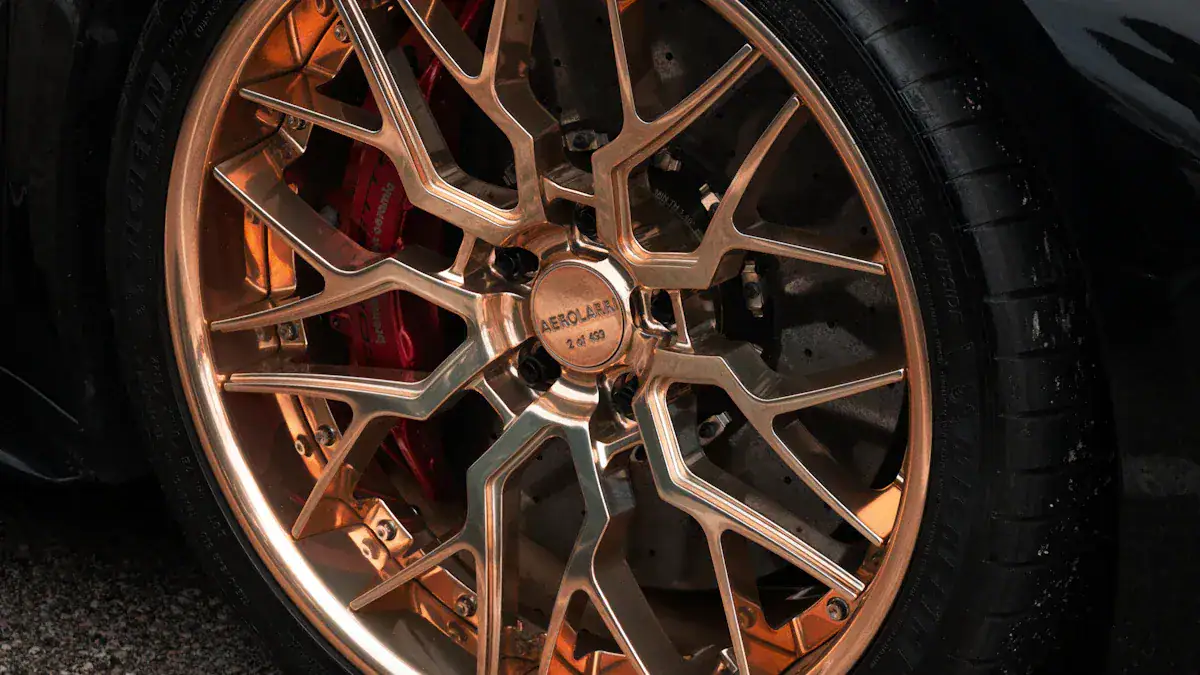
You want your car or plane to work well. Forged magnesium wheels help you do this. These wheels are made by pressing hot magnesium into shape. This makes the wheels very strong and tough. They last longer and can handle more stress than other wheels.
When you use forged magnesium wheels, you feel a big change. Your vehicle feels lighter and reacts faster. These wheels weigh less than aluminum wheels. Your suspension works better, so your ride is smoother. You also use less fuel because your vehicle is lighter.
- The wheels are strong and can take hard hits.
- They lower inertial energy, so you speed up and stop faster.
- They let heat out better, so your tires last longer.
- Lighter wheels mean you save more fuel.
Forged magnesium alloy wheels are great for racing and airplanes. In races, every second matters. These wheels help you go faster and stop quicker. In planes, lighter wheels mean you can carry more or fly farther. You also stay safer. One-piece forged magnesium wheels have no weak spots. This keeps you safe, even in tough situations.
Forged magnesium wheels start as a solid piece. They are shaped with heat and pressure. This makes them strong and reliable. They can handle more stress before breaking than cast wheels. This is important for high-performance jobs where safety matters.
Forged magnesium alloy wheels also fight rust better than cast wheels. New coatings protect them from water and salt. You do not need to worry about rust or damage. Your wheels look good and work well for a long time.
3.2 Forged Magnesium Alloy Wheels Vs. Alternatives
You might wonder how forged magnesium wheels compare to others. The answer is easy to see. Forged magnesium wheels are lighter, stronger, and last longer than cast magnesium or aluminum wheels.
Here is a table to show the differences:
| Feature | Forged Magnesium Wheels | Cast Magnesium Wheels | Aluminum Wheels |
|---|---|---|---|
| Durability | Extremely durable | Prone to casting defects | Moderate |
| Weight | 1.5x lighter than aluminum | Heavier | Heavier |
| Strength | Higher than cast Al | Lower | Moderate |
| Shock Absorption | 100x higher than aluminum | Lower | Lower |
| Corrosion Resistance | More resistant | Less resistant | Moderate |
| Brake Cooling | Better heat conductivity | Lower | Moderate |
| Impact on Vehicle Performance | Shorter braking distance, faster acceleration | Less effective | Moderate |
Forged magnesium alloy wheels give you a big weight edge. They can be up to 30% lighter than forged aluminum wheels. This means your car or plane handles better. You feel more control when you drive or fly. The wheels also help your suspension react faster to bumps and turns.
| Feature | Forged Magnesium Wheels | Forged Aluminum Wheels |
|---|---|---|
| Weight Advantage | Up to 30% lighter than aluminum | Heavier than magnesium |
| Responsiveness | Lower unsprung mass improves handling | Good, but not as responsive as magnesium |
| Durability | Proven in motorsport, modern finishes reduce corrosion | Strong and reliable, but heavier |
Forged magnesium wheels also keep you safe. Racing teams use these wheels because they have no weak spots. The one-piece design means there are no joints that can break. This is why Formula 1 and GT3 cars use them. You get better performance and more safety at high speeds.
Forged magnesium alloy wheels also make driving better. You get:
- Faster starts and shorter stops.
- Better grip and control in turns.
- Less tire wear because heat spreads out better.
- Lower fuel use and less pollution.
Forged magnesium wheels last longer too. You do not need to replace them as often as cast wheels. This saves you money and time.
Using one-piece forged magnesium wheels in racing makes cars safer and more reliable. There are no joints that can fail. This design also helps the car move through air better and work well in tough conditions. It keeps drivers safe.
Forged magnesium wheels give you strength, lightness, and toughness. You get all these good things in one wheel. Whether you drive on the road or race, you can trust these wheels to work well.
Forged magnesium alloy wheels change how you think about wheels. They are lighter, stronger, and safer. They also help the planet by using less fuel and making less pollution. When you pick forged magnesium wheels, you choose the future of fast and safe vehicles.
Reliability And Safety
4.1 Structural Integrity Under Load
You want parts to stay strong when you use them hard. Magnesium forged parts are packed tightly during forging. This makes them tough and helps them keep their shape. They work well under heavy loads. You can trust them in racing or flying.
Quality checks help find problems early. You can use raking light to spot surface flaws. You can feel for changes by running your fingers over the part. Dye penetrant shows hidden cracks. You should check spoke undersides and barrel interiors. Defects often hide in these places. Comparing suspect areas to other wheels helps confirm issues.
The table below shows how to inspect magnesium forged parts for strength:
| Inspection Aspect | Pass Criteria | Fail Indicators |
|---|---|---|
| Visual | Clean machining, uniform finish | Cracks, deep gouges, texture irregularities |
| Weight | Within 5% of spec, lighter than cast | Exceeds tolerance, matches cast weight |
| Acoustic | Clear bell tone, consistent response | Dull thud, dead spots, variation |
| Dimensional | All measurements within tolerance | Significant deviations from specifications |
Note: The forging process has many quality checks. These checks help make sure your parts are safe.
4.2 Fatigue And Impact Resistance
You want parts to last through stress and impacts. Magnesium forged parts do well in fatigue tests. They resist cracks and wear better than cast magnesium or aluminum. You can use them where parts face vibration or shocks.
The table below compares magnesium and aluminum for fatigue resistance:
| Material | Tensile Strength | Fatigue Resistance |
|---|---|---|
| AZ80 Magnesium | High | Performs well under repeated stress |
| 6061-T6 Aluminum | Balanced | Widely trusted and extensively tested |
Magnesium forged parts absorb shocks better. They keep their strength after many uses. You get parts that last longer and fail less often. You spend less time fixing things and more time using them.
Tip: Pick magnesium forged parts for tough jobs. You get reliable performance and feel safe.
Energy Efficiency And Sustainability
Fuel Savings And Lower Emissions
You want your car or plane to use less fuel. Magnesium forged parts help with this. Magnesium alloys are lighter than other metals. You can use them in engine blocks and steering wheels. They also work in transmission cases. This makes your car weigh less. In airplanes, magnesium alloys go in frames and landing gear. This saves even more weight.
When your car is lighter, the engine does not work as hard. You burn less fuel. You make fewer greenhouse gases. Your car moves faster and uses energy better. Magnesium forged parts help you save fuel.
- Magnesium alloys in cars make them lighter.
- Lighter cars use less fuel and make less pollution.
- Planes with magnesium frames and landing gear save fuel and fly farther.
If you pick magnesium forged parts, you help make greener cars and planes. You help keep the air clean and the planet healthy.
Recyclability And Environmental Impact
You want to help the environment. Magnesium forged parts are good for this. More people want lighter materials now. Magnesium wheels and parts help cars use less energy. This helps make factories more green.
How much magnesium parts hurt the environment depends on how they are made. Forging uses less energy than casting. Using clean energy makes even less pollution. Making magnesium can cause emissions, but new ways and clean energy help lower this. Magnesium can make less pollution than aluminum if you use the right process.
Magnesium forged parts are easy to recycle. You can melt them and use the metal again. This means less waste and saves resources. You help make a cycle that uses less and wastes less. You make things that last and help the planet.
| Material | Recyclability | Potential Emissions (kg CO2/kg) | Sustainability Trend |
|---|---|---|---|
| Magnesium Forged | High | Lower with clean energy | Growing |
| Aluminum | High | Moderate | Stable |
| Magnesium Cast | High | Higher with traditional energy | Improving |
Magnesium forged parts let you build strong, light, and green products. You help the earth and support better ways to make things.
You notice magnesium forged parts are important in making things today. These parts are strong and light. They help things work better. You can find them in gearboxes, EV battery boxes, and suspension arms. Magnesium alloys weigh 35% less than aluminum. This helps save fuel and lowers pollution. Cars use almost 40% of all magnesium forged parts. New ideas and more research help magnesium forging grow. You get parts that are valuable, reliable, and good for the planet. Think about using magnesium forging for your next car or plane project.
| Factor | Forging Benefits | Casting Limitations |
|---|---|---|
| Weight | Lightweight properties | Heavier materials |
| Performance | Better mechanical properties | Inferior performance under load |
- Gearboxes and covers
- EV battery boxes
- Suspension arms and links
Magnesium forging lets you make products that are strong, light, and better for the environment.
FAQ
What makes magnesium forged parts better for vehicle performance?
Magnesium forging makes parts lighter. This helps cars and planes go faster. You also get better handling. Lighter wheels and parts make it easier to turn. Your ride feels smoother and responds quickly.
Are magnesium forged parts corrosion-resistant?
Yes, special coatings protect magnesium forged parts. These coatings stop rust and damage. You can use them in wet or salty places. You do not have to worry about corrosion.
How do magnesium forged wheels affect braking and brakes?
Magnesium forged wheels help brakes work well. They cool down fast and do not get too hot. This keeps your brakes working longer. You also stop safely, even when driving fast.
Can magnesium forged parts improve maneuverability?
You will notice your car or plane handles better. Magnesium forged parts lower unsprung mass. This helps the suspension move quickly. You get more control on the road or in the air.
Where can you use magnesium forged parts?
You can use magnesium forged parts in many things. They work in cars, planes, bikes, and electronics. You can use them for wheels, frames, and engine parts. Their strength and light weight make them a great choice for many jobs.