
Magnesium WE43 is a rare-earth magnesium alloy used when a lightweight part also needs stronger elevated-temperature performance than a common magnesium grade can provide. It is seen in castings and in related wrought product forms, but those routes are not interchangeable. A useful WE43 inquiry starts with the part form, condition, service temperature, machining plan, and acceptance requirements—not just the alloy name on a drawing.
The designation shows up often in aerospace, motorsport, specialist equipment, and medical-research projects. It can be a sensible choice, but it is not a low-cost default material. The rare-earth chemistry, limited supply route, and qualification work deserve attention before the design is locked down.
Where Magnesium WE43 Fits
WE43 belongs to the magnesium-yttrium-rare-earth-zirconium family. Its combination of low density, heat-treat response, corrosion behavior, and useful strength at elevated temperature is why engineers consider it for demanding lightweight components.
The alloy name alone does not tell a supplier what to make. Original WE43 is widely discussed as a casting alloy. Wrought variants, including ASTM WE43C / Elektron 43, are sold as extrusion, plate, or forging feedstock. Their composition limits, grain structure, heat treatment, and published mechanical properties are different from a sand casting. A bar cut from wrought stock should not be specified or priced as if it were a WE43 casting.
Start with the function of the part. A pressure-tight cast housing, a machined research fixture, a forged support, and a 3D-printing feedstock project may all use the letters “WE43,” but they need different material certificates, process controls, and inspection plans.
For cast WE43B, Luxfer MEL identifies high-temperature applications such as aeroengine and power-system components, where the alloy is described for use up to 300°C and long-term exposure up to 250°C. Those figures are material capability references, not a blanket component rating. A real part still needs its own load, duration, environment, and temperature-cycle review.
Composition and Published Reference Data
The “W” and “E” refer broadly to yttrium and rare-earth additions. Zirconium is used for grain refinement. For a cast WE43B purchase route, the chemistry is commonly specified as 3.7–4.3% yttrium, 2.4–4.4% rare earths, and at least 0.4% zirconium, with magnesium as the balance.
The table below keeps published cast-alloy reference values together. It is intentionally labeled for WE43B castings. Do not use it to approve extrusion, plate, powder, or a finished machined part without checking the exact product standard.
| WE43B casting reference | Published value or limit | Why it matters in a quote |
|---|---|---|
| Yttrium | 3.7–4.3 wt.% | Part of the rare-earth alloy system; certificate should state the applicable chemistry |
| Total rare earths | 2.4–4.4 wt.% | The rare-earth mix and limits should follow the named specification |
| Zirconium | 0.4 wt.% minimum | Supports grain refinement in the cast route |
| Density | 1.84 g/cm³ | Useful for early mass estimates, not a finished-part weight guarantee |
| Minimum 0.2% proof strength | 172 MPa | Published fully heat-treated casting design minimum |
| Minimum tensile strength | 220 MPa | Published fully heat-treated casting design minimum |
| Minimum elongation | 2% | Published fully heat-treated casting design minimum |
The tensile numbers are a starting point for early design work. Casting section size, test-bar location, heat treatment, porosity limits, and the standard named on the order all affect what a supplier can certify. A component with a thick hub and thin ribs should not be evaluated as if every area had the same cooling rate.
If your drawing says only “WE43,” ask whether the requirement is WE43B casting alloy, WE43C wrought alloy, or another customer-controlled material definition. This one question can prevent a long quotation loop.
Cast, Wrought, and Machined WE43 Parts
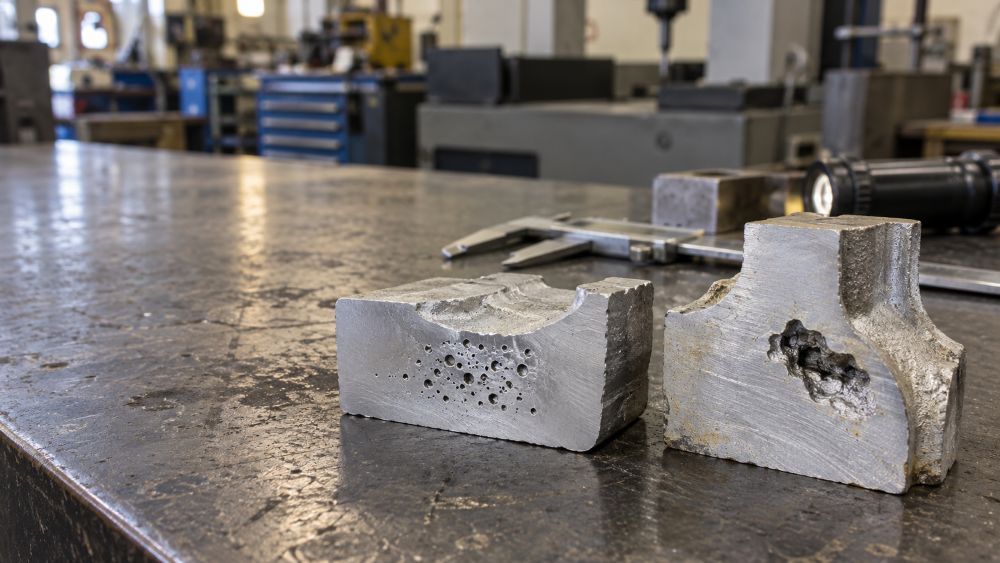
Casting is worth considering when the part has enclosed geometry, heavy-to-thin transitions, complex internal features, or a shape that would waste too much stock if it were machined from solid material. It also brings the usual casting questions: gating, feeding, porosity acceptance, heat treatment, and machining allowance.
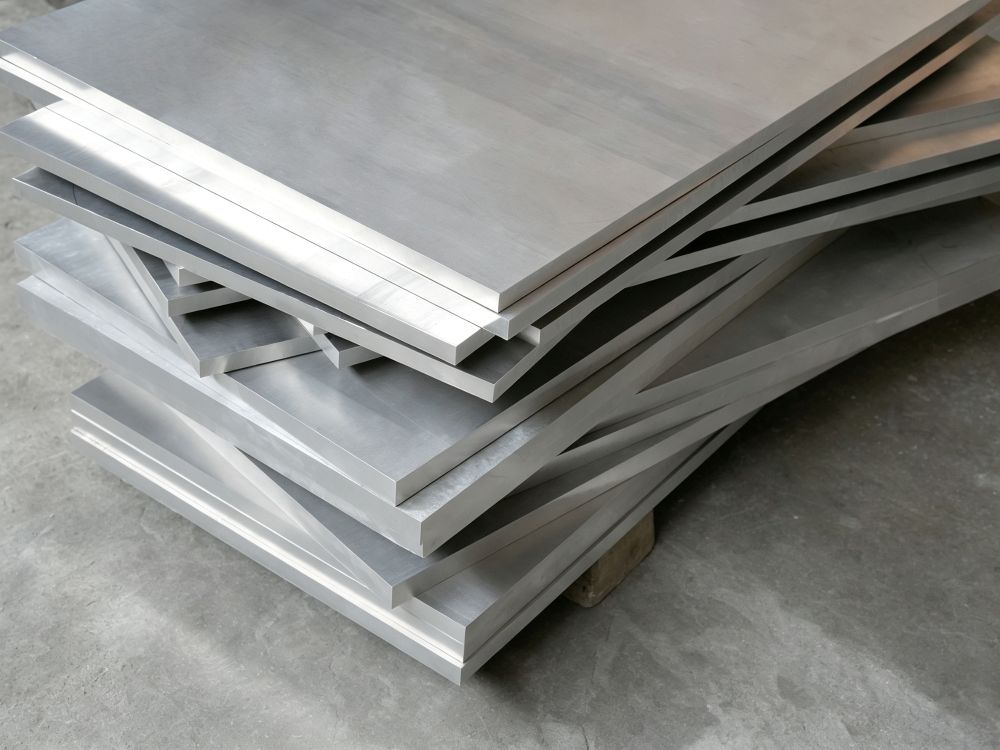
Wrought WE43 may be the better route for a simpler shape made from bar, plate, extrusion, or forging stock. Its grain flow and directional properties need to be read in the context of the product form. For example, published wrought data often separates longitudinal and transverse test directions. That is not paperwork; it can matter when a long structural member is loaded across its extrusion direction.
Machining a WE43 blank can be efficient, but “machinable” is not the whole story. The shop needs to know whether the incoming stock is cast, wrought, solution treated, or aged. Thin webs, broad faces, and deep pockets may move after material is removed or after heat treatment. A reliable drawing identifies the real datums, critical wall thicknesses, and any surface that must be inspected in the free state.
For general setup and chip-handling practices, see our magnesium alloy CNC machining guide. Magnesium chips require controlled collection, housekeeping, and a documented fire-safety process. That remains true even when the finished part is small.
Heat Treatment, Machining, and Surface Protection
WE43 castings are commonly supplied in a solution-treated and aged condition when strength is required. The heat-treatment route needs to be stated on the purchase order. It affects dimensions, machining sequence, and the properties a test report represents.
The order of operations deserves a brief conversation. A shop may machine datum surfaces before final treatment, then finish bores or sealing faces afterward. Another part may need extra stock left on a broad face because heat treatment and unclamping can reveal movement. There is no single route that suits every geometry.
Surface protection should be decided with the service environment in mind. Magnesium parts can see corrosion problems at damaged coatings, crevices, and interfaces with dissimilar metals. A dry, protected laboratory assembly has a different risk profile from an externally exposed part that sees salt, washdown, or condensation. Specify the coating system, masked surfaces, electrical-contact areas, and corrosion-test requirement if one applies.
For joining, keep the requirement practical. If the part will be bolted, identify the insert, thread, torque, and isolation requirement. If it will be welded or bonded, the joining method should be reviewed with the selected product form and post-process finish. An alloy data sheet is not a substitute for a qualified joint procedure.
A Thailand WE43 Machining Project
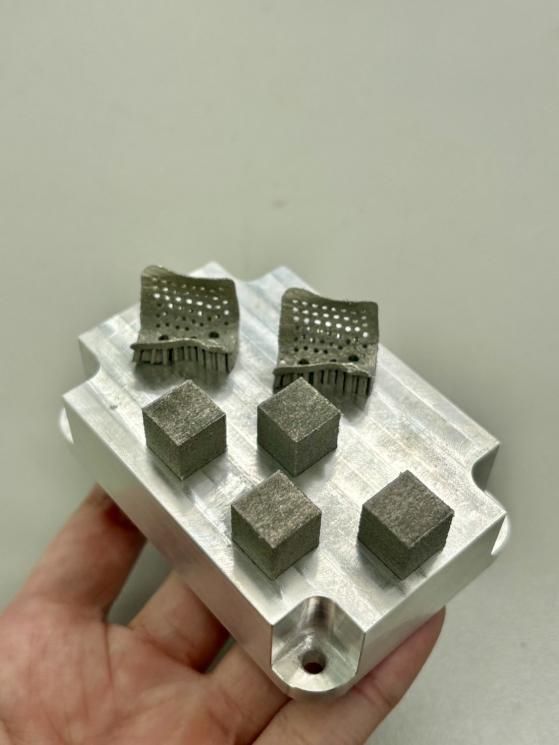
One recent project shows why the product form and drawing review matter. A Thailand-based medical-equipment company working with a local university laboratory first purchased about 20 kg of material in October 2024. The initial supply met the customer’s quality expectations. A later research project required machined WE43 parts for medical experimental 3D-printing work.
The task was not presented as a generic “medical-grade” order. The customer supplied drawings, and the discussion centered on how the features could be machined, the minimum order quantity, and what the project actually needed. Once the quantity was set at 10 pieces, the first batch was completed within seven days.
That project should not be read as a universal lead-time promise. Part complexity, material availability, inspection documents, and finishing can change the schedule quickly. What it does show is that a small specialty-alloy order can move smoothly when the material condition, drawing, quantity, and machining approach are agreed before the machines are scheduled.
The project was a research application. Any use of WE43 in an implantable, regulated, or patient-contact product needs separate material, biocompatibility, corrosion, sterilization, traceability, and regulatory validation. Those requirements cannot be assumed from the alloy designation or from a successful research-part delivery.
What to Clarify Before You Request WE43
For a useful first quotation, send a 2D drawing and 3D model, then identify the required product form: casting, bar, plate, extrusion, forging feedstock, or a customer-controlled route. State the alloy specification and temper if they are already defined. If they are not defined, state the temperature, load, environment, part quantity, and critical features that led you to consider WE43.
Also call out the surfaces that will be machined, coated, sealed, or used for electrical contact. Include inspection requirements such as chemistry certification, mechanical-property report, dimensional report, NDT, leak test, or traceability. A few clear notes at this stage are more useful than a long list of generic requirements copied from another project.
WE43 can be the right material for a demanding lightweight job. It earns that position when its product route and performance are tied to the actual part. When the part only needs a basic magnesium component at room temperature, a more common alloy may be easier to source and manufacture.