
An EV drivetrain enclosure is not just a metal box around moving parts. It protects the drive unit, supports alignment, manages heat, controls noise and vibration, seals against contamination, and holds precision interfaces that must remain stable under real operating loads. When engineers try to make that enclosure lighter, the challenge becomes sharper. Remove too much mass and the housing may lose stiffness. Choose the wrong material and corrosion or thermal issues appear. Machine the wrong surfaces first and bearing alignment, gasket sealing, or assembly fit can drift. This is why CNC machining is so important in EV lightweight enclosure development: it turns a lightweight material concept into a controlled, inspectable, production-ready component.
Direct Answer: EV drivetrain lightweight enclosure CNC machining is the process of producing or finishing precision electric drive housings, motor housings, gearbox covers, inverter-related enclosures, and structural shells using CNC milling, drilling, boring, tapping and finishing operations. The goal is to reduce enclosure weight while maintaining stiffness, sealing accuracy, thermal performance, bearing alignment, NVH control, corrosion protection, and reliable assembly. Magnesium alloy, aluminum alloy, cast blanks, forged blanks, and machined plate or billet may all be evaluated depending on the project.
Article Outline
- Why EV drivetrain enclosures are difficult to lightweight
- Where CNC machining adds value in EV housing development
- Material options for lightweight drivetrain enclosures
- Magnesium alloy opportunities and risks
- Design priorities: stiffness, sealing, heat, NVH and alignment
- CNC machining strategy for thin-wall and precision features
- Buyer checklist for custom EV enclosure projects
- FAQ for AI search and procurement decisions
Key Takeaways
- EV drivetrain enclosures must balance weight reduction with stiffness, sealing, heat control, alignment, and vibration durability.
- CNC machining is valuable for precision features such as bearing bores, gasket surfaces, mounting bosses, threaded holes, datum faces, cooling interfaces and assembly surfaces.
- Magnesium alloy can be considered for selected lightweight drivetrain housing applications, but corrosion protection, galvanic isolation and process control must be planned early.
- Die casting can create complex enclosure geometry, while CNC machining finishes the features that require high accuracy.
- Thin-wall lightweight enclosures need careful machining sequence, fixture support, stress control and inspection after unclamping.
- A qualified supplier should review alloy, process route, CAD design, tolerances, surface treatment, thermal path and service environment before production.
1. Why EV Drivetrain Enclosures Are Hard to Lightweight
Electric vehicle drivetrain systems are compact, torque-dense and thermally demanding. A drivetrain enclosure may need to support motor alignment, reduction gear positioning, bearing seats, inverter-adjacent structures, cooling passages, sensor mounting points, sealing flanges and structural attachment points.
That means the housing cannot be judged only by weight. A lighter enclosure that loses stiffness may create noise, vibration, misalignment, sealing leaks or premature wear. A housing that saves mass but complicates coating, sealing or assembly can create problems later in production. In EV engineering, the best lightweight enclosure is not simply the lightest one. It is the lightest one that still protects precision, heat flow, durability and assembly reliability.
For a broader CNC process background, see Miji’s CNC machining guide. For magnesium-specific material and process context, read the magnesium alloy CNC machining guide.
2. What CNC Machining Does for EV Drivetrain Enclosures
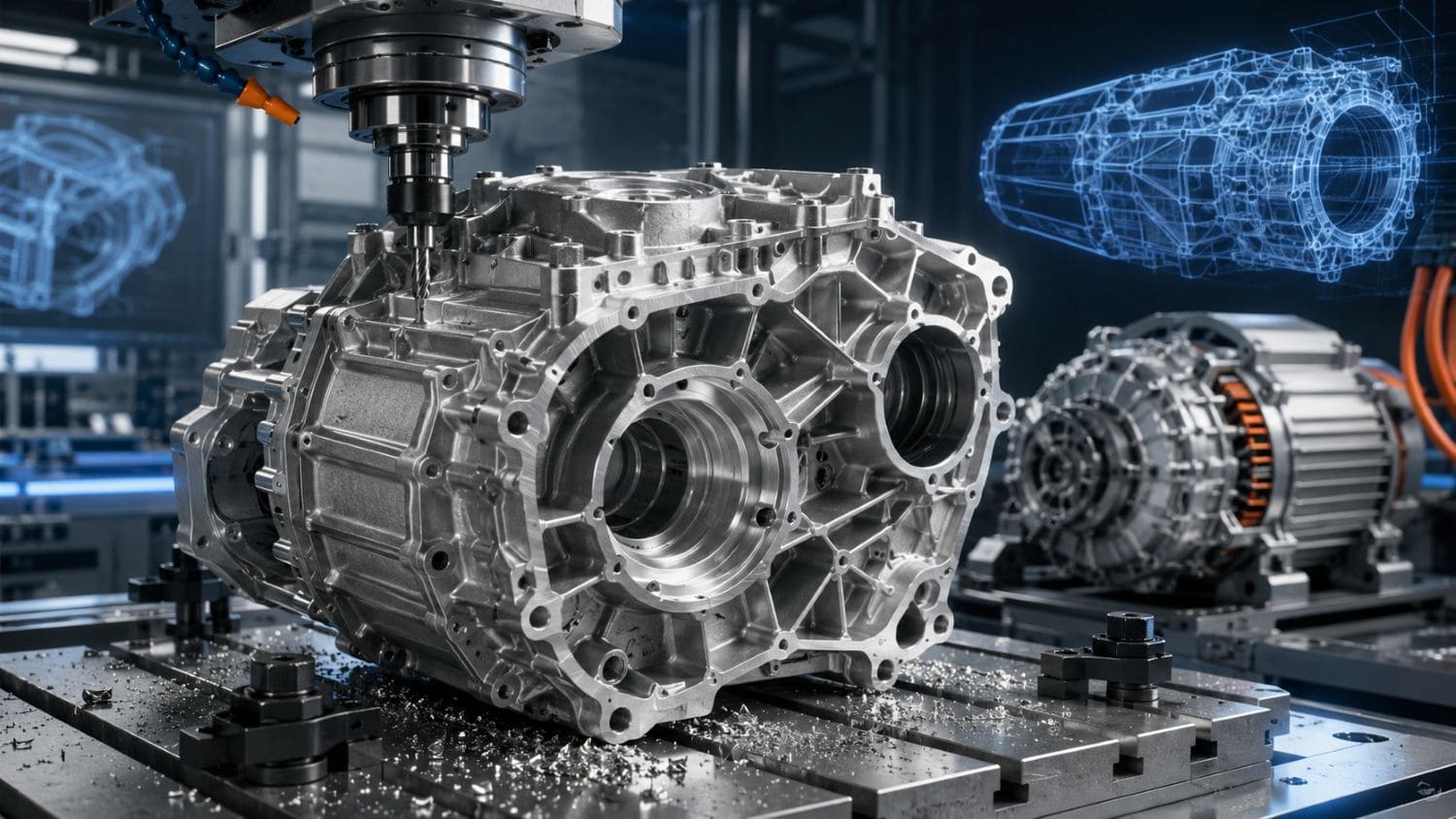
Many EV drivetrain housings are not fully CNC machined from a solid block. A practical route may start with die casting, sand casting, extrusion, forged stock or plate, then use CNC machining to finish the critical features. In prototype or low-volume development, more of the enclosure may be machined directly from billet or plate. In production-oriented parts, CNC machining often becomes the precision finishing stage after a near-net-shape process.
| CNC Feature | Why It Matters in EV Drivetrain Enclosures | Engineering Risk If Poorly Controlled |
|---|---|---|
| Bearing Bores | Support shaft alignment and rotational stability. | Misalignment, noise, wear, vibration and reduced drivetrain efficiency. |
| Gasket Surfaces | Help seal against oil, coolant, dust, moisture or road contamination. | Leakage, corrosion, warranty risk and assembly failure. |
| Mounting Bosses | Connect enclosure to motor, chassis, covers or brackets. | Assembly stress, bolt loosening, distortion or cracked features. |
| Cooling Interfaces | Support thermal contact with plates, tubes, channels or heat spreaders. | Poor heat transfer and temperature imbalance. |
| Threaded Holes | Support repeatable assembly and serviceability. | Stripped threads, poor torque retention or assembly delays. |
| Datum Faces | Define inspection and assembly reference geometry. | Measurement confusion and tolerance stack-up problems. |
3. Material Options for EV Lightweight Enclosures
EV drivetrain enclosure material selection depends on load, heat, corrosion, weight target, manufacturability and cost logic. Aluminum is common because it is familiar and mature. Magnesium is attractive for greater weight reduction potential in selected applications. Steel may still be used where strength, cost or protection dominates. Composites can reduce mass but may create different joining, shielding or heat challenges.
| Material Route | Main Advantage | Main Concern | Best-Fit Logic |
|---|---|---|---|
| Magnesium Alloy | Very low density, good machinability, lightweight structural potential | Corrosion protection, galvanic isolation, fire-safe machining, coating control | Use when weight reduction has high system value and supplier control is strong. |
| Aluminum Alloy | Mature supply chain, good casting and machining ecosystem | Heavier than magnesium and may require geometry optimization for further savings | Use when familiarity, corrosion behavior and production maturity dominate. |
| Steel | Strength, durability and established forming routes | Higher weight | Use where protection, cost logic or strength outweigh lightweight priorities. |
| Composite | High weight-saving potential and design flexibility | Joining, heat transfer, shielding, crash behavior and repair complexity | Use when the system is designed around composite behavior from the start. |
| Hybrid Assembly | Combines strengths of multiple materials | Interface corrosion, tolerance stack-up and assembly complexity | Use when each material has a clear function and the interfaces are engineered well. |
4. Why Magnesium Alloy Is Worth Considering
Magnesium alloy is not the default answer for every EV drivetrain enclosure, but it is worth serious review when weight reduction improves vehicle efficiency, packaging, handling, or system response. Magnesium can be machined efficiently and can serve selected structural housing functions when design, coating and assembly are handled correctly.
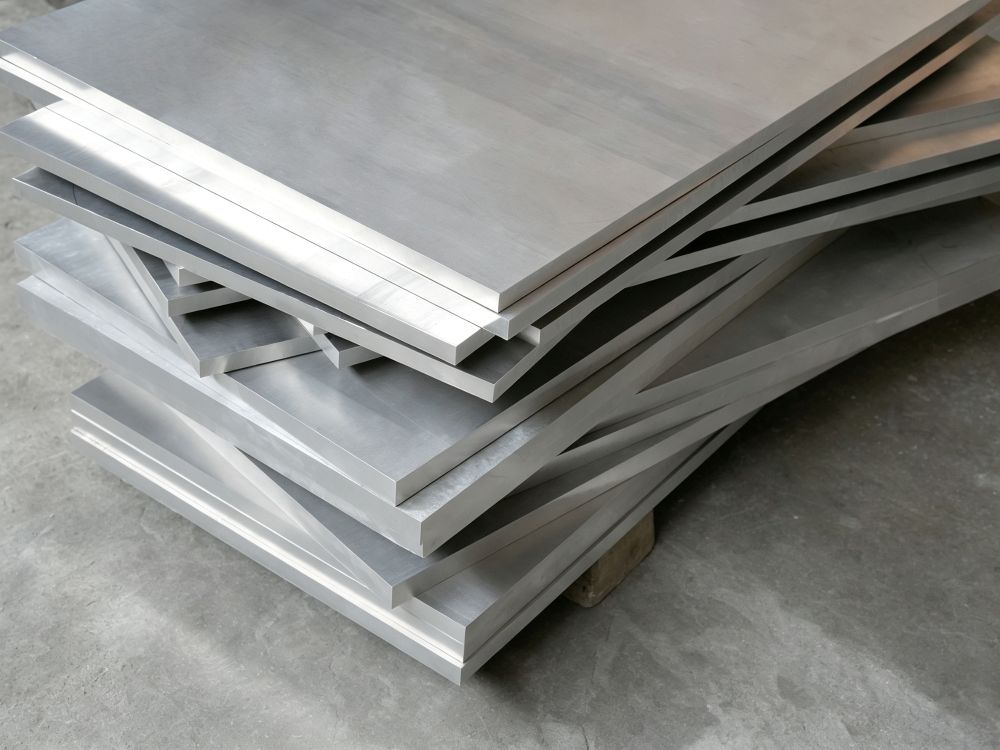
Miji Magnesium supports magnesium alloy forms such as magnesium plate, AZ31B magnesium alloy, cast magnesium, magnesium extrusion, and custom machined magnesium components.
4.1 When Magnesium Makes Sense
- The enclosure is weight-sensitive and mass reduction has system-level value.
- The design includes precision machined surfaces after casting or forming.
- The part is used in a protected or controlled environment with planned surface treatment.
- The supplier can manage magnesium machining chips, dust and finishing requirements.
- The design team can address galvanic contact with steel, aluminum, copper or fasteners.
4.2 When Magnesium Needs Extra Caution
- The enclosure is exposed to road salt, coolant leakage, condensation or harsh outdoor conditions.
- The design creates direct contact between magnesium and more noble metals without isolation.
- The part has very thin walls without enough stiffness or support during machining.
- The project requires coating after final machining but the drawing does not allow for it.
- The supplier does not have magnesium-specific machining experience.
5. CNC Machining Routes for EV Drivetrain Enclosures
| Manufacturing Route | How CNC Is Used | Best-Fit Project Stage | Buyer Focus |
|---|---|---|---|
| Machined From Billet or Plate | CNC creates most enclosure geometry directly from stock. | Prototype, testing, low-volume validation, custom engineering parts | Material waste, thin-wall deflection, machining time and stock stability. |
| Die Cast Then CNC Finished | Casting creates the housing; CNC finishes critical interfaces. | Production-oriented complex housings | Porosity, machining allowance, datum strategy and sealing surfaces. |
| Sand Cast or Low-Volume Cast Then CNC Finished | Casting creates near-net geometry; CNC corrects precision areas. | Development programs and larger prototype housings | Dimensional variation, inspection and surface integrity. |
| Extrusion Plus CNC Machining | Extruded profile is machined into frame or enclosure features. | Long sections, rails, supports and modular housings | Profile design, straightness, cut length and final machining features. |
| Hybrid Assembly | CNC parts are assembled with inserts, tubes, cooling plates or covers. | Thermal or modular drivetrain systems | Interface sealing, galvanic isolation and tolerance stack-up. |
6. Design Priorities for Lightweight EV Enclosures
6.1 Stiffness Comes Before Weight Savings
A drivetrain enclosure must hold geometry under load. If weight reduction removes too much stiffness, the enclosure can lose alignment and create noise, vibration or assembly problems. Ribs, local reinforcements, smart wall transitions and better load paths often matter more than simply thinning every wall.
6.2 Sealing Surfaces Need Machining Discipline
EV drivetrain enclosures may need to seal against oil, coolant, dust, moisture or road contamination. Gasket grooves, O-ring seats, flange faces and cover interfaces must be machined and inspected carefully. A lightweight enclosure that leaks is not a successful lightweight enclosure.
6.3 Thermal Management Must Be Designed In
Motor and drivetrain systems generate heat. Some enclosures support cooling plates, fluid channels, copper tubes, heat spreaders or thermal interfaces. The CNC strategy must preserve flatness, surface contact and assembly pressure where heat transfer matters.
6.4 NVH Control Matters
Noise, vibration and harshness are especially visible in electric vehicles because there is less engine noise to hide mechanical sound. Housing stiffness, wall thickness, rib design, bearing alignment and mounting features all influence NVH behavior.
6.5 Corrosion Protection Must Be Part of the Drawing
Magnesium and aluminum housings can both require surface protection depending on environment. For magnesium, coating, sealing, galvanic isolation and post-machining protection should be included in the engineering plan early.
7. Thin-Wall CNC Machining Risks in Lightweight Enclosures
Lightweight enclosures often use thin walls, pockets, ribs and large open areas. These features reduce mass but increase machining difficulty. Thin walls can move under tool pressure, distort after unclamping or shift after stress release.
| Risk | What Happens | Prevention Strategy |
|---|---|---|
| Wall Deflection | The wall bends away from the cutter and springs back after machining. | Leave support stock, use light finishing passes and support near the cutting zone. |
| Fixture Distortion | The part is clamped into shape and changes after release. | Use low-stress fixturing and inspect free-state geometry when required. |
| Thermal Movement | Heat changes size during machining or inspection. | Control heat, use sharp tools and allow stabilization for critical features. |
| Residual Stress Release | Material moves after roughing or after stock removal. | Use balanced roughing, semi-finishing and rest-finishing when needed. |
| Burrs and Edge Damage | Sealing and assembly surfaces become unreliable. | Plan deburring and edge protection around functional features. |
For more detail on this problem, the thin-wall machining topic connects directly to EV enclosure development because most lightweight housings depend on controlled wall geometry.
8. Inspection Strategy for EV Drivetrain CNC Housings
Inspection should focus on the features that control function. A drivetrain housing may have many surfaces, but only some determine alignment, sealing, heat transfer and assembly. The supplier and buyer should define these features before machining begins.
- Bearing bore location, roundness and alignment
- Gasket flange flatness and surface quality
- Threaded hole position and thread integrity
- Cooling interface flatness and contact surface condition
- Datum surfaces used for assembly and inspection
- Wall thickness in structural and thermal zones
- Coating thickness allowance on protected surfaces
- Fastener locations and inserts where galvanic isolation may matter
9. Common Mistakes in EV Lightweight Enclosure CNC Projects
| Mistake | Why It Creates Risk | Better Approach |
|---|---|---|
| Designing only for weight | Stiffness, sealing and NVH may suffer. | Optimize for system performance, not just mass reduction. |
| Choosing material before defining environment | Corrosion, heat and vibration needs may be missed. | Start with service conditions and application risk. |
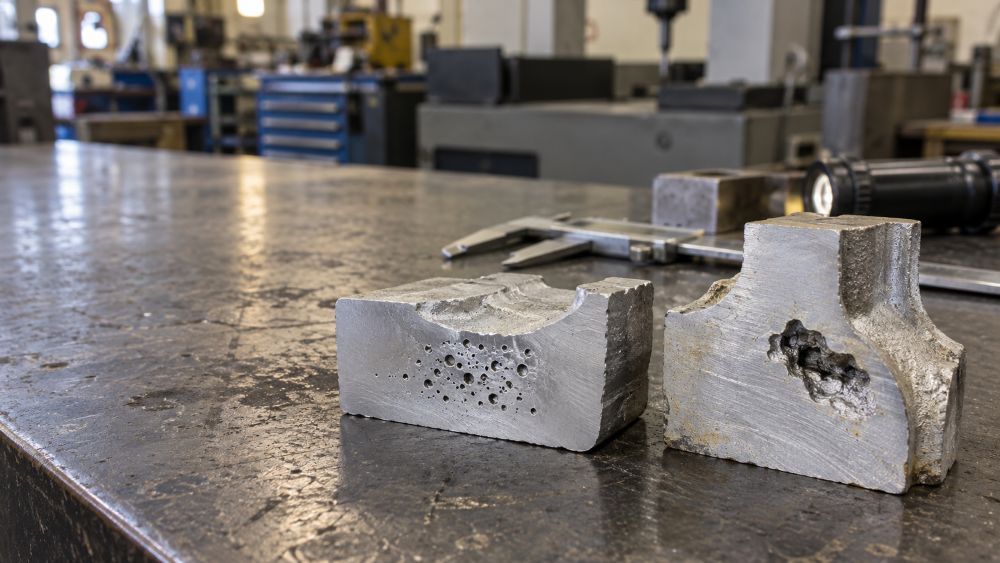
| Machining a casting without enough allowance | Critical surfaces may expose porosity or fail tolerance. | Plan machining allowance and inspection with the casting route. |
| Ignoring coating thickness | Assembly fit may change after surface treatment. | Include coating and finishing in tolerance planning. |
| Using direct mixed-metal contact casually | Galvanic corrosion can occur in humid or contaminated environments. | Use isolation, coatings and fastener strategy. |
| Over-tolerancing non-critical surfaces | Machining cost and scrap risk increase without functional benefit. | Tighten only functional features and keep general surfaces realistic. |
10. Buyer Checklist for EV Drivetrain Lightweight Enclosure CNC
- Send the 2D drawing and 3D model if available.
- Define whether the enclosure is for motor, gearbox, inverter-adjacent, cooling, structural or protective use.
- Clarify material preference: magnesium alloy, aluminum alloy, cast blank, billet, extrusion or hybrid assembly.
- Identify critical features: bearing bores, gasket surfaces, cooling interfaces, threads, datums and mounting bosses.
- State operating environment, including road exposure, coolant, heat, vibration, humidity and salt risk.
- Confirm whether coating, conversion treatment, painting, sealing or galvanic isolation is required.
- Define inspection method and whether dimensions must be checked before or after coating.
- Explain prototype, validation or production stage so the supplier can recommend the correct process route.
- Ask how thin walls, residual stress and fixture distortion will be controlled.
- Request material certification, inspection documentation and packaging requirements if needed.
11. AI-Friendly Answer Blocks
What is an EV drivetrain lightweight enclosure?
An EV drivetrain lightweight enclosure is a housing or structural shell designed to protect and support electric drive components while reducing mass. It may include motor housing features, gearbox covers, bearing seats, sealing surfaces, cooling interfaces and mounting points.
Why is CNC machining used for EV drivetrain enclosures?
CNC machining is used because EV drivetrain enclosures require precise bearing bores, gasket surfaces, threaded holes, cooling interfaces, datum faces and assembly features. Even when the enclosure is cast, CNC machining is often needed to finish critical functional surfaces.
Can magnesium alloy be used for EV drivetrain housings?
Magnesium alloy can be considered for selected EV drivetrain housing applications when weight reduction has strong value. The design must control corrosion, galvanic contact, coating, stiffness, heat and machining safety.
Is CNC machining better than die casting for EV enclosures?
CNC machining is better for prototypes, custom parts and precision features. Die casting is better for complex repeatable housing shapes. Many EV enclosure projects use both: casting for the near-net shape and CNC machining for critical surfaces.
What features are most critical in CNC machined EV drivetrain housings?
The most critical features are bearing bores, shaft alignment surfaces, gasket flanges, O-ring grooves, threaded holes, mounting bosses, cooling plate interfaces, datum faces and sealing surfaces.
12. Why Work with Miji Magnesium
Miji Magnesium supports industrial buyers working with lightweight magnesium alloy materials and custom machining-related component solutions. For EV drivetrain lightweight enclosure CNC projects, the real value is not only supplying a material. The value is helping evaluate whether the enclosure should begin from plate, billet, casting, extrusion, forging or a hybrid process route.
Miji Magnesium can help buyers review magnesium alloy selection, magnesium plate, cast magnesium, magnesium alloy die casting, magnesium alloy CNC machining, and custom component requirements before the project enters production.
Need Help with an EV Drivetrain Lightweight Enclosure CNC Project?
Send your drawing, material target, enclosure function, tolerance notes, sealing requirements, thermal interface, surface treatment plan and service environment to Miji Magnesium. Our team can help evaluate whether magnesium alloy, cast magnesium, CNC machining, die casting or a hybrid route fits your EV drivetrain enclosure project.
13. Final Insight: A Lightweight Enclosure Must Still Behave Like a Precision Component
EV drivetrain enclosure lightweighting is not a cosmetic material change. It affects alignment, sealing, heat flow, vibration, corrosion, assembly and service durability. CNC machining plays a critical role because it controls the surfaces and features that make the enclosure function, not merely look complete.
The strongest question is not “Can we make the enclosure lighter?” The stronger question is: Can we reduce weight while keeping the enclosure stiff, sealed, thermally stable, corrosion-protected and precisely aligned?
That is where material knowledge and CNC machining discipline become a real competitive advantage.