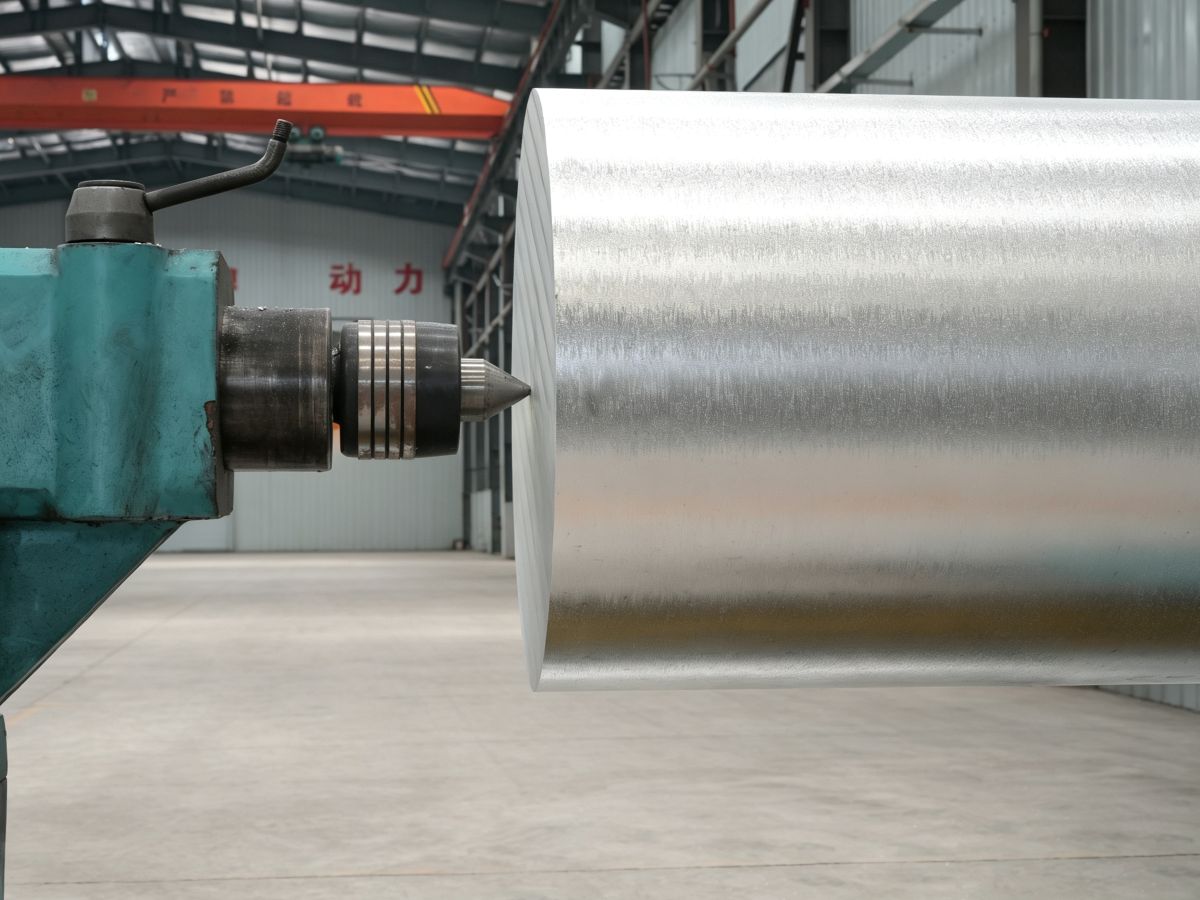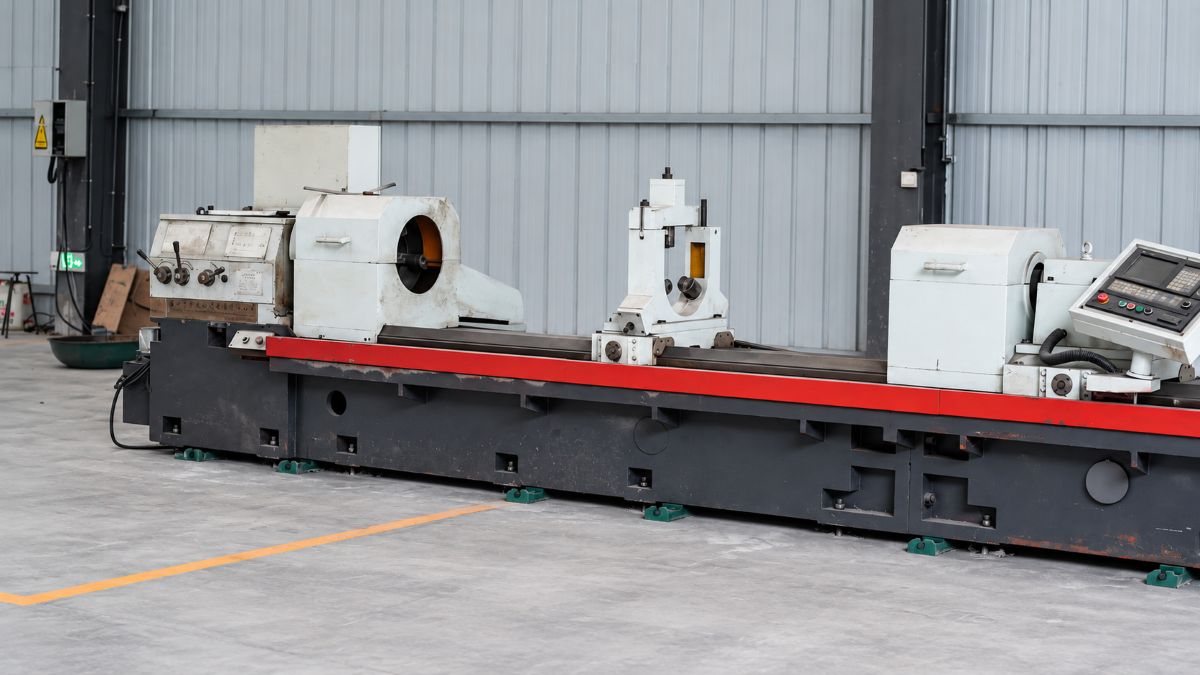

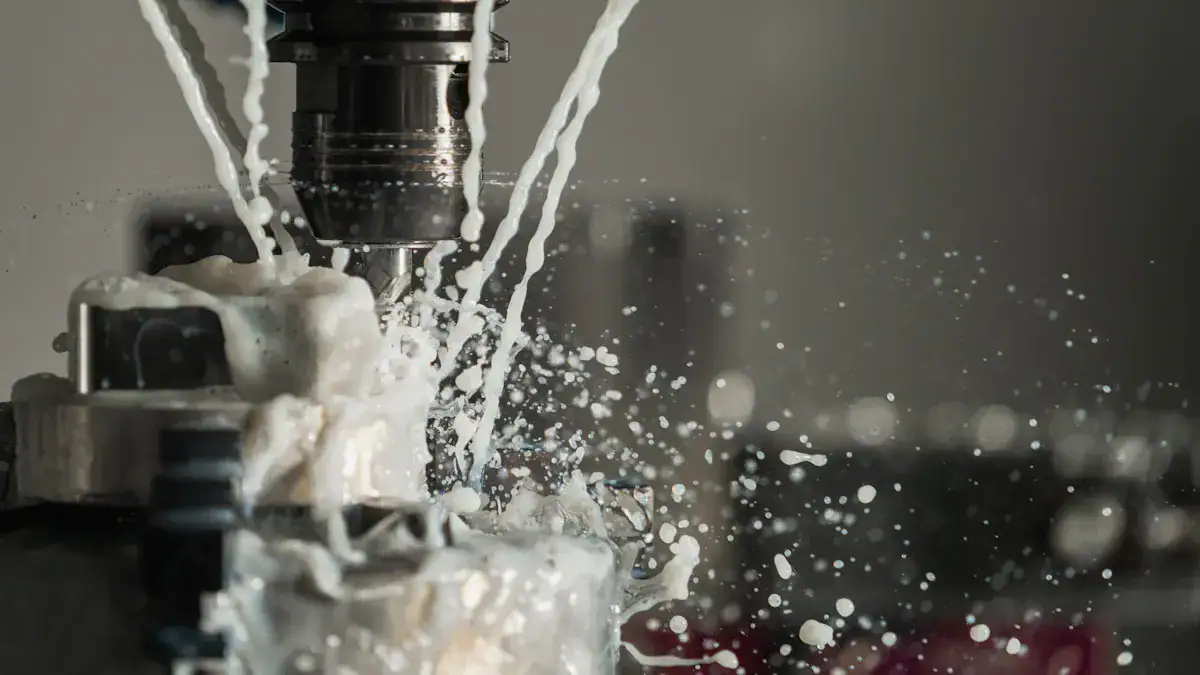
Imagine you have a block of metal or plastic. You can turn it into a detailed part with just a few clicks. That is what CNC machining can do. You use computer-controlled tools to shape raw materials into exact objects. This technology makes machining faster and more accurate than before. CNC machining lets you automate hard jobs. One person can run many machines at the same time. You get the same results, make fewer mistakes, and finish work faster. With CNC, you get high productivity and good quality every time you make a part. If you have ever wondered, “What Is CNC Machining?”—this is how modern manufacturing starts.
Key Takeaways
- CNC machining uses computers to guide tools. This makes work faster. It also makes work more accurate than old ways.
- Knowing blueprints is very important. It helps set up CNC machines the right way. This stops mistakes and saves materials.
- CNC machines can make hard shapes. They keep high precision. This is good for industries like aerospace and medical.
- CNC machining uses automation. One operator can run many machines. This boosts productivity and lowers labor costs.
- CNC machines need regular maintenance and checks. This keeps quality steady. It also stops errors in production.
What Is CNC Machining
CNC Machining Definition
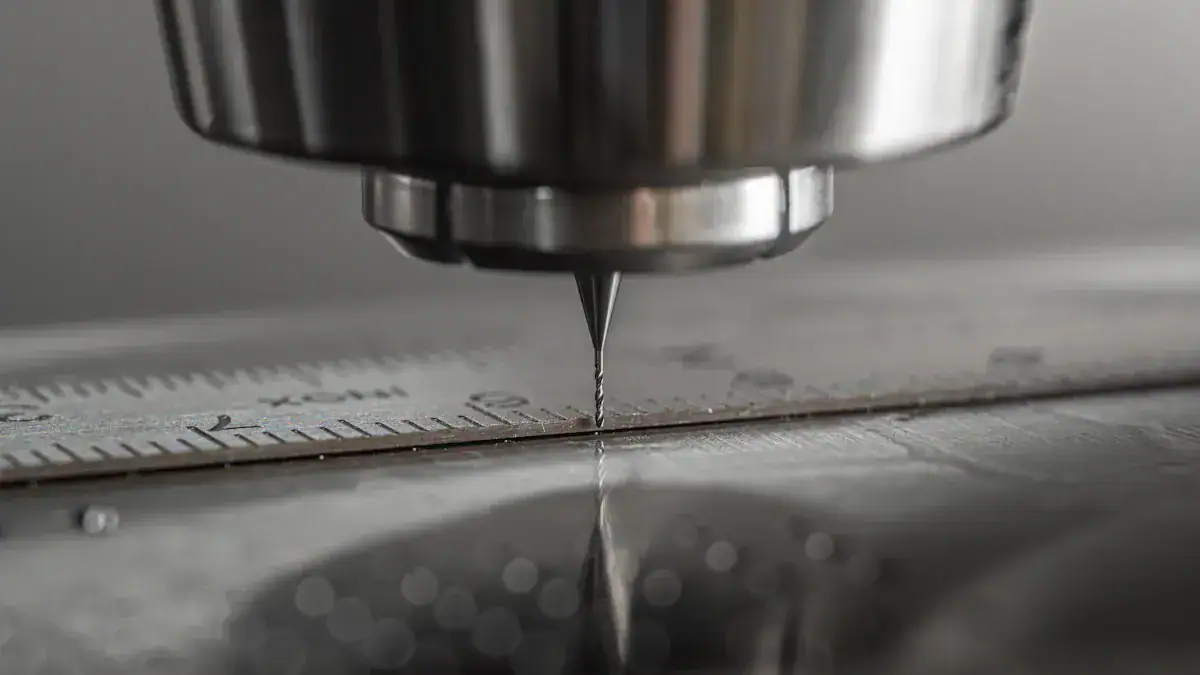
If you ask, “what is cnc machining,” you want a simple answer. CNC machining is a process where computers control cutting tools. You start with a block of material, like metal or plastic. The machine cuts away pieces until you get the shape you need. This is called subtractive manufacturing because you remove material instead of adding it.
CNC machining helps make parts for many industries. These include aerospace, cars, electronics, and medical devices. CNC manufacturing makes parts that need to be very accurate and the same every time. You can trust the machine to follow your instructions.
CNC machining works with lots of materials. Here are some common ones:
- Steel
- Aluminum
- Titanium
- Brass
- Copper
- Stainless Steel
- Plastic
Aluminum is light and cheap. Stainless steel is strong and does not rust. Titanium is strong and light. Brass is easy to use and conducts electricity. Plastics like Delrin are tough and slippery.
You control CNC machines with computer programs. You use CAD software to make a digital model of your part. Then you use CAM software to turn your design into instructions. The machine reads these instructions and moves the cutting tool. This lets you make shapes that are hard to do by hand.
Automation is important in CNC machining. You do not need to watch the machine all the time. The computer controls everything, so you get the same result every time. This means fewer mistakes and saves time. You can run several machines at once and make more parts.
Blueprint reading is very important in CNC machining. You must understand the sizes and limits shown on the blueprint. If you read the blueprint right, you can set up the machine to cut the part exactly. This stops errors and saves material. You also save time because you do not need to fix parts that do not fit.
Tip: Always check your blueprint before starting the machine. This helps you avoid mistakes and makes sure your part meets the standards.
CNC machining gives you high accuracy and repeatability. The machine can hold tight limits, so your parts fit together well. Sensors in the machine check the tool’s position many times each second. This reduces human mistakes and keeps your parts the same.
You use CNC machining in many industries because it offers:
- High precision
- Fast production
- Consistent quality
- Ability to make complex shapes
When you use CNC manufacturing, you get reliable results. You can trust the process to give you the same quality every time.
CNC vs. Traditional Machining
You might wonder how CNC machining is different from traditional machining. The main difference is how you control the machine. In traditional machining, you use your hands and simple tools. You move the cutting tool and the workpiece yourself. This can cause mistakes and makes it hard to make the same part many times.
CNC machining uses computers to control the process. You program the machine to follow exact paths. This gives you better accuracy and repeatability. You can make the same part over and over with little change.
Here are some key differences between CNC machining and traditional machining:
- CNC machining starts with a digital model. You use CAD and CAM software to plan.
- The process is automated. You do not need to control the machine by hand.
- CNC machines use computer programming to guide the tool. This reduces mistakes.
- You can make complex shapes and tight limits with CNC machining.
- Traditional machining needs skilled workers. This can cause differences in quality.
- CNC machining gives you consistent results, even for big batches.
Let’s look at a table that compares the two methods:
| Feature | CNC Machining | Traditional Machining |
|---|---|---|
| Accuracy | High precision with automated control | Lower precision due to human error |
| Repeatability | Consistent reproduction of operations | Variability in results |
| Tolerance | Maintains tight tolerances consistently | Inconsistent tolerances |
| Human Error | Minimal due to automation | Significant due to manual processes |
| Monitoring | Sensors verify positions frequently | Visual checks by operators |
You can see that CNC machining has many advantages. You get better accuracy, less human error, and more consistent parts. The machine checks its position many times each second. This means you can trust the results.
CNC machining also changes how you work. You do not need as many skilled workers to run the machines. One operator can watch several machines at once. This saves time and money in manufacturing.
Here is a quick look at how automation affects labor:
| Automation Level | Labor Savings | Description |
|---|---|---|
| Fully Automated | Up to 10 machinists | CNC machine centers with advanced monitoring and robotic systems can replace multiple skilled workers, enhancing efficiency and reducing costs. |
Even with automation, you still need skilled operators. You must know how to set up the machine, read blueprints, and check the finished parts. Your skills help keep the process running well.
CNC machining lets you make parts that are hard to do by hand. For example, CNC Swiss lathes can move the workpiece and the tool at the same time. This gives you more options for complex shapes and better support for the part. Traditional lathes hold the workpiece in one place, which limits what you can do.
Here are some features that make CNC machining special:
- You start with a digital design.
- The process is automated and precise.
- You can make complex parts with tight limits.
- The machine checks its position often, reducing mistakes.
- You can make lots of parts with the same quality.
Blueprint reading is important in CNC machining. You must read the blueprint to understand the part’s sizes and limits. This helps you pick the right tools and set up the machine. If you make a mistake, you might need to redo the part, which wastes time and material.
Here is how blueprint reading helps you:
- You understand the sizes and limits.
- You plan how to cut the part and pick tools.
- You choose the right inspection tools to check your work.
- You make sure the part matches the blueprint, reducing waste.
Note: Good blueprint reading skills help you make accurate parts and avoid mistakes.
CNC machining is a big part of modern manufacturing. You use it to make things like airplane parts and medical devices. The process gives you high accuracy, repeatability, and efficiency. You can trust CNC manufacturing to give you the results you need.
If you want to know what is cnc machining, remember these points:
- It is a subtractive manufacturing process.
- You use computers to control the machine.
- You get high accuracy and repeatability.
- You can make complex shapes and tight limits.
- Blueprint reading is important for success.
CNC machining has changed how you make parts. You can now make high-quality components for many industries with less effort and more confidence.
How CNC Works
CNC Machining Process Steps
You can break down the cnc machining process into clear steps. Each step helps you move from an idea to a finished part. Here is how you go from a digital cad model to a real object:
- CAD Design Creation
You start by making a digital cad model using CAD software. You set the size, shape, and details. This model shows exactly what you want to make. - CAM Conversion and Programming
Next, you use CAM software. This software takes your model and creates a plan for the cnc machine. It sets toolpaths and checks for problems. The software then turns your plan into code the machine can read. - Machine Setup and Preparation
You prepare the cnc machine. You place the raw material, install the right cutting tools, and make sure everything lines up. This step is important for accuracy. - Running the CNC Program
The cnc machine follows the code. It moves the cutting tool along the paths you set. You watch for errors or tool wear, but the machine does most of the work. - Quality Check and Final Output
When the machining ends, you check the part. You measure it to make sure it matches your model. If it passes, you have a finished product.
Tip: Always double-check your setup before starting the cnc machining process. This helps you avoid mistakes and wasted material.
From Design to Finished Part
You use software and code to control every step of cnc machining. CAD software lets you design parts with great detail. CAM software plans how the cnc machine will cut the material. The code, often called G-code, tells the machine how to move. M-code helps control things like coolant and spindle speed.
- G-code gives the cnc machine exact instructions for movement and speed.
- M-code manages extra functions, such as turning on coolant or changing tools.
Cnc machining uses a subtractive process. The machine removes material from a solid block. Advanced programming helps you use material wisely. You get less waste and save on costs. Here is a quick look at how cnc machining helps with material use:
| Evidence Type | Description |
|---|---|
| Material Utilization | Cnc machining uses smart programming to cut only what you need. |
| Cost Savings | Less waste means you spend less on raw materials. |
| Advanced Programming | The machine follows the best path to use every bit of material efficiently. |
Cnc machining gives you control, speed, and accuracy. You can make complex shapes that match your digital cad models. The process helps you turn ideas into real parts with less waste and more precision.
CNC Machine Components
Machine Tools and Controllers
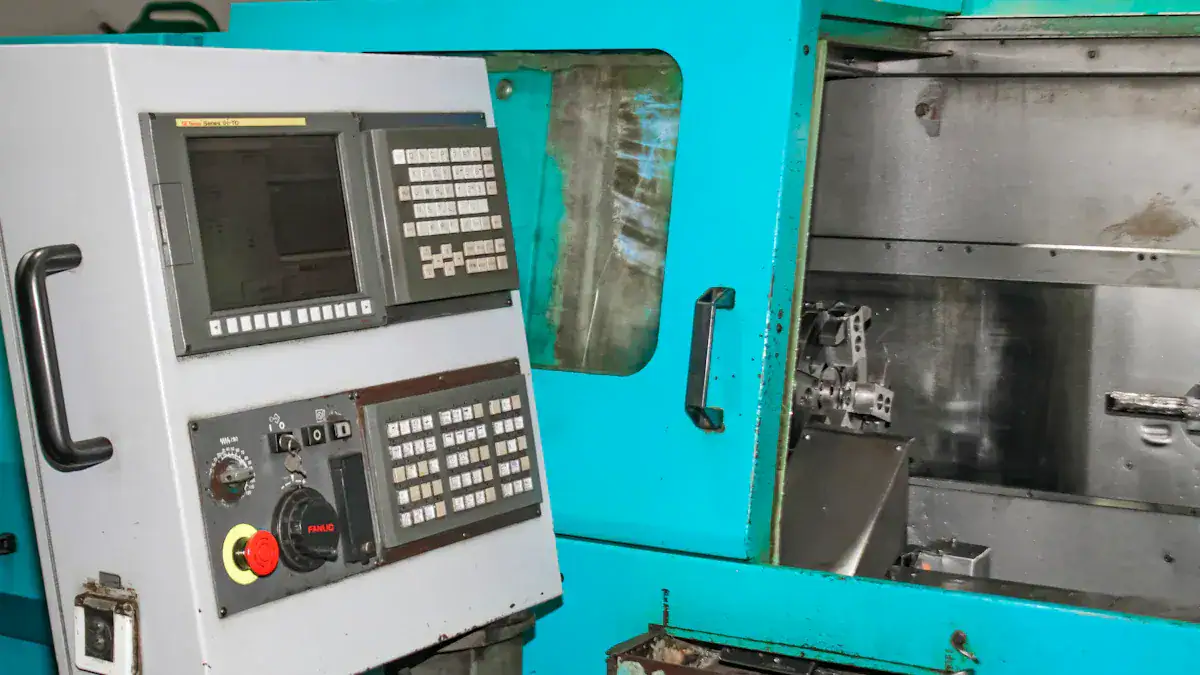
When you use cnc machining, you work with many parts. Machine tools and controllers help shape the material. The control unit reads instructions and sends signals to the drive system. Motors and ball screws move the cutting tools in exact ways. The feedback system checks tool position and speed as you work. You use the control panel to set up and watch the process. The machine bed holds everything and keeps vibrations low. The spindle spins the cutting tools fast so you can cut, drill, or shape the material.
| Component | Role in CNC Machining |
|---|---|
| Machine Tools | Work with the material to cut, shape, or drill. |
| Driving System | Moves the axes smoothly and with accuracy. |
| Feedback System | Watches movements for consistency and precision. |
| Control Panel | Lets you manage and check operations. |
CNC machines use digital instructions to work. The controller reads numbers and tells motors what to do. Feedback systems help keep every cycle accurate and consistent.
Software and Programming
Software and programming are needed to control cnc machining. G-code programming tells the machine how to move and how fast. CAM software makes toolpaths and cnc programs. You use programs like Autodesk Fusion 360, SolidWorks, and Mastercam to design and plan. Macro programming helps automate simple tasks. Error checking finds problems in the design. Tool path generation sets the coordinates for cutting tools. Configuration sets things like voltage and cutting speed. The software makes sure the machine follows your design and makes parts with high precision.
- G-code Programming
- CAM Software
- Macro Programming
- Tool path generation
- Error checking
Cutting Tools and Workpiece
You must pick the right cutting tools for each cnc machining job. The shape and wear of the tools change the results. The hardness, toughness, and heat properties of the material affect how tools work with the workpiece. Materials like titanium and Inconel need careful control to stop tool wear. The way you set up tools and pick materials affects the finished product’s quality. High-speed cutting tools remove material quickly. Common cnc machining tools are end mills, drills, and inserts. You hold the workpiece with a device to keep it steady and accurate. The coolant system cools things down and removes chips during cutting.
- Hardness, toughness, and elasticity change machining.
- High-speed cutting tools make work faster.
- The right material and tool setup give precision.
CNC Principles
Automation and Computer Control
CNC machining helps you do hard jobs automatically. The system uses special instructions to move the machine. You do not need to move the tools by hand. The CNC controller reads the code and tells the motors what to do. The machine moves the cutting tools very accurately. You can shape, drill, and cut metal or plastic. CNC machining is between fixed and flexible systems. You get the good parts of both. You can use lathes, mills, routers, and grinders for many jobs. CNC gives you the right size every time.
CNC machines work fast and make the same part each time. This is important for oilfield equipment. The parts must be the same to keep things safe and working well.
You make fewer mistakes because the computer does the hard work. The machine follows the path you put in the program. You can use special monitoring to watch how things are going. This helps you know when to fix or check the machine. Your work stays smooth and steady.
- Less human error because you do not enter data by hand.
- The machine does the job right with little help from people.
- You get better accuracy and the same results every time.
- Special monitoring lets you watch and fix problems fast.
Precision and Repeatability
CNC machining gives you very exact parts. The machine follows the program and keeps tight limits. You can make even hard shapes with the right size. The system uses numbers from your CAD model. This means fewer mistakes and more accurate parts.
| Machining Process | Tolerance |
|---|---|
| Milling (3-axis) | ± 0.005″ (0.13 mm) |
| Milling (5-axis) | ± 0.005″ (0.13 mm) |
| Engraving | ± 0.005″ (0.13 mm) |
| Rail Cutting Tolerances | ± 0.030″ (0.762 mm) |
| Screw Machining | ± 0.005″ (0.13 mm) |
You can get tolerances as close as ±0.0005 inches. For special jobs, you can go to ±0.0002 inches. This high accuracy is needed for aerospace, medical, and car parts. CNC machining makes sure every part fits and works right. The machine repeats the same path for each part. This gives you the same results every time.
Consistency in Production
CNC machining makes sure you get the same quality each time. The machine uses the same program, so you can learn the steps fast. It is easier to find and fix mistakes. You do not get confused, and you keep working well.
- The same program helps you learn the steps quickly.
- It is easier to find mistakes when the program is the same.
- If things are not the same, it can cause confusion and mistakes.
You can also watch the process in real time. The system checks the spindle speed, feed rate, and temperature. This stops the machine from getting too hot. It also keeps your tools working well. You keep the right speed for cutting and stop the material from changing shape.
- Real-time checks let you watch the process right away.
- Watching spindle speed stops the machine from getting too hot.
- Feed rate control keeps the right cutting speed.
- Temperature checks stop the part from changing shape.
CNC machining helps you meet the right standards for every part. You save time and money because you do not need to fix as many mistakes. You can finish parts on time and keep your customers happy.
- Every part meets the right standards.
- You can make more parts for less money.
- You know when you will finish the job.
- You waste less and do not need to fix as much.
You can trust CNC machining to give you accurate, repeatable, and steady results every time you make parts.
Types of CNC Machines
There are many types of CNC machines today. Each machine uses its own way and tools to shape materials. Knowing about these machines helps you pick the right one for your job.
CNC Milling Machines
CNC milling machines use spinning cutting tools. They remove material from a still workpiece. You can make complex shapes and detailed surfaces with this method. CNC milling is good for making prototypes, custom parts, and batches. These machines are used in aerospace, automotive, electronics, and medical fields. They help make engine blocks, gears, molds, and surgical tools.
Tip: CNC milling gives you high accuracy. You can use metals and plastics with it.
CNC Lathes
CNC lathes work differently. The workpiece spins while the cutting tool stays still. You use CNC turning to make round parts like shafts and bolts. This method is fast and gives uniform results. CNC turning is used in cars, planes, and mechanical jobs. You can make many parts that are exactly the same.
- CNC turning is best for round shapes.
- CNC milling is better for complex designs.
CNC Routers
CNC routers cut, carve, and shape materials. They work with wood, plastics, and soft metals. You use them for furniture, signs, and art. CNC routers are good for cabinets and prototypes. With the right tools, you get smooth edges and detailed patterns.
| Material | Applications |
|---|---|
| Wood | Furniture, cabinet making, art |
| Plastics | Signs, prototypes |
| Non-ferrous metals | Aerospace, high-precision cutting |
CNC Plasma Cutters
CNC plasma cutters use a fast plasma arc. They cut materials that conduct electricity. You can cut thick metal sheets quickly and accurately. These machines are used in construction, cars, and metal shops. CNC plasma cutters are good for big projects and precise metal work.
| Industry | Application Description |
|---|---|
| Construction | Fast cutting of thick materials for big projects |
| Automotive | Precision cutting of metal parts for vehicles |
| Metalworking | Clean, accurate cuts for fabrication shops |
Other CNC Machines
There are other CNC machines for special jobs. Some examples are:
- CNC drilling machines for making holes
- CNC laser cutting machines for precise cuts
- CNC EDM for shaping with sparks
- CNC grinding machines for smooth finishes
- 5-axis CNC machines for complex parts
Each machine uses its own tools and ways. You can choose the machine that fits your needs for the best results in cnc machining.
CNC Machining Benefits
High Accuracy
CNC gives you very high accuracy for your projects. The computer tells the cutting tools where to go. This makes the tools move with great care. You can get tolerances as close as 0.0001 inches. Manual methods cannot match this level of accuracy. Sensors in the CNC machine check tool position many times each second. This helps stop mistakes and keeps your parts within tight limits. The table below shows how CNC and manual machining are different:
| Benefit | CNC Machining | Manual Machining |
|---|---|---|
| Human Error | Reduced by digital instructions | High risk from operator reliance |
| Precision | Tolerances as tight as 0.0001 inches | Limited by human skill |
| Consistency | High across all parts | Variations common |
| Monitoring | Sensors verify position constantly | Visual checks only |
| Speed | High RPM, up to 20000 | Slower, manual operation |
| Feedback Loop | Instant correction of deviations | No automatic correction |
| Application | Critical for aerospace, medical | Less suitable for high precision |
You can count on CNC to give you the same accuracy for every part. This is important for industries that need parts they can trust.
Efficiency and Speed
CNC helps you work faster and more efficiently. The machine does the cutting by itself, so you spend less time on each part. You do not need to stop and make changes by hand. The machine can switch tools and move to the next step quickly. You can run CNC machines all day and night, which means you make more parts. When you switch from manual to CNC, you can make parts 50% to 80% faster. Tool changes and moving in many directions help you finish jobs quickly. This is great for making new designs fast and making lots of parts.
- CNC programming makes hard jobs easy.
- Automated cutting means less manual work.
- Machines can run all the time, so you make more parts.
Complex Shapes and Versatility
CNC lets you make complex shapes and use it for many jobs. You can create parts that are too hard for regular machines. Five-axis CNC machines move the tools in many ways, so you can shape tricky surfaces. Electrical Discharge Machining (EDM) helps you make detailed shapes in hard materials. Swiss-type CNC lathes make small, complex parts with high accuracy. The table below shows some CNC types and what they do:
| CNC Machining Type | Description |
|---|---|
| 5-axis CNC Machines | Shape complex parts for aerospace and medical fields |
| Electrical Discharge Machining (EDM) | Create intricate shapes in hard materials using electrical current |
| Swiss-type CNC Lathes | Produce small, detailed components with high precision |
You can use CNC for custom parts in aerospace, medical, and electronics. Being able to do many jobs is a big advantage.
Consistency and Quality
CNC machining gives you the same quality every time. The machine follows the same program, so you get the same results. You can trust CNC to meet the exact needs for every order. Machinists check tools for wear and change them before they cause problems. They also change cutting settings to keep accuracy high. Regular maintenance keeps the machine working well. You keep records of settings and checks for quality control. This helps you find and fix problems fast.
- CNC makes accurate parts with little difference.
- Each part matches the design, which is important for special jobs.
- Consistent results make CNC good for making many parts and for tough industries.
Tip: Take care of your CNC machine and check it often to keep your parts at the highest quality.
You have learned that CNC machining uses computers to control machines. These machines shape materials with very good accuracy. The process is fast and gives the same results every time. You can count on CNC machining to make hard parts for many jobs. Automation and precision help you finish work faster and make fewer mistakes. If you want to make good parts or learn about new ways to build things, CNC machining is a great choice.
Want to do more with your ideas? Try CNC machining for your next project!