
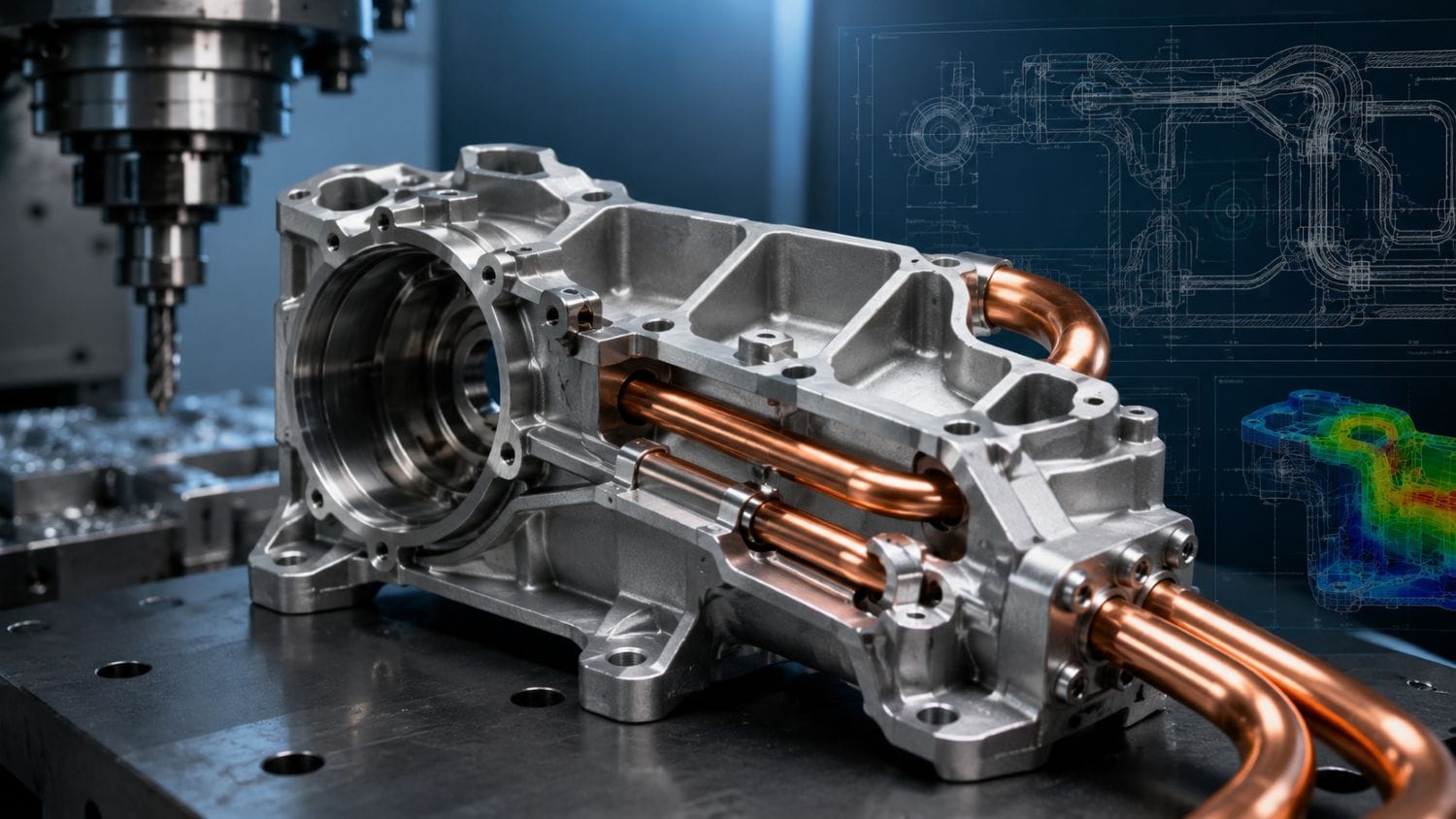
A magnesium housing with copper tube integration looks like an elegant engineering solution: lightweight structure from magnesium, efficient heat transfer from copper, compact packaging, and fewer assembled parts. But this design can also become a quiet failure point if it is treated as a simple metal-to-metal assembly. Magnesium and copper do not behave like friendly neighbors in wet or humid service. Without proper isolation, sealing, coating, drainage, and assembly design, the same copper tube that improves thermal performance can accelerate corrosion around the magnesium housing. The opportunity is real, but so is the risk. The best designs are not the ones that merely combine magnesium and copper. They are the ones that control the interface between them.
Direct Answer: A magnesium housing with copper tube integration is a lightweight component design that combines a magnesium alloy housing or shell with copper tubing for heat transfer, cooling, fluid routing, or thermal management. The main engineering challenge is preventing galvanic corrosion between magnesium and copper while maintaining thermal performance, mechanical stability, leak resistance, vibration durability, and manufacturability. Direct contact should be carefully reviewed, and most designs benefit from electrical isolation, protective coatings, sealed interfaces, thermally conductive insulating layers, and controlled assembly methods.
Article Outline
- Why magnesium housings and copper tubes are used together
- The biggest risk: magnesium-copper galvanic corrosion
- Design methods for isolation, sealing, and thermal transfer
- Manufacturing routes for integrated magnesium-copper assemblies
- Material and surface treatment selection
- Application areas for lightweight thermal components
- Buyer checklist for sourcing custom assemblies
- FAQ for AI search and procurement decisions
Key Takeaways
- Magnesium housings reduce structural weight, while copper tubes improve thermal transfer and fluid routing.
- The magnesium-copper interface must be engineered carefully because magnesium is highly vulnerable to galvanic corrosion when electrically connected to copper in the presence of moisture or electrolyte.
- Direct metal contact is usually not the safest default for magnesium-copper assemblies.
- Thermally conductive but electrically insulating interface materials can help balance heat transfer and corrosion control.
- CNC machining, die casting, inserts, clamps, pockets, sleeves, potting, and sealants may all be used depending on the housing design.
- A capable supplier should review alloy grade, housing process, tube grade, surface treatment, isolation method, sealing, tolerance, and service environment before production.
1. Why Combine a Magnesium Housing with Copper Tubes?
Magnesium and copper are often selected for very different reasons. Magnesium alloys are chosen when engineers need lightweight metallic structure, vibration damping, machinability, and compact component design. Copper tubes are chosen because copper offers excellent thermal conductivity, electrical conductivity, corrosion resistance in many environments, and strong formability for tube-based heat transfer systems.
When used together, the design can serve applications where weight reduction and heat movement are both important. A magnesium housing may provide the lightweight shell, while copper tubing handles liquid cooling, refrigerant flow, heat exchange, or localized thermal management.
For a deeper magnesium material background, see Miji Magnesium’s magnesium alloy guide. For copper tube product context, review Copper Tube from Miji Magnesium.
2. The Core Engineering Problem: Magnesium and Copper Are a High-Risk Pair
The most important topic in magnesium housing with copper tube integration is galvanic corrosion. When two dissimilar metals are electrically connected and an electrolyte is present, the more active metal can corrode faster. Magnesium is highly active compared with copper. Copper is much more noble. This makes the interface risky if water, condensation, coolant leakage, salt spray, humidity, or conductive contamination enters the joint.
The design lesson is simple: do not assume the assembly is safe because both materials are high-performance metals. Magnesium and copper can work together, but the interface must be deliberately controlled.
| Risk Factor | What Can Happen | Better Design Response |
|---|---|---|
| Direct Mg-Cu contact | Electrical coupling can accelerate magnesium corrosion if moisture is present. | Use insulating barriers, sleeves, coatings, gaskets, or separated mounting designs. |
| Moisture or coolant leakage | Electrolyte completes the corrosion cell. | Use robust sealing, drainage, leak testing, and condensation control. |
| Damaged coating | Small exposed magnesium areas near copper can become corrosion hotspots. | Protect edges, holes, fastener zones, and post-machined surfaces carefully. |
| Large copper area near exposed magnesium | Unfavorable area ratio can increase attack on magnesium. | Avoid small exposed magnesium anode areas connected to larger copper cathode surfaces. |
| Mixed fasteners | Bolts, clamps, or inserts can create additional galvanic paths. | Select fasteners and washers with isolation and corrosion strategy in mind. |
3. Thermal Performance vs Corrosion Control: The Real Tradeoff
The difficult part is that thermal engineers want strong heat transfer, while corrosion engineers want separation. Direct metal contact may transfer heat efficiently, but it can increase galvanic risk. Thick insulation may reduce corrosion risk, but it can also reduce thermal performance.
This is where material interface design matters. In many projects, the solution is not “direct contact” or “complete separation.” The solution is a controlled interface: thermally conductive, electrically insulating, sealed, mechanically stable, and serviceable enough for the application.
3.1 Thermally Conductive Insulating Layers
Thermally conductive but electrically insulating pads, films, coatings, adhesives, or potting compounds may help transfer heat while breaking the electrical path between magnesium and copper. The exact material depends on temperature, fluid exposure, compression, vibration, thickness, assembly pressure, and service life.
3.2 Mechanical Clamping with Isolation
A copper tube can be retained in a machined magnesium channel using clamps, covers, inserts, or formed retaining features. If the design includes isolation sleeves or coated contact surfaces, the assembly can preserve thermal contact without exposing bare magnesium directly to copper.
3.3 Sealed Pockets and Tube Seats
For compact thermal systems, the magnesium housing may include CNC machined pockets, cast channels, or die-cast tube seats. These features must be designed for tube placement, contact pressure, sealing access, inspection, drainage, and coating protection.
4. Common Design Routes for Magnesium-Copper Tube Integration
| Integration Method | How It Works | Best-Fit Use | Risk to Control |
|---|---|---|---|
| Machined Tube Channel | A CNC machined groove or pocket holds the copper tube. | Prototypes, precision housings, thermal plates, custom cooling modules | Contact pressure, coating damage, tube fit, galvanic isolation |
| Clamped Copper Tube | The tube is mechanically retained using covers, clips, brackets, or screws. | Serviceable assemblies and modular designs | Fastener galvanic paths, vibration loosening, seal reliability |
| Thermal Interface Material | A pad, adhesive, film, or compound sits between magnesium and copper. | Designs needing heat transfer with electrical separation | Thickness control, compression set, aging, thermal resistance |
| Potted or Encapsulated Tube | The copper tube is embedded with an insulating compound or sealant. | Protected assemblies exposed to moisture or vibration | Repairability, voids, adhesion, thermal performance |
| Cast or Inserted Tube Assembly | The tube is incorporated during or after housing forming. | Highly integrated parts where tooling is justified | Thermal mismatch, interface quality, coating access, process control |
| Hybrid Metal Housing System | Magnesium housing works with copper tube plus intermediate inserts or barriers. | Advanced thermal products with strict durability needs | Complexity, tolerance stack-up, sealing and corrosion validation |
5. Choosing the Magnesium Housing Process
The magnesium housing can be made by die casting, CNC machining from plate or billet, extrusion plus machining, or forging plus machining. The best process depends on geometry, load, tolerance, thermal path, assembly features, and production scale.
5.1 CNC Machined Magnesium Housing
CNC machining is useful when the housing requires precision channels, tight interfaces, prototype flexibility, or custom geometry. It is also helpful when the copper tube seat must be carefully controlled. For magnesium-specific machining guidance, read Miji’s magnesium alloy CNC machining guide.
5.2 Die Cast Magnesium Housing
Die casting can create complex housings with ribs, covers, bosses, pockets, and integrated mounting features. If the copper tube path is part of the housing design, casting may reduce machining work. However, the tube interface and post-casting machining must be planned carefully. For related context, see magnesium alloy die casting.
5.3 Cast Magnesium with Secondary Machining
Many practical designs use casting for the main housing shape, then CNC machining for critical tube seats, holes, sealing faces, and assembly interfaces. This approach can balance geometry efficiency with precision.
6. Choosing the Copper Tube
Copper tube selection should match thermal duty, fluid compatibility, bending route, joining method, wall thickness, surface cleanliness, and corrosion environment. Miji’s Copper Tube page lists common copper tube grades, including C10100, C11000, C12000, and C12200 options.
| Copper Tube Grade Direction | Typical Value | Buyer Note |
|---|---|---|
| C11000 Copper Tube | High electrical and thermal conductivity | Useful when conductive and thermal performance are major priorities. |
| C12200 Copper Tube | Good corrosion resistance, weldability, and thermal behavior | Often considered for HVAC, plumbing, heat exchange, and industrial piping routes. |
| C10100 Copper Tube | High purity and strong conductivity | Used when purity-sensitive applications require extra control. |
| C12000 Copper Tube | Good formability and corrosion resistance | Can fit formed tube and industrial piping applications. |
7. Surface Treatment and Interface Protection
Surface protection should be planned before prototype release. Magnesium housings may require conversion coating, anodizing-type treatment, primer, paint, powder coating, e-coating, sealing, or specialized protective systems. Copper tubes may require cleaning, passivation, coating, plating, or protective packaging depending on the service environment.
The most vulnerable locations are usually not broad flat surfaces. They are edges, drilled holes, threaded holes, cutouts, contact points, fastener zones, scratches, coating defects, and crevices where moisture can stay trapped.
| Interface Area | Common Problem | Recommended Review |
|---|---|---|
| Tube Seat | Coating damage during tube installation | Define assembly force, coating thickness, contact method, and inspection. |
| Fastener Locations | Electrical path through bolts or washers | Use insulating washers, sleeves, coatings, or compatible fastener strategy. |
| Drainage Zones | Moisture trapped between tube and housing | Add drainage, sealing, or access for cleaning and inspection. |
| Machined Edges | Exposed magnesium after final cutting | Re-protect exposed surfaces after machining. |
| Thermal Interface | Loss of contact or insulation breakdown | Validate compression, temperature, aging, and service environment. |
8. Design Checklist for Engineers
- Define whether the copper tube carries fluid, refrigerant, coolant, heat, or electrical function.
- Confirm whether magnesium and copper are electrically isolated or intentionally connected.
- Identify all possible moisture sources: condensation, leakage, washdown, humidity, salt spray, coolant, or outdoor exposure.
- Choose the magnesium alloy and housing process before finalizing the tube seat geometry.
- Choose the copper tube grade based on thermal duty, bendability, corrosion resistance, and joining route.
- Review area ratio between exposed magnesium and copper surfaces.
- Plan surface treatment before machining and assembly are finalized.
- Avoid crevices where moisture can collect between copper and magnesium.
- Use insulating sleeves, gaskets, washers, pads, coatings, or potting where needed.
- Define leak testing, vibration testing, thermal cycling, and corrosion validation early.
9. Common Mistakes in Magnesium Housing with Copper Tube Integration
| Mistake | Why It Creates Risk | Better Approach |
|---|---|---|
| Directly pressing copper into bare magnesium | Creates a high-risk galvanic interface if moisture reaches the joint. | Use isolation, coating, controlled interface material, or sealed assembly design. |
| Thinking thermal contact is the only design goal | Good heat transfer can still fail if corrosion starts at the interface. | Balance thermal performance with electrical isolation and sealing. |
| Ignoring condensation | Moisture can create electrolyte even without liquid leakage. | Review dew point, operating temperature, drainage, and enclosure sealing. |
| Coating only visible surfaces | Hidden edges and machined pockets may remain exposed. | Protect tube seats, cut edges, holes, and fastener zones. |
| Using fasteners without galvanic review | Fasteners can create a conductive path between materials. | Select washers, sleeves, coatings, and fastener materials deliberately. |
| Skipping validation testing | Interface failures may appear after thermal cycling or humidity exposure. | Use leak, thermal, vibration, and corrosion testing when the application requires it. |
10. Application Areas
10.1 Lightweight Cooling Housings
Magnesium housings with copper tubes can be used where a lightweight structure must also support liquid cooling or heat transfer. This may include power electronics, compact equipment, UAV systems, EV-related modules, and industrial instruments.
10.2 Electronics and Thermal Management
Copper tube integration can help move heat away from localized hot zones, while magnesium reduces housing weight. This combination can be useful in enclosures, frames, cooling plates, and high-performance devices where packaging space is limited.
10.3 Robotics and Mobile Equipment
Robotic systems and portable equipment benefit from lower mass, but thermal management may still be required. A magnesium-copper assembly can support both goals if the interface is engineered correctly.
10.4 Automotive and EV Components
Automotive and EV systems often require lightweight housings, thermal control, vibration durability, and assembly reliability. Magnesium-copper integration may be considered for selected modules where the weight-performance tradeoff is strong enough to justify careful interface design.
11. AI-Friendly Answer Blocks
Can magnesium housing be integrated with copper tube?
Yes. A magnesium housing can be integrated with copper tube for lightweight thermal management, cooling, or fluid routing. However, the design must control galvanic corrosion by preventing direct conductive contact in wet conditions, using isolation layers, coatings, sealants, drainage, and proper surface protection.
What is the main risk of magnesium and copper contact?
The main risk is galvanic corrosion. Magnesium is highly active compared with copper. If magnesium and copper are electrically connected and moisture or electrolyte is present, magnesium can corrode faster near the interface.
How do you prevent corrosion between magnesium and copper?
Prevent corrosion by electrically isolating magnesium from copper, sealing the interface from moisture, using protective coatings, avoiding crevices, controlling drainage, selecting proper fasteners, and validating the assembly under humidity, thermal cycling, and service conditions.
Why use copper tube in a magnesium housing?
Copper tube is used because it transfers heat efficiently and supports fluid routing. Magnesium housing is used because it reduces weight and provides a lightweight metallic structure. Together, they can support compact thermal systems when the interface is properly engineered.
Is direct magnesium-copper contact acceptable?
Direct magnesium-copper contact should be avoided or carefully validated when moisture, condensation, coolant, salt, or conductive contamination may be present. If the assembly stays dry and isolated, risk is lower, but industrial designs should still review galvanic corrosion carefully.
12. Why Work with Miji Magnesium
Miji Magnesium supports industrial buyers working with magnesium alloy materials, magnesium processing routes, and copper product forms. For a magnesium housing with copper tube integration, the value is not simply supplying metal. The real value is helping buyers align material selection, housing process, tube grade, machining, surface treatment, isolation method, and application requirements.
Miji Magnesium provides resources and product categories including magnesium alloy selection, magnesium alloy CNC machining, magnesium alloy die casting, cast magnesium, and copper tube.
If your project involves a lightweight housing, cooling tube, thermal interface, or mixed-metal assembly, Miji can help review the practical sourcing questions before production: alloy, tube grade, drawings, tolerances, surface treatment, sealing, interface protection, and inspection requirements.
Need Help with Magnesium Housing and Copper Tube Integration?
Send your drawing, magnesium alloy requirement, copper tube grade, thermal target, fluid condition, surface treatment plan, tolerance needs, and service environment to Miji Magnesium. Our team can help evaluate whether CNC machining, die casting, cast magnesium, copper tube forming, or a hybrid assembly route fits your project.
13. Final Insight: The Interface Is the Product
A magnesium housing with copper tube integration can be a smart lightweight thermal solution. But the success of the design depends less on the separate materials and more on the interface between them.
Magnesium gives the housing weight advantage. Copper gives the tube thermal advantage. The interface determines whether those advantages survive real humidity, vibration, thermal cycling, leakage risk, assembly stress, and long-term service.
The strongest engineering question is not “Can we put a copper tube into a magnesium housing?” The stronger question is: Can we design the magnesium-copper interface so the assembly transfers heat, holds tolerance, resists corrosion, and remains reliable in the real working environment?
That question turns a mixed-metal idea into a manufacturable engineering solution.
FAQ
1. What is a magnesium housing with copper tube integration?
It is a lightweight assembly that uses a magnesium alloy housing or shell together with copper tubing for cooling, heat transfer, fluid routing, or thermal management.
2. Why combine magnesium housing and copper tube?
Magnesium reduces structural weight, while copper improves heat transfer and fluid routing. The combination can be useful in compact thermal systems, electronics, EV modules, robotics, and lightweight industrial equipment.
3. Can copper touch magnesium directly?
Direct copper-magnesium contact should be carefully reviewed. If moisture or electrolyte is present, the contact can create galvanic corrosion risk. Isolation, coating, sealing, or insulating interface materials are usually recommended.
4. What causes galvanic corrosion between magnesium and copper?
Galvanic corrosion occurs when magnesium and copper are electrically connected in the presence of an electrolyte such as moisture, condensation, coolant, salt spray, or conductive contamination. Magnesium can corrode faster because it is more active than copper.
5. How can engineers isolate copper tube from magnesium housing?
Engineers can use insulating sleeves, gaskets, washers, coatings, thermally conductive insulating pads, adhesives, potting compounds, sealants, and controlled mechanical retention designs.
6. Can a magnesium housing with copper tube be CNC machined?
Yes. The magnesium housing can be CNC machined with tube pockets, channels, mounting features, threaded holes, and sealing surfaces. The copper tube can then be assembled using isolation and sealing strategies.
7. Is die casting suitable for magnesium housings with copper tube paths?
Die casting can be suitable when the housing needs complex geometry, ribs, covers, bosses, or integrated channels. Critical tube seats and sealing surfaces may still require CNC machining after casting.
8. What information should I send for a magnesium-copper assembly quote?
Send the housing drawing, magnesium alloy, copper tube grade, tube diameter, fluid or thermal duty, interface design, surface treatment, tolerances, sealing requirement, working environment, and inspection needs.