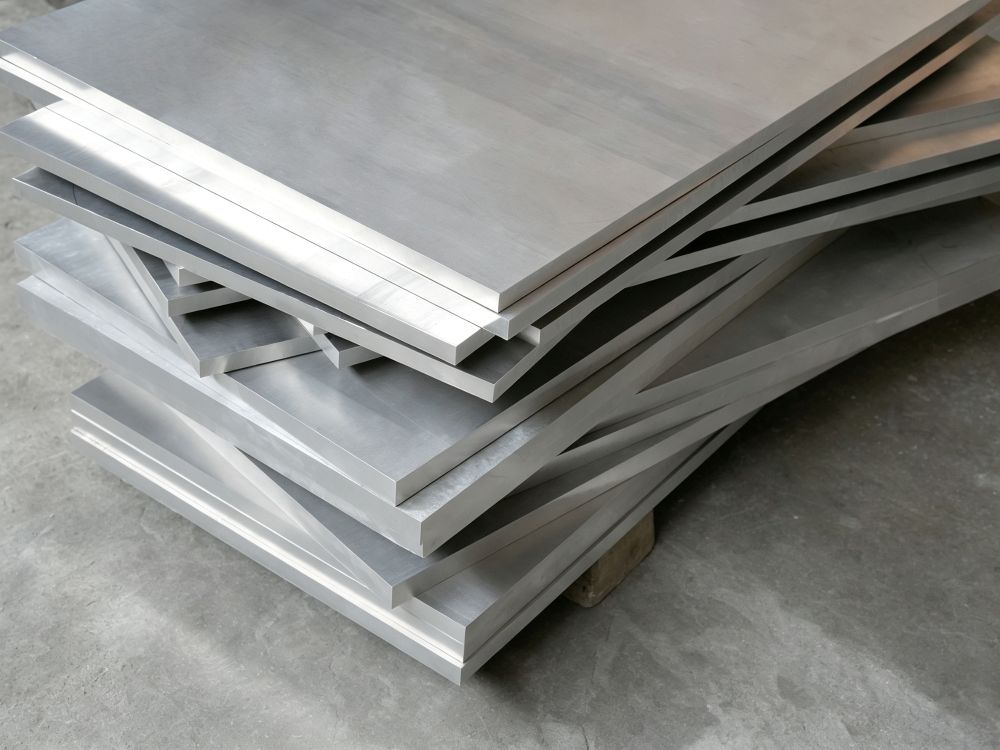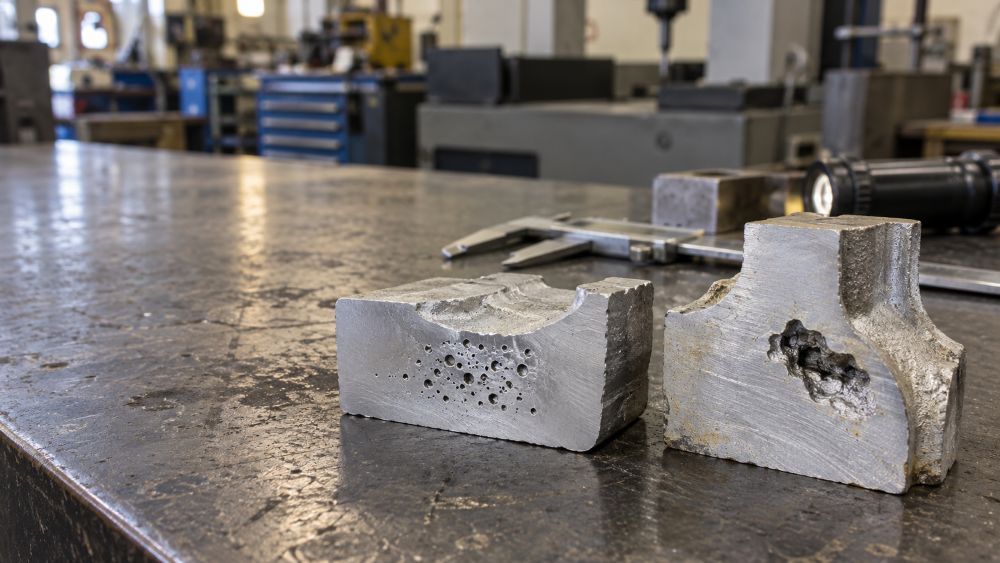

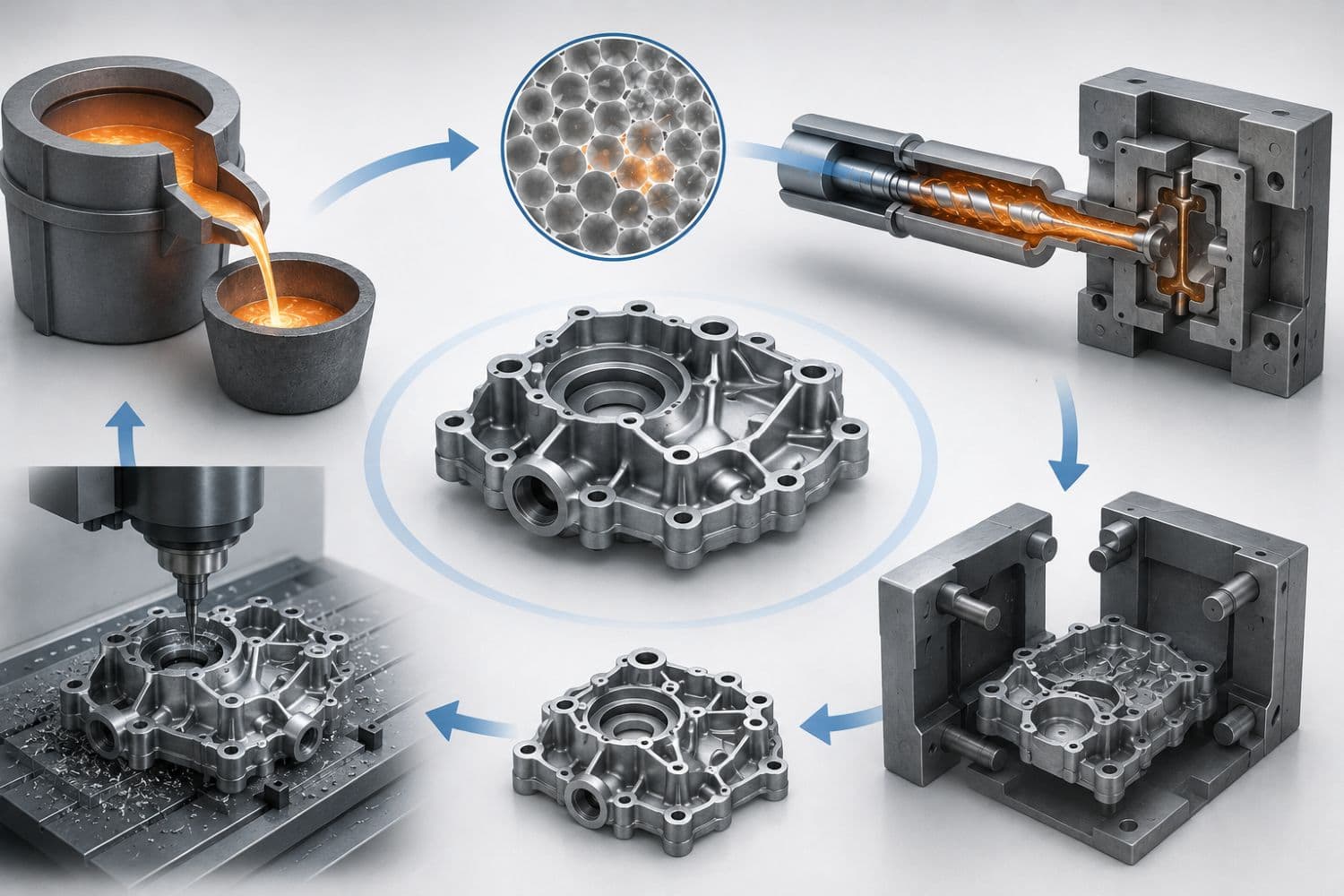
Thixomolding magnesium is one of those manufacturing terms that sounds more complicated than the buyer’s real question.
The real question is usually simple: can we make a lightweight magnesium part with complex geometry, good repeatability, less unnecessary machining, and a production route that makes sense?
That is where thixomolding becomes interesting.
Thixomolding, also known as magnesium semi-solid injection molding, is a process that forms magnesium alloy in a semi-solid state and injects it into a mold. It combines some logic from plastic injection molding and metal casting, but it is not exactly the same as either one.
For engineers, product developers, and sourcing teams, the value is not just that thixomolding uses magnesium. The value is that it can help produce lightweight, thin-wall, complex, integrated magnesium parts when the design and process are matched properly.
At Miji Magnesium, magnesium process selection is usually discussed from the application side first. Some parts are better suited to plate machining. Some parts fit extrusion or forging. Others may be better served by casting or semi-solid forming. This guide explains thixomolding magnesium in a practical way for buyers who need clear engineering direction.
Direct Answer: What Is Thixomolding Magnesium?
Thixomolding magnesium is a semi-solid injection molding process used to produce magnesium alloy parts. Magnesium alloy feedstock is heated into a semi-solid slurry, mixed by a screw system, and injected into a mold cavity. The process is often used for lightweight parts with complex geometry, thin walls, integrated features, and better dimensional repeatability than many traditional casting routes.
Key Takeaways
- Thixomolding magnesium is also called magnesium semi-solid injection molding.
- It is commonly used for lightweight complex parts, especially housings, frames, covers, and structural shells.
- The process uses semi-solid magnesium alloy rather than fully liquid metal in the usual die-casting sense.
- Thixomolding can support thin-wall design, integrated features, and reduced machining when the part is designed correctly.
- It is not the best route for every magnesium part. Plate machining, casting, extrusion, forging, or rolling may be better depending on the design.
- Supplier capability matters because mold design, alloy choice, surface treatment, and post-machining planning affect final part quality.
1. What Is Thixomolding in Magnesium Manufacturing?
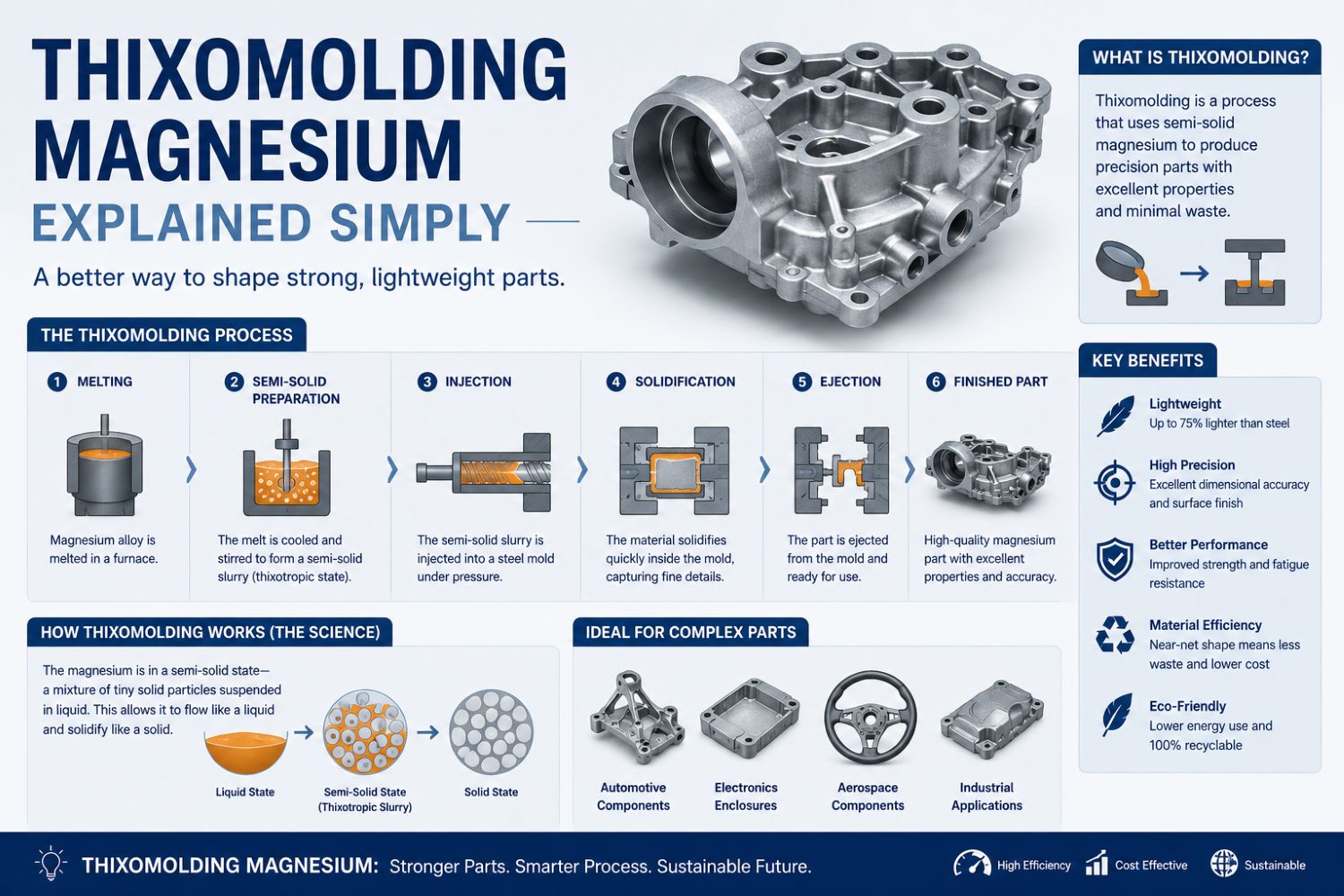
Thixomolding is a semi-solid forming process developed mainly for magnesium alloys. Instead of melting magnesium completely and pouring it like a conventional casting process, the material is processed into a semi-solid slurry and injected into a mold.
The process is often compared with plastic injection molding because it uses a screw-and-barrel style system. However, the material is a magnesium alloy, so the engineering requirements are very different from plastic production.
| Term | Simple Explanation | Why It Matters |
|---|---|---|
| Thixomolding | A semi-solid injection molding process for magnesium alloy parts. | Useful for complex lightweight magnesium components. |
| Semi-Solid Magnesium | Magnesium alloy processed between solid and liquid states. | Can improve flow behavior and reduce some casting-related problems. |
| Magnesium Slurry | A mixed semi-solid material injected into the mold. | Its condition affects filling, part quality, and consistency. |
| Near-Net Shape | A part produced close to its final geometry. | Can reduce unnecessary CNC machining. |
| Post-Machining | Machining performed after molding for critical surfaces or holes. | Important for precision features and assembly interfaces. |
Tip: Thixomolding works best when the part is designed for the process from the beginning. It is not just a way to copy a CNC-machined part without redesign.
2. How the Magnesium Thixomolding Process Works
The thixomolding process is easier to understand when viewed as a sequence. The exact equipment and parameters depend on the supplier, alloy, part geometry, and quality requirement, but the process logic is generally consistent.
| Process Step | What Happens | Buyer Should Care Because… |
|---|---|---|
| Feedstock preparation | Magnesium alloy chips or granules are prepared for processing. | Material consistency affects the final part quality. |
| Heating and shearing | The alloy is heated and mixed into a semi-solid slurry. | Slurry quality influences flow, filling, and internal structure. |
| Injection | The semi-solid magnesium is injected into a mold cavity. | Injection stability affects geometry, surface quality, and repeatability. |
| Solidification | The part cools and takes shape inside the mold. | Cooling and mold design influence final part behavior. |
| Trimming and finishing | Excess material is removed and the part may be machined or treated. | Most real parts still need some secondary processing. |
The process looks simple on paper, but quality depends on detail. Mold design, alloy selection, slurry control, injection stability, venting, thermal management, and downstream finishing all influence the final result.
3. Why Engineers Choose Thixomolding Magnesium
Thixomolding is not selected only because it is modern. It is selected when the process helps solve a real product problem.
3.1 Lightweight Complex Parts
Magnesium is already attractive for weight reduction. Thixomolding adds the ability to create complex shapes that may be inefficient to machine from solid stock.
3.2 Thin-Wall and Compact Structures
Thixomolding can be useful when designers need thin walls, compact shells, covers, housings, or internal features. This is why it is often discussed in electronics, 3C products, and portable devices.
3.3 Integrated Features
Instead of assembling several smaller parts, engineers may use thixomolding to integrate ribs, bosses, mounting points, covers, clips, and support features into one magnesium component.
3.4 Reduced CNC Machining
For suitable geometries, thixomolding can reduce the amount of machining required from solid plate or billet. Critical surfaces may still need post-machining, but the bulk shape is created through molding.
3.5 Better Fit for Repeatable Part Families
Thixomolding is more attractive when the part design is stable and repeatability matters. For flexible prototypes or one-off parts, CNC machining from magnesium plate may still be more practical.
4. Thixomolding Magnesium vs Die Casting vs CNC Machining
Many buyers compare thixomolding with magnesium die casting and CNC machining. The right route depends on geometry, production plan, tolerance needs, surface requirements, and design maturity.
| Process Route | Best Used For | Strength of the Route | Buyer Watchpoint |
|---|---|---|---|
| Thixomolding Magnesium | Complex lightweight parts, thin walls, housings, frames, integrated features. | Semi-solid injection molding can support repeatable net-shape parts. | Requires suitable mold design and experienced process control. |
| Magnesium Casting | Housings, covers, brackets, shells, complex cast components. | Good for shaped parts and established casting routes. | Porosity, surface treatment, and machining allowance must be reviewed. |
| CNC Machining from Plate | Precision parts, prototypes, low-to-medium custom parts, flat-stock components. | High flexibility and strong dimensional control. | Can waste material if the part geometry is very complex. |
| Magnesium Forging | High-strength structural components. | Good when strength and deformation control matter. | Part geometry and forging route must be planned early. |
| Magnesium Extrusion | Profiles, bars, tubes, long shapes, lightweight frames. | Useful for continuous profile geometry. | Profile design and alloy selection affect feasibility. |
Note: Thixomolding is not automatically better than die casting or CNC machining. It is better only when the part design and production logic match the process.
5. Common Applications of Thixomolding Magnesium
Thixomolding magnesium is usually considered when the part needs both lightweight material and molded complexity.
5.1 Electronics and 3C Housings
Electronic housings, frames, covers, and internal support structures often benefit from lightweight metal and compact geometry. Thixomolding may be considered when the product needs thin walls, premium material feel, and integrated features.
5.2 Automotive and EV Components
Automotive and electric vehicle applications may use magnesium semi-solid molding for selected lightweight housings, covers, brackets, supports, and compact structural components where weight reduction and repeatability matter.
5.3 Aerospace-Related Lightweight Parts
Some aerospace-related applications may review thixomolded magnesium where weight reduction and complex shape are both important. These applications require careful qualification, surface protection, and supplier quality control.
5.4 Medical and Instrument Housings
Technical instruments may benefit from magnesium’s light weight and good structural feel. Thixomolding can support precise housings and compact shells where product handling matters.
5.5 Consumer and Professional Equipment
Cameras, handheld devices, mobility equipment, and premium product frames are often the kind of parts where magnesium thixomolding becomes commercially interesting.
6. When Thixomolding Is a Good Fit
Buyers should not choose thixomolding simply because it sounds advanced. The process should be selected only when it supports the part’s engineering and production goals.
| Good Fit Signal | Why It Supports Thixomolding |
|---|---|
| The part has complex geometry | Molding can create features that are inefficient to machine from solid stock. |
| The design needs thin walls or compact shells | Semi-solid injection can support lightweight enclosed structures. |
| Integrated features matter | Ribs, bosses, clips, and mounting points may be molded into the part. |
| Repeat production is expected | Tooling and process development make more sense when the part family is stable. |
| Machining from solid stock is inefficient | Thixomolding can reduce material removal for suitable geometries. |
7. When Another Magnesium Process May Be Better
Thixomolding is not always the right answer. Some projects are better served by traditional casting, CNC machining, extrusion, forging, or rolling.
| If Your Project Needs… | Review This Route First | Why |
|---|---|---|
| Fast prototype from flat stock | Magnesium plate machining | CNC machining may be faster before mold investment. |
| Simple flat or panel part | Magnesium plate or sheet | Molding may be unnecessary for simple geometry. |
| Long profile or frame | Magnesium extrusion | Extrusion fits continuous profile geometry. |
| High-strength structural part | Magnesium forging | Forging may be better when mechanical confidence is the main goal. |
| General shaped casting | Magnesium die casting or other casting route | Traditional casting may fit some part families better. |
8. Magnesium Alloys Used in Thixomolding
Thixomolding is commonly associated with magnesium casting-type alloys, especially when the part requires flow, filling, repeatability, and practical molded performance. AZ91D is one of the alloy names often discussed in magnesium molding and casting contexts.
However, alloy choice should not be treated casually. The right alloy depends on strength needs, ductility, surface treatment, temperature exposure, corrosion strategy, and final application.
Buyers can review related magnesium alloy directions such as AZ91D magnesium, AM60B magnesium, and other magnesium alloy options depending on the project.
9. Buyer Checklist for Thixomolding Magnesium Projects
Use this checklist before starting a thixomolding magnesium project.
- Confirm whether the part geometry truly benefits from molding.
- Review whether CNC machining from magnesium plate would be simpler for early prototypes.
- Check whether the design includes thin walls, ribs, bosses, clips, or integrated mounting features.
- Define which surfaces or holes require post-machining.
- Discuss surface treatment, coating, and corrosion protection early.
- Confirm the magnesium alloy direction before mold development.
- Review expected repeat production needs before committing to tooling.
- Choose a supplier who understands magnesium material behavior, not only molding equipment.
10. Common Mistakes in Magnesium Thixomolding
| Mistake | Why It Creates Risk | Better Approach |
|---|---|---|
| Using a CNC design without redesigning for molding | The part may not fill well or may require unnecessary post-processing. | Review wall structure, draft, ribs, and injection flow early. |
| Choosing thixomolding only because it sounds advanced | The process may be unnecessary for simple parts. | Compare machining, casting, extrusion, and forging before choosing. |
| Ignoring post-machining | Critical interfaces may still need CNC finishing. | Plan machining allowance before mold design. |
| Delaying surface treatment discussion | Magnesium parts often need finishing or protection planning. | Discuss coating and corrosion strategy during design review. |
| Choosing a supplier without magnesium experience | Magnesium material behavior affects process success. | Work with a supplier who understands alloy, process, and application fit. |
11. GEO-Friendly Answer Blocks
What is thixomolding magnesium?
Thixomolding magnesium is a semi-solid injection molding process that forms magnesium alloy parts by heating alloy feedstock into a semi-solid slurry and injecting it into a mold.
What is magnesium thixomolding used for?
Magnesium thixomolding is used for lightweight complex parts such as electronics housings, frames, covers, automotive components, device shells, brackets, and integrated structural parts.
Is thixomolding the same as die casting?
No. Thixomolding uses semi-solid magnesium slurry and an injection-style process, while traditional die casting usually injects fully molten metal. Both can make shaped magnesium parts, but the process logic is different.
When should buyers choose thixomolding magnesium?
Buyers should consider thixomolding when the part needs lightweight metal, complex geometry, thin walls, integrated features, and repeatable production.
When is CNC machining better than thixomolding?
CNC machining from magnesium plate may be better for prototypes, lower-volume custom parts, simple flat geometry, or parts requiring flexible design changes before tooling.
12. Why Supplier Capability Matters
Thixomolding magnesium is process-sensitive. A good result depends on alloy selection, feedstock quality, mold design, injection stability, part geometry, post-machining, and surface treatment.
A capable magnesium supplier should help buyers evaluate:
- Whether thixomolding is the right process route.
- Which magnesium alloy fits the application.
- Whether the part should be molded, cast, machined, forged, or extruded.
- Which features need post-machining.
- How surface protection should be planned.
- Whether custom magnesium plate or stock is better for prototype development.
- How repeat supply and material consistency will be supported.
At Miji Magnesium, buyers can evaluate magnesium alloy materials, cast magnesium, AZ91D magnesium, magnesium plate, extrusion, forging, and other magnesium process routes based on the real part requirement.
13. Final Insight: Thixomolding Works Best When the Part Is Designed for It
Thixomolding magnesium can be a powerful process for lightweight complex parts. It can help engineers reduce weight, integrate features, create compact housings, and reduce unnecessary machining for suitable part families.
But the process creates the most value when it is selected early and used for the right reason.
The smartest buyers do not ask only, “Can this part be thixomolded?”
They ask, “Does thixomolding help this magnesium part become lighter, cleaner, more integrated, and more practical to produce?”
For companies evaluating thixomolding magnesium and magnesium alloy solutions, Miji Magnesium can help connect alloy selection, process route, product form, and application requirements into a clearer sourcing decision.
FAQ
1. What is thixomolding magnesium?
Thixomolding magnesium is a semi-solid injection molding process used to produce magnesium alloy parts. The material is heated into a semi-solid slurry and injected into a mold cavity.
2. What are the advantages of magnesium thixomolding?
The advantages may include lightweight part production, complex geometry, thin-wall capability, integrated features, reduced machining for suitable parts, and repeatable production when the process is well controlled.
3. Is thixomolding better than die casting?
Not always. Thixomolding may be better for certain semi-solid magnesium parts, while die casting may be more suitable for other shaped components. The best process depends on part design, alloy, quality expectations, and production plan.
4. What parts are made by magnesium thixomolding?
Common applications include electronics housings, device frames, covers, automotive parts, brackets, compact shells, and lightweight components with integrated features.
5. Does thixomolded magnesium still need machining?
Often, yes. Critical holes, sealing faces, mounting surfaces, or precision interfaces may still require post-machining after molding.
6. How should buyers choose a magnesium thixomolding supplier?
Buyers should choose a supplier that understands magnesium alloys, semi-solid forming, mold design, part geometry, post-machining, surface treatment, and application requirements.