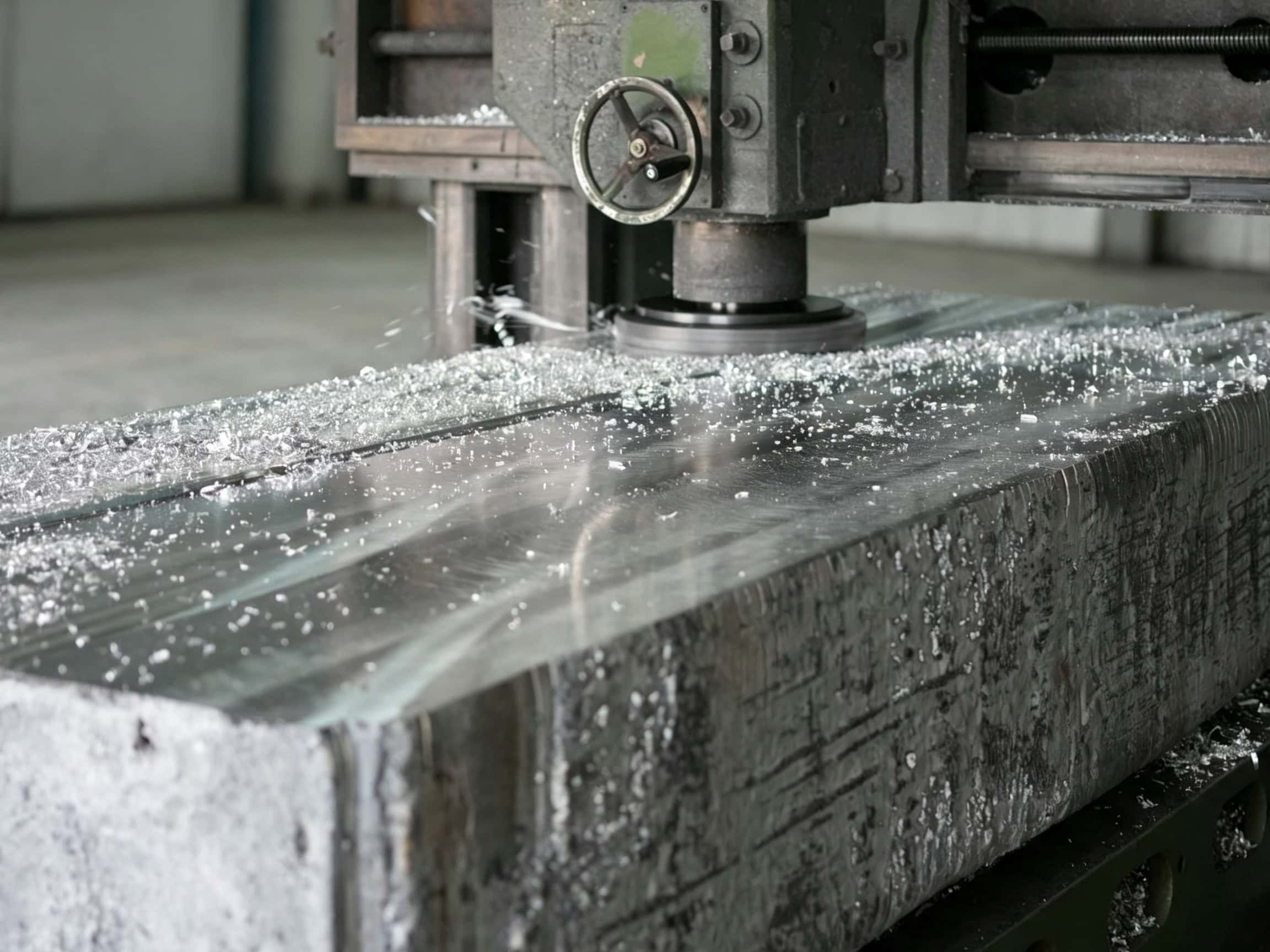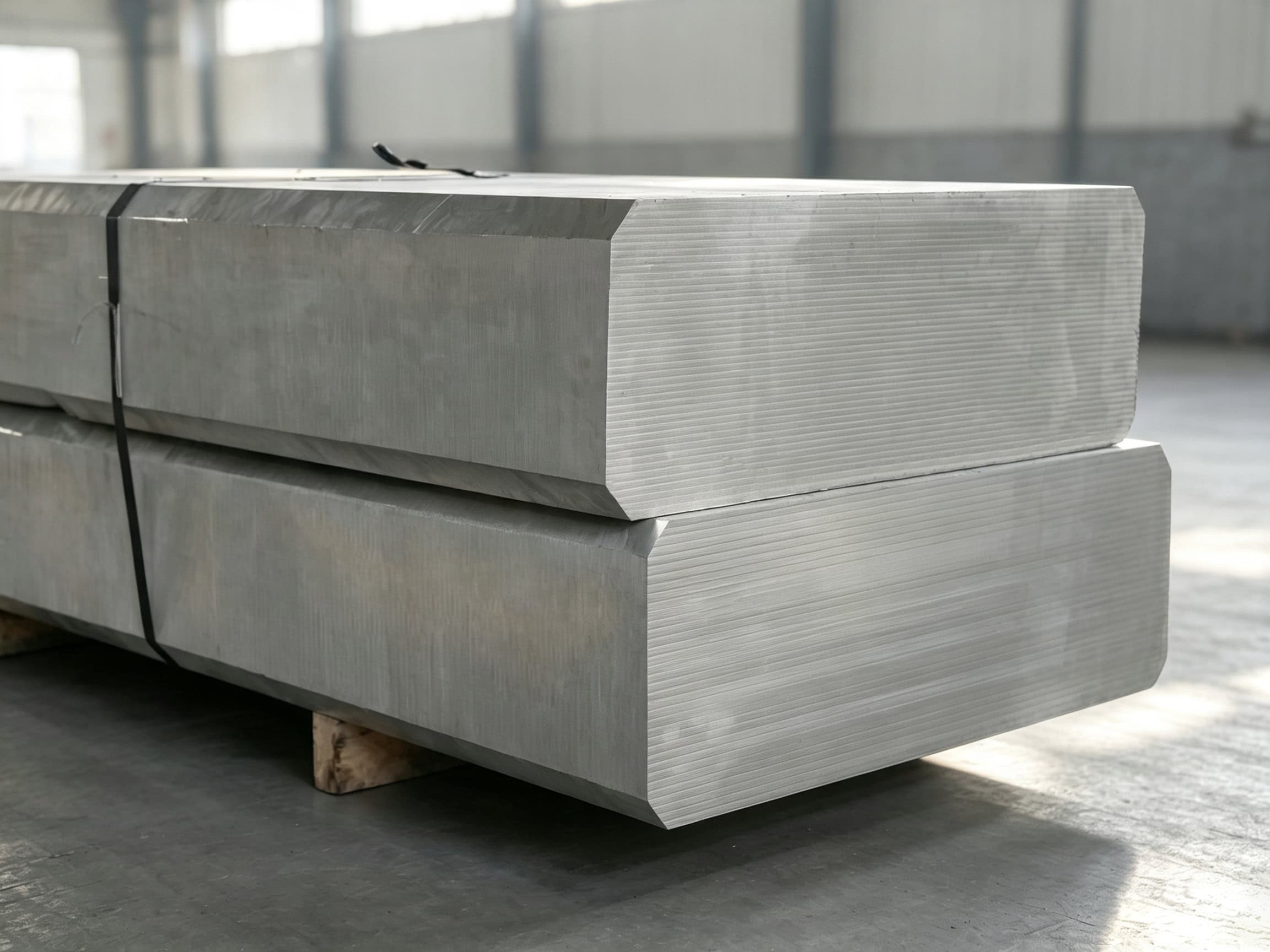

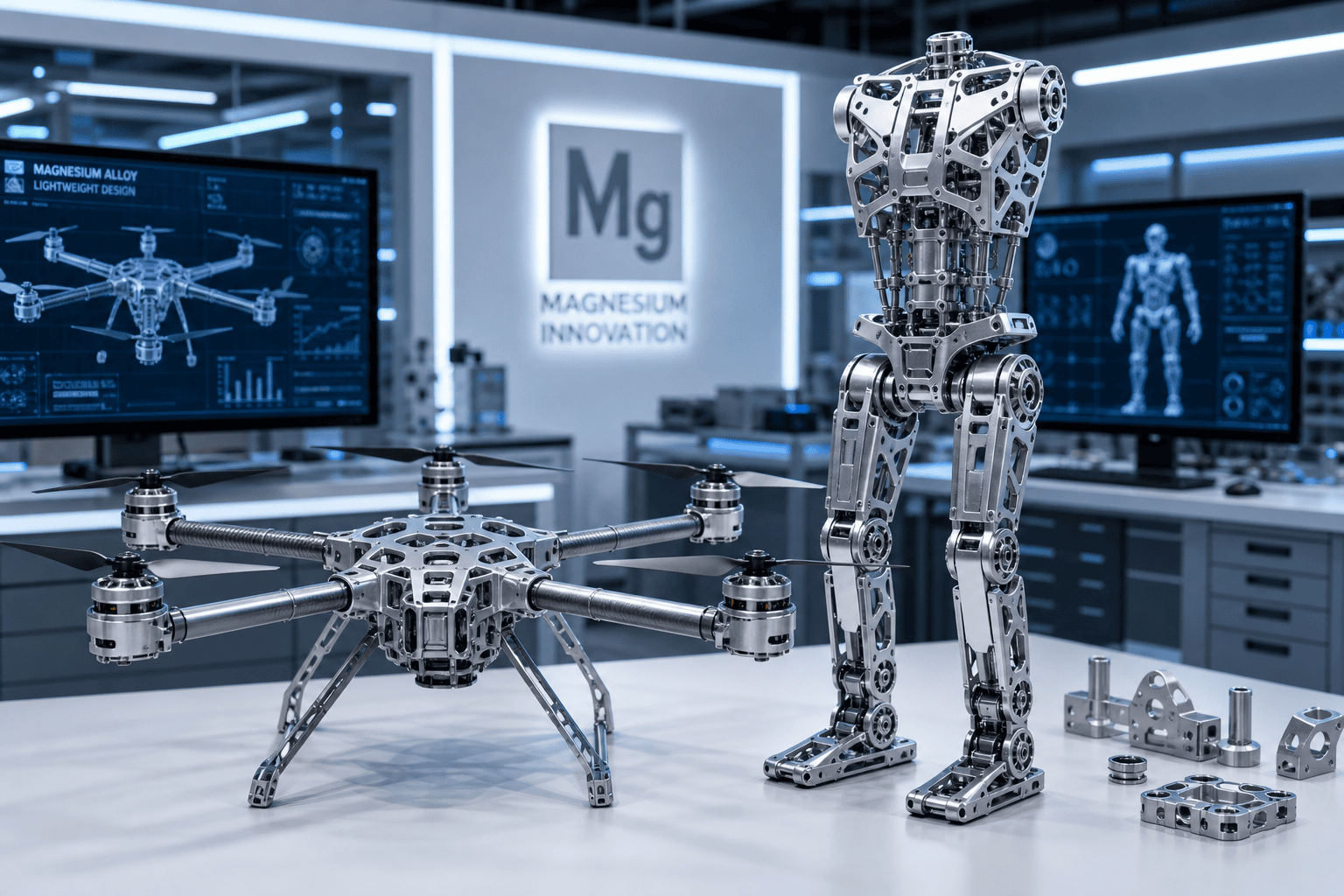
In the rapidly advancing frontiers of unmanned aerial vehicles (UAVs / drones) and humanoid robotics, structural weight and high-frequency vibration are the two ultimate engineering bottlenecks. Every gram shaved off a commercial delivery drone extends flight range and battery life, while every millijoule of vibrational shock absorbed in a bipedal robot’s motor-driven joints directly preserves sensor accuracy and dynamic balance. Magnesium alloys—standing as the lightest structural metal on Earth with a density of just 1.78 g/cm³—are fundamentally revolutionizing aerospace airframes and autonomous robotic skeletons.
1. Why Magnesium Outperforms Aluminum and Carbon Fiber in Autonomous Systems
While 6061/7075 aluminum alloys and carbon fiber reinforced polymers (CFRP) have traditionally dominated drone and robotics airframes, magnesium alloys provide a unique trifecta of physical and mechanical advantages that composites and heavier metals cannot match:
| Engineering Property | AZ31B / ZK60 Magnesium | 6061-T6 Aluminum | CFRP (Carbon Fiber) | Titanium (Ti-6Al-4V) |
|---|---|---|---|---|
| Density (g/cm³) | 1.78 – 1.83 (Lightest) | 2.70 (36% heavier) | 1.55 – 1.60 | 4.43 (145% heavier) |
| Specific Yield Strength (kN·m/kg) | 125 – 165 | 102 | 300 – 450 (Directional) | 198 |
| Specific Damping Capacity (SDC) | Up to 60% (10× vs Aluminum) | < 5% (Poor Damping) | Moderate (Viscoelastic) | < 2% |
| Electromagnetic Shielding (EMI) | > 60 – 80 dB (Inherent) | > 60 dB | Poor (Requires metallic mesh) | > 60 dB |
| Thermal Conductivity (W/m·K) | 75 – 125 (Excellent heat dissipation) | 167 | 5 – 10 (Thermal Insulator) | 6.7 (Severe heat trap) |
| Recyclability & Machinability | 100% Recyclable / Ultra-high speeds | 100% Recyclable | Difficult to recycle / Delaminates | Difficult to machine |
2. UAV Drone Applications: Extending Range and Stabilizing Optical Payloads
In multi-rotor and eVTOL (electric vertical takeoff and landing) platforms, payload capacity and hovering endurance are governed by strict power-to-weight ratios. Magnesium alloys serve vital structural roles across the airframe:
- High-Damping Motor Mounts & Arms: High-KV brushless motors generate high-frequency micro-vibrations that propagate through rigid carbon fiber arms, introducing noise into flight-controller IMUs (gyroscopes/accelerometers) and causing optical camera jitter. Magnesium’s internal dislocation friction absorbs vibrational kinetic energy within milliseconds, drastically improving video stabilization and flight stability.
- Avionics Enclosures & Heat Sinks: High-definition video transmission transmitters and edge-AI compute units generate concentrated heat. Unlike plastic or carbon fiber housings, magnesium enclosures act simultaneously as structural shells, natural EMI/RFI shielding Faraday cages (>60dB), and high-efficiency thermal heat sinks.
- Landing Gear & Quick-Release Hubs: Extruded seamless magnesium tubes provide exceptional impact absorption and torsional stiffness during hard landings without catastrophic shattering.
3. Humanoid Robotics: Dynamic Agility in Bipedal Skeletons & Articulated Linkages
Modern bipedal humanoid robots face severe inertial penalties. Actuator motors located at distal extremities (such as knee joints, ankles, and wrist linkages) multiply rotational inertia ($I = m \cdot r^2$). Replacing standard aluminum brackets with high-strength ZK60 or AZ80A magnesium alloys directly lowers joint inertia, allowing robotic actuators to achieve faster acceleration cycles with lower peak current draw.
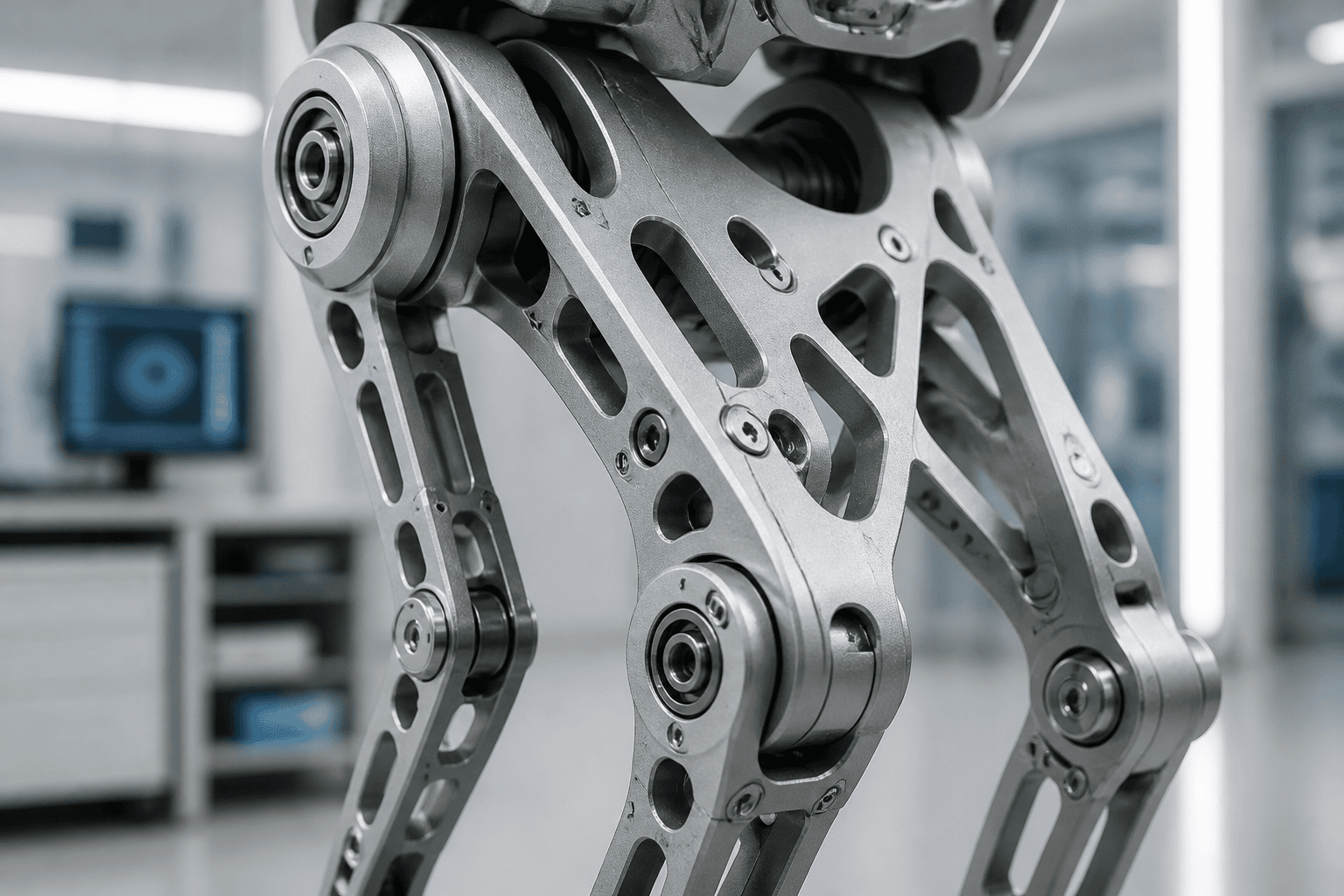
- Harmonic Drive & Cycloidal Gearbox Housings: High power-density robotic actuators require rigid, lightweight casing materials to maintain gear concentricity under high torque shock loads without thermal distortion.
- Bipedal Thigh & Shin Structural Beams: Complex hollowed-out geometry machined via 5-axis precision CNC machining yields exceptional bending stiffness and resistance to cyclic walking impacts.
- Torso Frame & Battery Compartment Modules: Extruded structural profiles conforming to ASTM B107 provide protective crash barriers around high-capacity lithium battery packs while keeping the robot’s center of gravity agile and controllable.
4. Recommended Alloy Grades & Heat Treatments for Robotics & Drones
- AZ31B-H24 / AZ31B-O: The premier choice for sheet metal stamped covers, drone battery trays, and thin-walled extruded tubes where lightweighting and deep formability take precedence.
- ZK60A-T5: High-yield-strength alloy ($R_{p0.2} \ge 280\text{ MPa}$) with fine zirconium grain refinement, ideal for high-stress robotic articulated arm linkages, landing struts, and motor brackets subject to severe dynamic fatigue.
- AZ80A-T6: Heavy-duty forging and extrusion grade with superior mechanical stability, chosen for high-torque robotic gearbox mounts and structural bulkheads.
- WE43-T6 (Rare Earth Alloy): Creep-resistant up to 300°C with inherent ignition resistance, specified for high-performance military UAV turbine generator compartments and aerospace-grade drone frames.
5. Surface Finishing: Micro-Arc Oxidation (MAO) & Galvanic Isolation
To ensure robust corrosion protection in outdoor drone missions and humid operational environments, Miji Magnesium implements comprehensive multi-layer surface protection protocols:
- Micro-Arc Oxidation (MAO / PEO): Converts the magnesium surface into a dense, crystalline ceramic coating ($10-25\mu\text{m}$ thickness, hardness $800-1200\text{ HV}$), providing over 500 hours of neutral salt spray (ASTM B117) corrosion resistance and total electrical insulation.
- Galvanic Corrosion Isolation: In multi-material assemblies connecting magnesium frames to carbon fiber tubes or stainless steel fasteners, we apply Dacromet/Geomet coated fasteners and non-conductive polymer or fiberglass isolation gaskets to eliminate galvanic coupling.
6. Partner with Miji Magnesium for Autonomous Systems Prototyping
Miji Magnesium is an ISO 9001 certified Chinese manufacturer delivering turnkey lightweight solutions—from ASTM B90/B107 raw alloy plates, rods, and custom extrusion tooling to 5-axis precision CNC machined drone and robotic components. Every batch is supported by accredited EN 10204 3.1 MTC certificates, OES chemical assays, and complete CMM 3D dimensional reports.