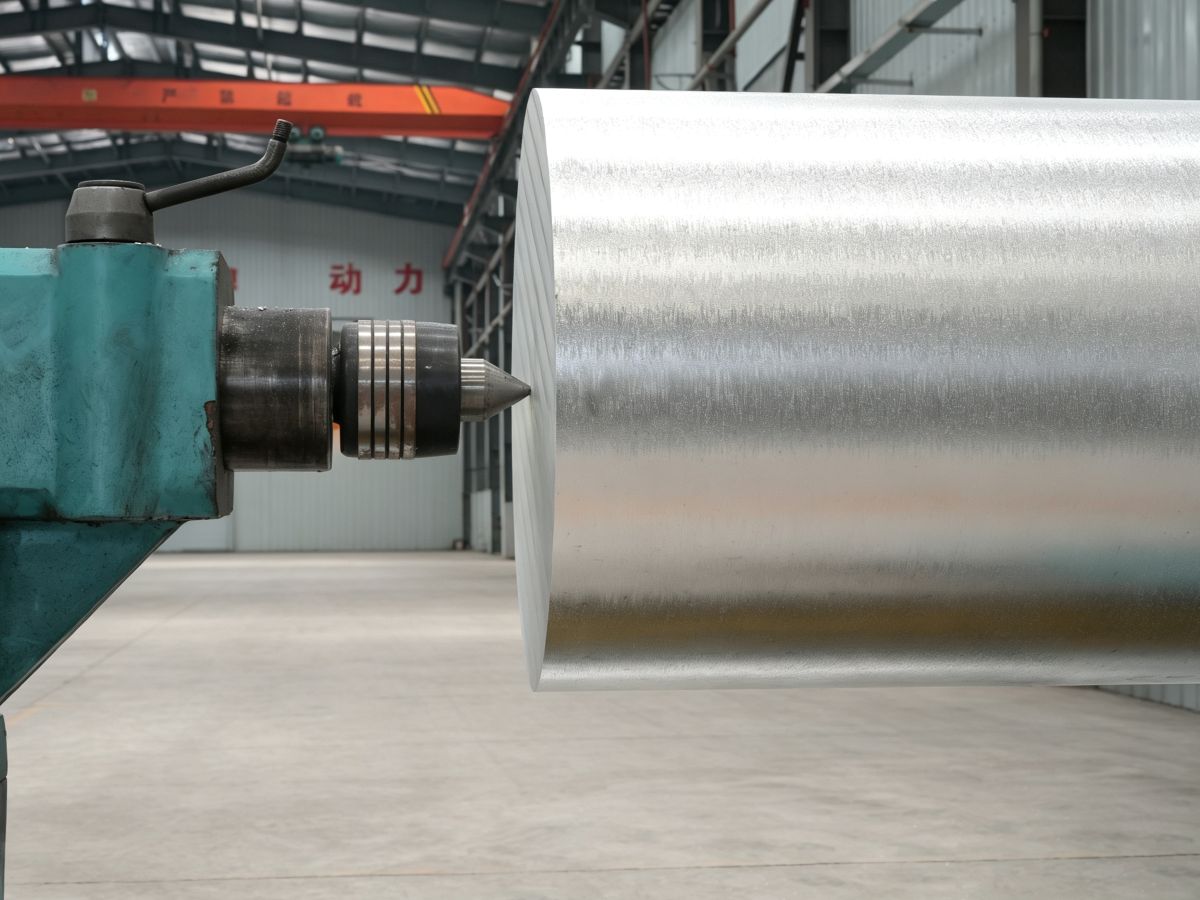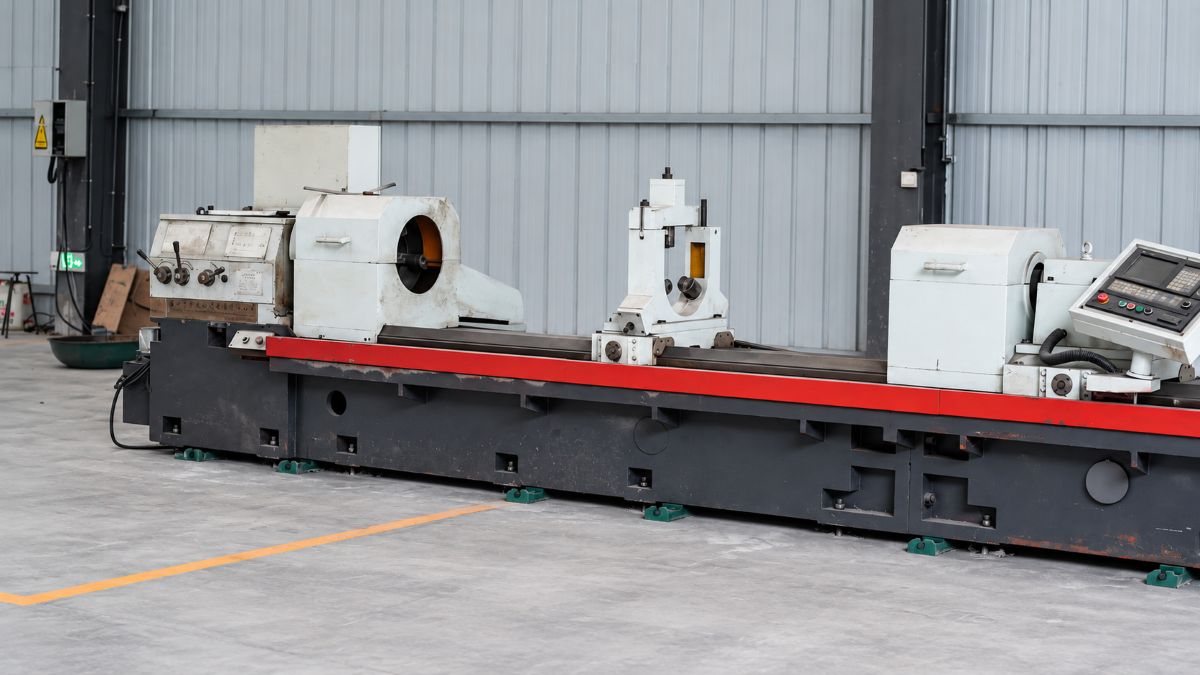

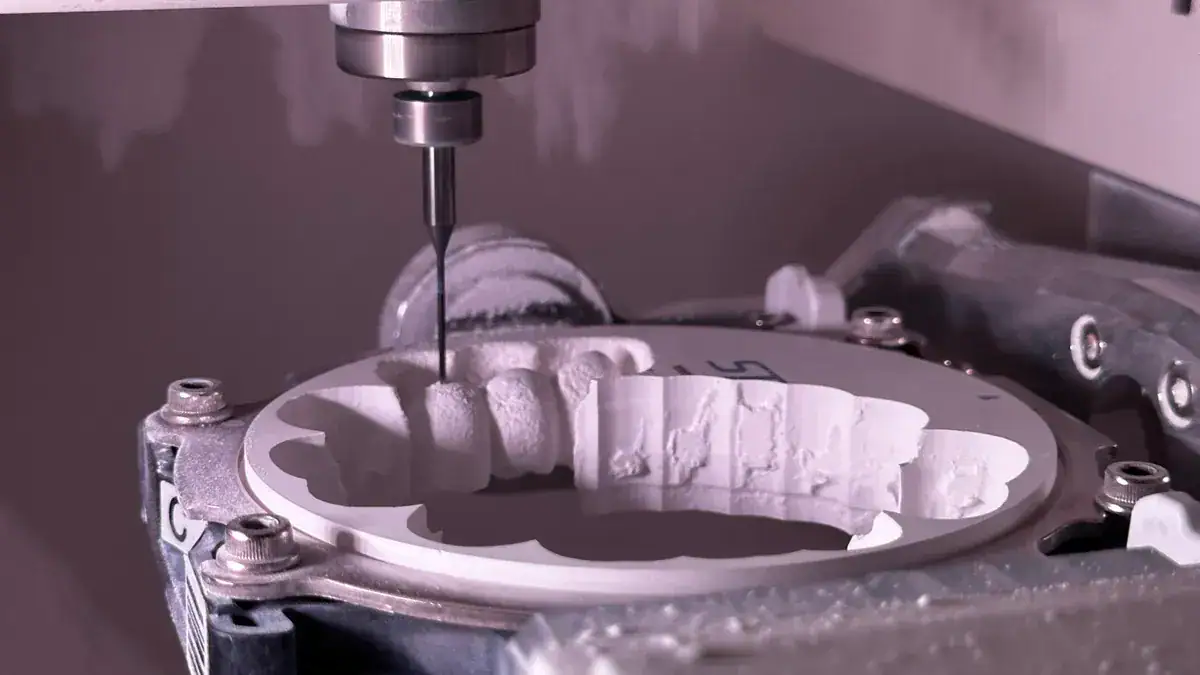
You see precision CNC machining as a way to shape materials very accurately. Computer numerical control machining uses special software and hardware to control each step. In 2026, cnc precision machining gives you parts that are high-quality and almost perfect. Computer-controlled machining helps you get the same results every time. It also makes things faster and improves quality. Factories use robots to make products quickly and safely. You can trust computer numerical control to give you precision machining that follows strict rules. When you need solutions that are reliable and high-quality, precision machining is the best choice.
Key Takeaways
- Precision CNC machining makes parts that are very exact. The parts look almost perfect and are the same each time.
- CAD and CAM software help make designing and machining easier. They cut down on mistakes and save time.
- Automation and AI make CNC machining better. They help machines work well and improve quality. Machines can run with little help from people.
- CNC machining can use many materials and make hard shapes. This is good for fields like aerospace and medical.
- CNC machining uses green ideas like recycling and saving energy. These steps help make manufacturing better for the planet.
Precision CNC Machining Overview
What Is Precision CNC Machining
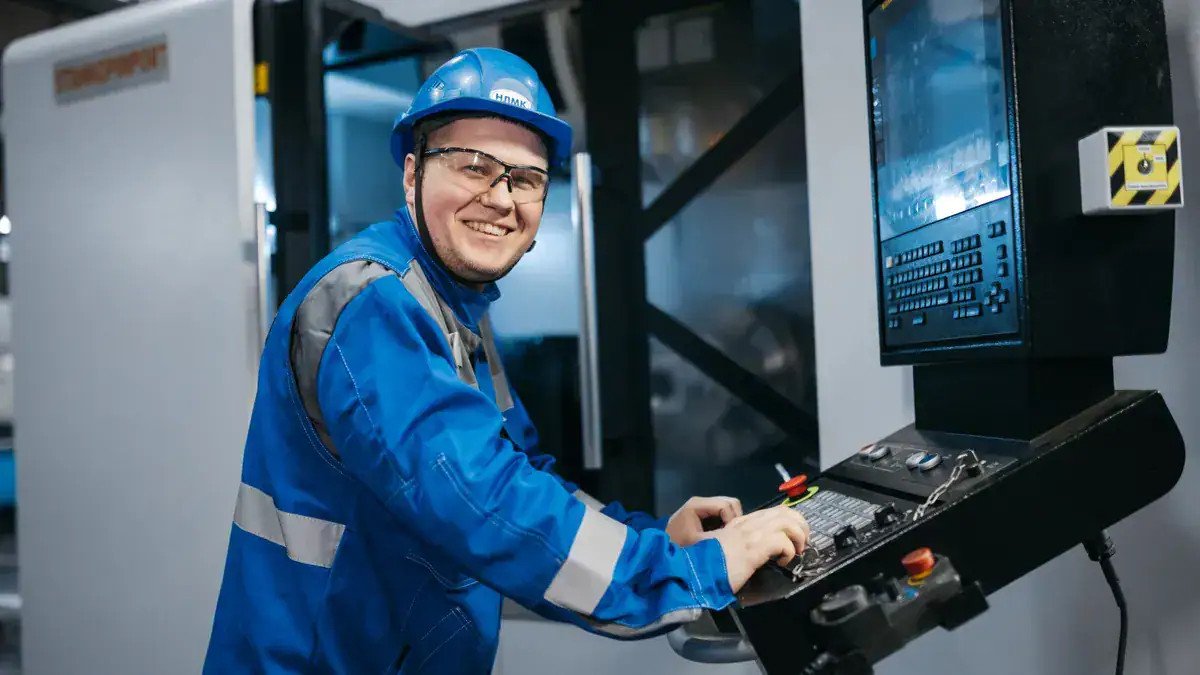
Precision CNC machining helps you make parts with exact sizes. Computers control the machines during this process. You can create parts that are very close to the right size, even as small as 0.025mm. This is much more accurate than older ways of making things. CNC machining lets you make the same part over and over. Each part will look just like the design.
| Principle | CNC Machining | Traditional Machining |
|---|---|---|
| Repetition | Makes parts with the same accuracy each time | Accuracy changes because people do the work |
| Precision | Can reach very tiny measurements | Not as exact because people make mistakes |
| Complexity | Can make hard shapes | Can only make simple shapes |
CNC precision machining lets you build shapes that are too hard to make by hand. You can count on this method for great results.
Key Features and Benefits
There are many good things about CNC precision machining. Here are some top features:
- You get high accuracy and every part is the same.
- You waste less material and save money.
- You can make hard shapes with small errors.
- You can use many materials like metal or plastic.
- You can make just one part or a lot of parts.
CNC machining also helps you make fewer mistakes. Machines follow computer instructions, so you get better parts. This means your products last longer and work better.
Importance of Precision in 2026
In 2026, many jobs need very exact parts. Places like airplane and medical companies need parts that fit perfectly for safety. More people want these high-quality parts every year. New tools like AI and digital twins help you get even more exact. These tools let machines work all day and night with little help from people. This way, you can make sure your parts are always good and keep up with what people need.
Tip: If you use CNC precision machining, you can stay ahead in jobs that need the best parts.
Precision Machining Process Steps
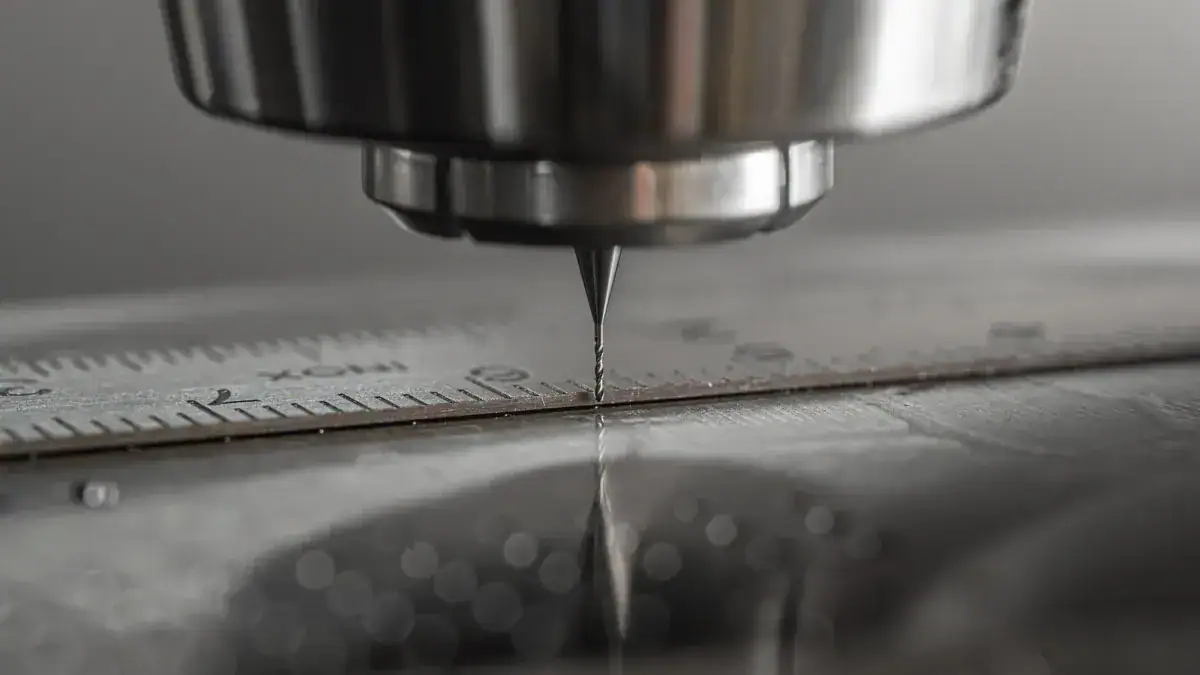
CAD Design and Digital Instructions
You begin with a digital design for your part. You use CAD software to make a 3D model. This model is like a plan for cnc precision machining. CAD software gives you some big benefits:
- You can look at your part from all sides before making it.
- The software lets you set exact sizes for each part.
- You can fix mistakes in your design fast.
- The digital model is easy to send to the cnc machine.
CAD software works with CAM tools. This helps you go from design to machining faster. It also means you make fewer mistakes. The software checks your work and helps you avoid errors.
CAM Programming and Simulation
When your design is done, you use CAM programming. CAM turns your model into instructions for the cnc machine. The software reads your 3D model and makes a plan. You do not have to write every step yourself. The software makes the code for the machine.
CAM programming lets you test the process before cutting anything. You can watch a pretend version of the process. You see how the tools will move. This helps you find problems early. You can fix tool paths and stop crashes. You make sure the process is safe and works well. Simulation helps you get great results from cnc milling machines and other tools.
- CAM changes your 3D model into machine steps.
- The software makes G&M codes for tool moves.
- Simulation finds mistakes and helps you be more exact.
Machine Setup and Calibration
You must set up and check your cnc machine before cutting. This step makes sure the machine follows the digital plan. You use different ways to check and adjust the machine:
| Method | Best for | Limits | Machine complexity fit | Traceability value |
|---|---|---|---|---|
| Manual leveling and dial-gauge checks | Basic setup, simple checks, spindle checks, easy faults | Not good for full error checks | Best for simple machines and first checks | Low to moderate |
| Test cuts | Real cutting test, surface finish and size check | Does not show the main problem by itself | Good for all machines as a last check | Moderate if written down |
| Ballbar | Checks axis moves and round shapes | Not as good as direct checks | Good for checking servo and motion | Moderate |
| Laser interferometer | Checks position, straightness, angle, and more | Takes more time and needs a specialist | Best for very exact machines and hard fixes | High |
| Volumetric compensation | Checks 3D errors on many-axis machines | Harder to do, not always needed | Best for 5-axis and very exact work | High |
You pick the best way based on your machine and how exact you need to be. Careful setup helps you stop mistakes and keeps your cnc machining working well.
Material Removal and Close Tolerance Finishes
Now you start the main machining step. The cnc machine cuts away material from a block to make your part. You use tools like cutters and drills to shape it. The machine follows the digital plan for every cut.
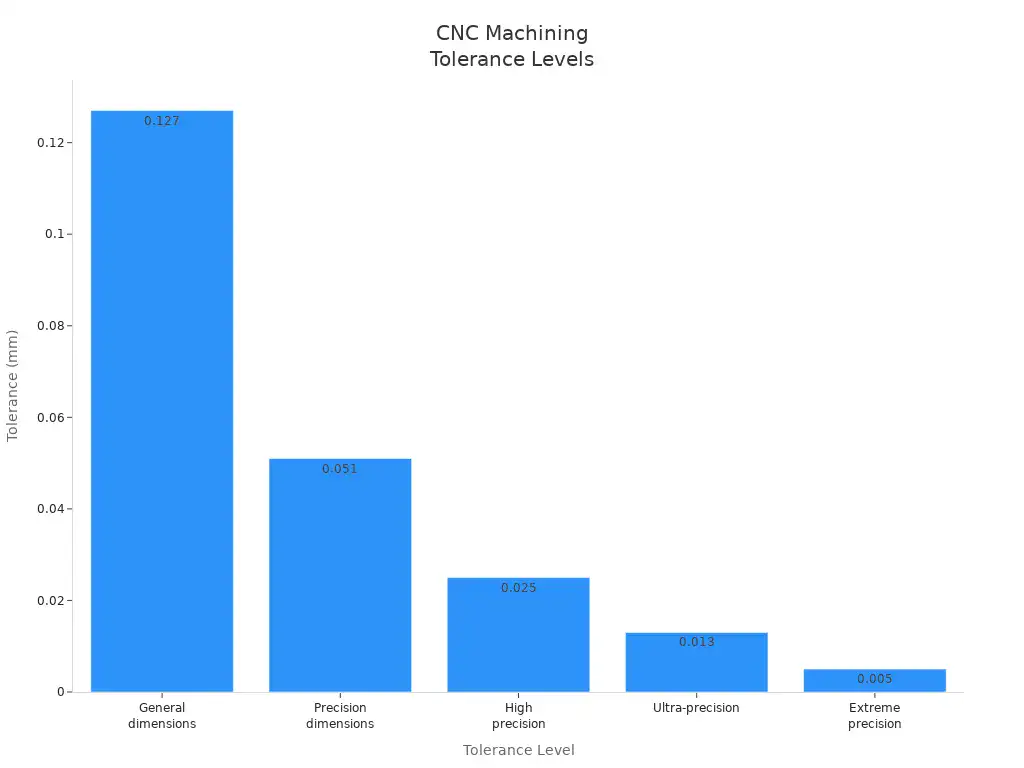
How exact you can be depends on the process and the material. Here is a table that shows the usual tolerances you can get with cnc precision machining:
| Tolerance Level | Achievable Tolerance | Required Conditions |
|---|---|---|
| General dimensions | ±0.005″ / ±0.127mm | Standard 3-axis machining, regular tools, normal checks |
| Precision dimensions | ±0.002″ / ±0.051mm | Watch temperature, check tools, use good instruments |
| High precision | ±0.001″ / ±0.025mm | Control climate, use special tools, check with CMM |
| Ultra-precision | ±0.0005″ / ±0.013mm | Use special machines, control temperature, plan the process well |
| Extreme precision | ±0.0002″ / ±0.005mm | Use special machines and measuring tools |
You also need to think about the material you use. Hard metals like stainless steel can wear out tools and change the size. Soft plastics can bend when you cut them, so you lose accuracy. Some metals get bigger when hot, so you must control the heat. Each material needs a special way to get the best results.
Post-Processing and Quality Control
After machining, you check your part to see if it is good. This step is called post-processing and quality control. You use different ways to check your precision machined parts:
| Inspection Type | Purpose | Timing | Common Methods |
|---|---|---|---|
| In-Process | Stop mistakes early | While machining | Calipers, micrometers, portable CMMs |
| Final | Make sure everything is right | After all machining | Large CMMs, laser scanners |
| NDT | Check inside the part | After machining, before finishing | Ultrasonic, dye test, magnetic test |
- Coordinate Measuring Machines (CMMs) help you measure hard shapes very exactly.
- Non-Destructive Testing (NDT) checks inside your part without breaking it.
Modern cnc machining uses probes to check parts during the process. You can fix problems right away if you find them. This helps you keep quality high and waste less.
Tip: Careful checks at every step help you make precision machined parts that meet strict rules.
You follow these steps every time you do precision machining. Each step builds on the last one to give you good, high-quality parts. When you use cnc precision machining, you get the accuracy, speed, and sameness you need for advanced manufacturing.
CNC Machining Technologies and Tools
Types of CNC Machines
There are many cnc machines you can pick for your work. Each one is made for a special job in cnc precision machining. The table below shows the main types and what they do:
| CNC Machine Type | Applications |
|---|---|
| CNC Milling Machines | Ideal for producing parts with intricate geometries, such as engine components or medical devices. |
| CNC Lathes and Turning Machines | Used for creating cylindrical parts like shafts and screws, suitable for automotive and aerospace. |
| CNC Swiss Lathes | Specialized for small, complex parts in medical and electronics industries. |
| CNC Drilling Machines | Create holes with precision, used for various drilling tasks. |
| Electric Discharge Machine (EDM) | Ideal for machining hard metals and producing intricate internal features. |
| CNC Plasma Cutting Machines | Employed in shipbuilding, automotive, and construction for cutting thick metal sheets. |
| CNC Precision Grinding Machines | Used for achieving tight tolerances and high surface finishes in automotive and aerospace parts. |
| Multi-Axis CNC Machining | Suitable for advanced applications requiring highly complex geometries in aerospace and automotive. |
Each machine helps you get different results. Some are best for tiny details. Others are good for strong metals or big shapes.
CNC Milling and Other Processes
CNC machining lets you shape parts in many ways. Here are the main processes:
- Milling uses spinning tools to cut and make shapes.
- Turning spins the part while a tool shapes it, great for round things.
- Drilling and reaming make holes that are very exact.
5-axis cnc machining helps you make parts with many sides and angles. This method gives you high precision and makes sure each part is the same. CNC precision machining helps many industries get the quality they need.
Cutting Tools and Tooling Systems
You need the right tools to get good results in precision machining. In 2026, you can use strong tool materials like ultra-fine carbide, ceramics, and synthetic diamonds. These tools last longer and cut better than old ones. Tool coatings help tools stay sharp and work faster. Smart toolholders have sensors to check pressure and shaking. They can connect to the internet and show you data right away. Modular workholding systems let you change setups fast. This means you can finish more jobs quickly and keep your work good.
Tip: Smart tooling systems can tell you when to change tools. This keeps your cnc machining working well and stops waste.
Automation and AI in CNC Precision Machining
Automation and artificial intelligence help cnc precision machining get better. AI helps you pick the best speeds and feeds for each material. Machine learning can guess when a tool will wear out, so you can fix it before it breaks. Sensors collect data and help the machine make smart choices. Computer vision checks each part for mistakes and measures sizes. This makes sure every part is the same.
These new tools make machining faster, safer, and more exact. Automation lets machines work all day with little help from people. AI helps you keep your parts high-quality and very precise.
You now know that precision CNC machining helps make things better. This process gives you very exact parts for many uses. In 2026, CNC machining is trusted for good quality and new ideas in important jobs and industries.
- You get strong and safe parts for medical, airplane, and car uses.
- You see new designs with hard shapes and lighter weight in new products.
- You work in safer places and finish products faster in all jobs.
- You spend less money and work better in your projects.
- You use green ways to help the planet and make things last.
- You keep up by learning about AI, robots, and new ways to use CNC.
Find out how CNC machining can help your next project and give you more choices in advanced work.