
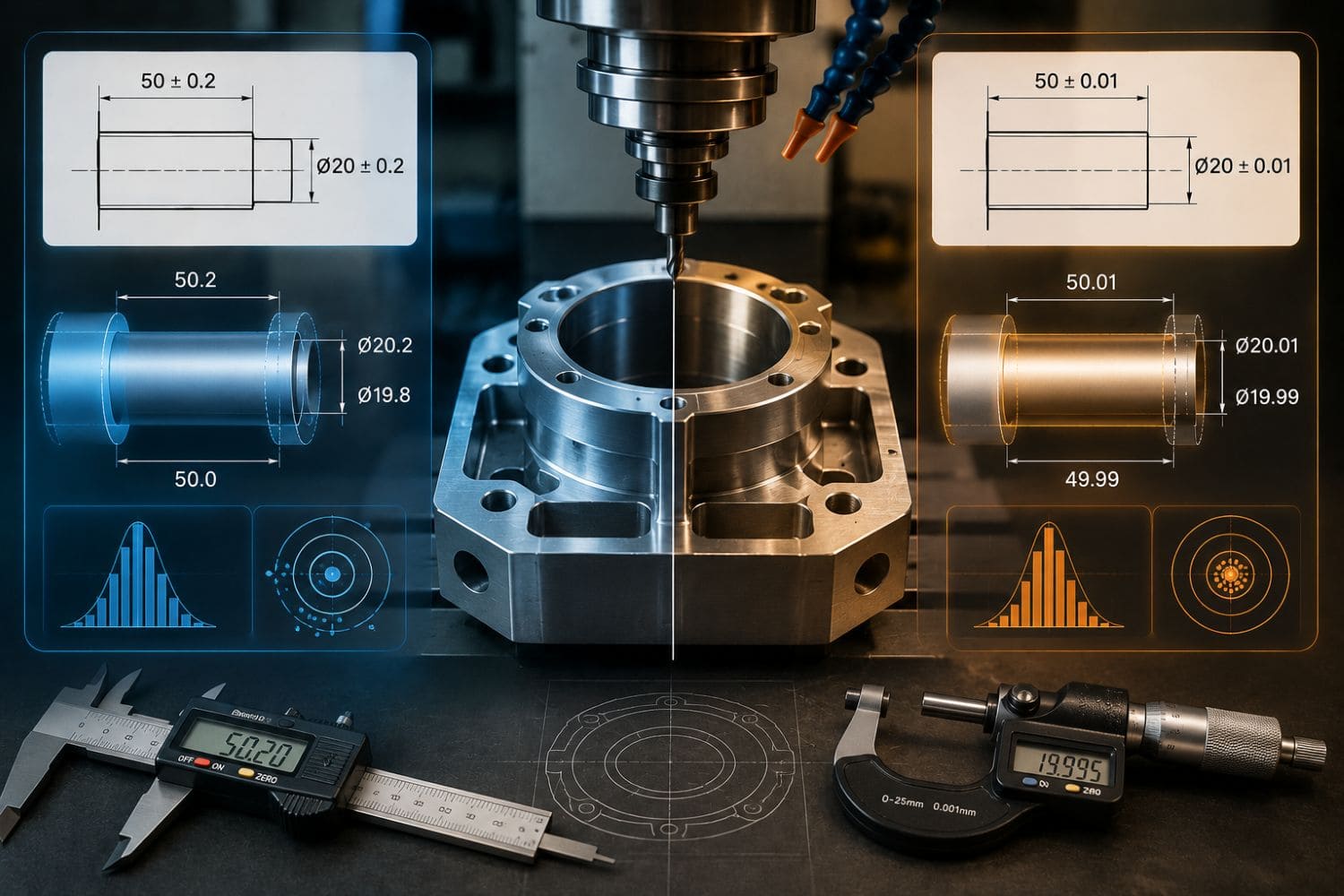
When you use CNC machining, tolerances guide your choices. Tolerances show how much a part’s size can change from the plan. They are important for making parts fit and work right. You often see tolerances like ±0.1 mm in normal jobs. Most parts can meet these limits. Precision limits are much smaller, like ±0.01 mm or even ±0.005 mm. Not many parts can reach these tight limits. The table below shows that tighter tolerances cost more and give fewer good parts:
| Tolerance Range | Key Processes | Yield Rate | Relative Cost (Est.) |
|---|---|---|---|
| ±0.1 mm | Standard 3-axis CNC, single setup | >99% | Benchmark (1x) |
| ±0.01 mm | High-precision CNC, roughing & finishing | ~90% | 3x – 5x |
| ±0.005 mm | Precision CNC + Grinding process | ~70% | 8x – 15x or higher |
You need to think about tight tolerances, quality, cost, and design. Understanding CNC Machining Tolerances: Standard vs. Precision Limits helps you pick the right limit for your project.
Key Takeaways
- Standard tolerances save money and work for most parts. Precision tolerances make parts fit exactly but cost more and are harder to make.
- Tighter tolerances need special tools and slower machines. They also need more checks. This makes making parts cost more.
- The material you pick changes how tight the tolerance can be. Metals like aluminum can handle tight tolerances better. Plastics can bend when they get hot.
- GD&T symbols show hard tolerances in a clear way. They help parts fit and work like they should.
- Working with machinists early helps pick the best tolerances. This keeps parts working well and saves money.
Understanding CNC Machining Tolerances
What Are Tolerances
Machining tolerances are used a lot in factories. They tell you how much a part’s size can change from the plan. CNC machining tolerances help parts fit and work together. CNC machines let you control each part’s size. The designer picks the biggest and smallest sizes for each part. For example, if a shaft should be 1.500 inches, you might use a tolerance of ±0.005 inches. This means the shaft can be as small as 1.495 inches or as big as 1.505 inches.
Machining tolerances are important for how parts fit and work. You can see this in the table below:
| Type | Purpose | Common Application |
|---|---|---|
| Functional Fit | Defines clearance, transition, or interference | Shafts, holes, bushings, bearings |
| Dimensional Tolerance | Controls acceptable variation of a single feature | Diameters, lengths, grooves |
| GD&T Control | Ensures geometric accuracy such as flatness or position | Precision CNC mating interfaces |
Machining tolerances help with alignment, smooth movement, and motion. They also help keep costs down and make sure things go together right.
How Tolerances Are Specified
You show CNC machining tolerances on engineering drawings. You can use rules like ISO 2768-1 for sizes or ISO 286-1 for fits. You put special tolerances on important parts and general ones on less important parts. Sometimes, you use GD&T frames to control the shape of parts.
There are different kinds of machining tolerances:
| Tolerance Type | Description | Typical Values |
|---|---|---|
| Bilateral | Variation allowed in both directions | ±0.05 mm |
| Unilateral | Variation allowed in one direction only | +0.05 / 0.00 mm |
| Limit | Minimum and maximum range specified directly | 9.95 – 10.05 mm |
You often see bilateral tolerances like 20.00 ± 0.05 mm. You also see unilateral tolerances like 10.00 +0.00 / –0.05 mm. These help you pick if a fit is tight or loose.
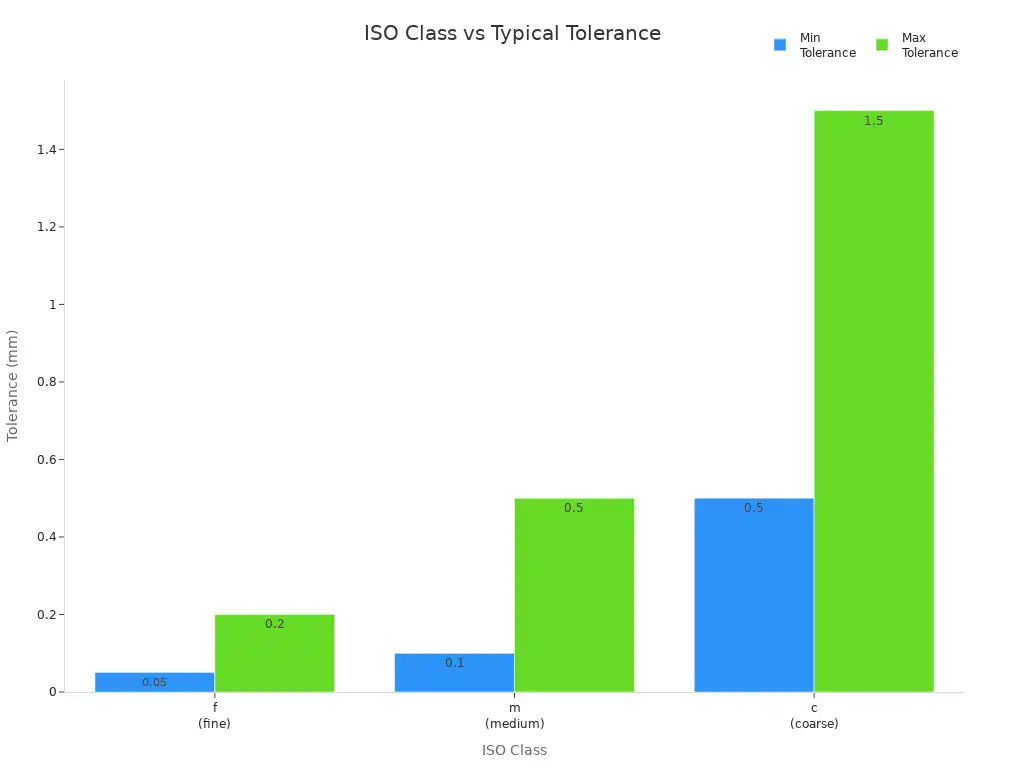
CNC machining tolerances help make sure parts are the right size and work well. Standards like ASME Y14.5 help you get the right shape and accuracy.
Standard vs. Precision Limits
Standard Tolerances
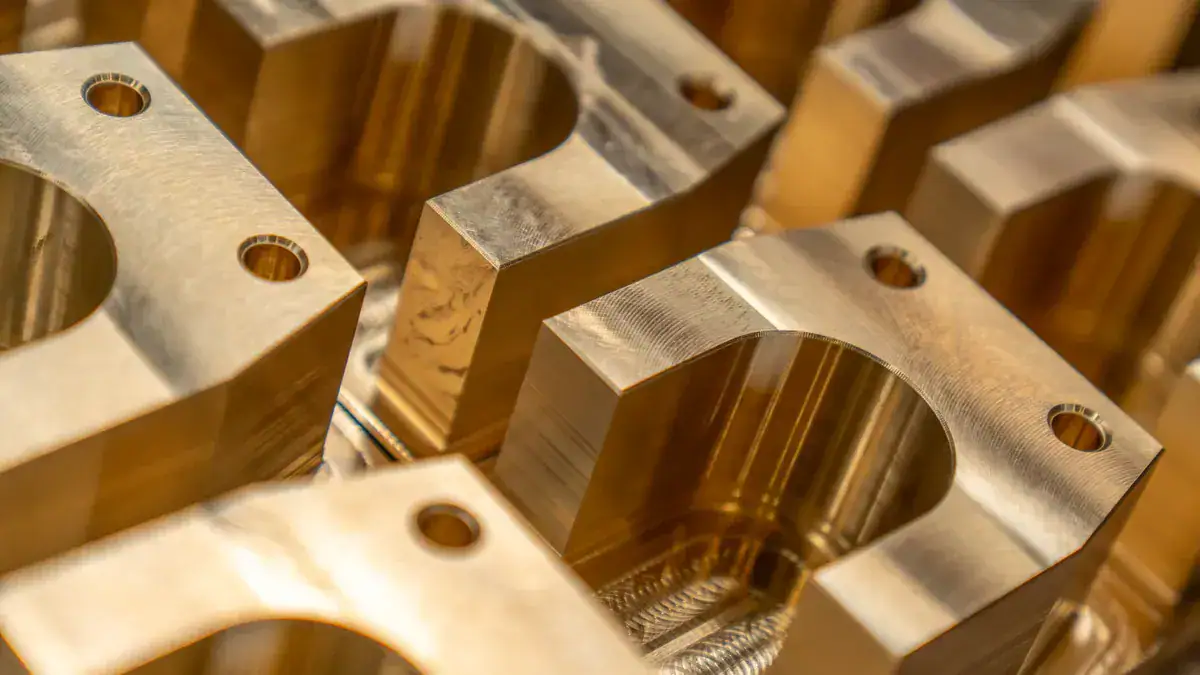
Standard tolerances are used a lot in CNC machining. They help you make parts that fit and work well. These tolerances also help you save time and money. You can use standard tolerances for most parts that do not need to be super exact. They are good for covers, brackets, plates, and surfaces that do not touch other parts. Standard tolerances keep parts close to the right size so they work as planned.
There are rules to help you pick standard tolerances. Some rules are ISO 2768, DIN 7168, ASME Y14.5, and GB/T 1184-1996. These rules tell you how to choose the right tolerance for your part. You can pick a grade based on how exact you need the part. ISO 2768 has four grades: F is fine, M is medium, C is coarse, and V is very coarse. DIN 7168 is like ISO 2768 but used more in Europe. ASME Y14.5 helps with shapes and sizes for very exact parts. GB/T 1184-1996 is used in China and is like ISO 2768.
- ISO 2768: Four grades for different needs.
- DIN 7168: Used in Europe for general parts.
- ASME Y14.5: For very exact shapes and sizes.
- GB/T 1184-1996: Used in China, like ISO.
Many industries use standard tolerances. The table below shows where you see them:
| Industry | Typical Tolerance Range | Description |
|---|---|---|
| Aerospace & Defense | ±0.005 mm to ±0.01 mm | High precision for parts like turbine blades and important structures. |
| Medical & Healthcare | ±0.005 mm | Tight tolerances for implants and tools to keep them working and clean. |
| Automotive Manufacturing | ±0.01-0.02 mm | Good balance for making lots of car parts like gear housings. |
| Consumer Electronics | ±0.1-0.2 mm | Makes sure electronics fit together and look nice. |
| Industrial Automation | ±0.01-0.02 mm | Needed for moving parts in robots and machines. |
Standard tolerances help you make parts that fit and work. You use them when you do not need super tight tolerances. They are also good when small changes in size do not matter much.
Precision Tolerances
Precision tolerances let you control the size of parts very closely. You use them when you need parts to be very exact. Precision tolerances are needed for special tools or important sizes. These tolerances help parts fit together perfectly. You see them in aerospace, medical, car, robot, and high-precision jobs.
To get precision tolerances, you need special CNC machines and careful checks. You might need boring, reaming, grinding, EDM, or CMM inspection. You can use GD&T to show how flat, straight, or round a part should be. You also need to check the parts and control the temperature for very tight tolerances.
The table below shows some common precision tolerances:
| Machining Process | Tolerance (inches) | Tolerance (mm) |
|---|---|---|
| Router | ± 0.005 | 0.13 |
| Lathe | ± 0.005 | 0.13 |
| Router (Gasket Cutting Tools) | ± 0.030 | 0.762 |
| 3-axis CNC Milling | ± 0.005 | 0.13 |
| 5-axis CNC Milling | ± 0.005 | 0.13 |
| Engraving | ± 0.005 | 0.13 |
| Rail Cutting Tolerances | ± 0.030 | 0.762 |
| Screw Machining | ± 0.005 | 0.13 |
| Steel Rule Die Cutting | ± 0.015 | 0.381 |
| Surface Finish | 125RA | N/A |
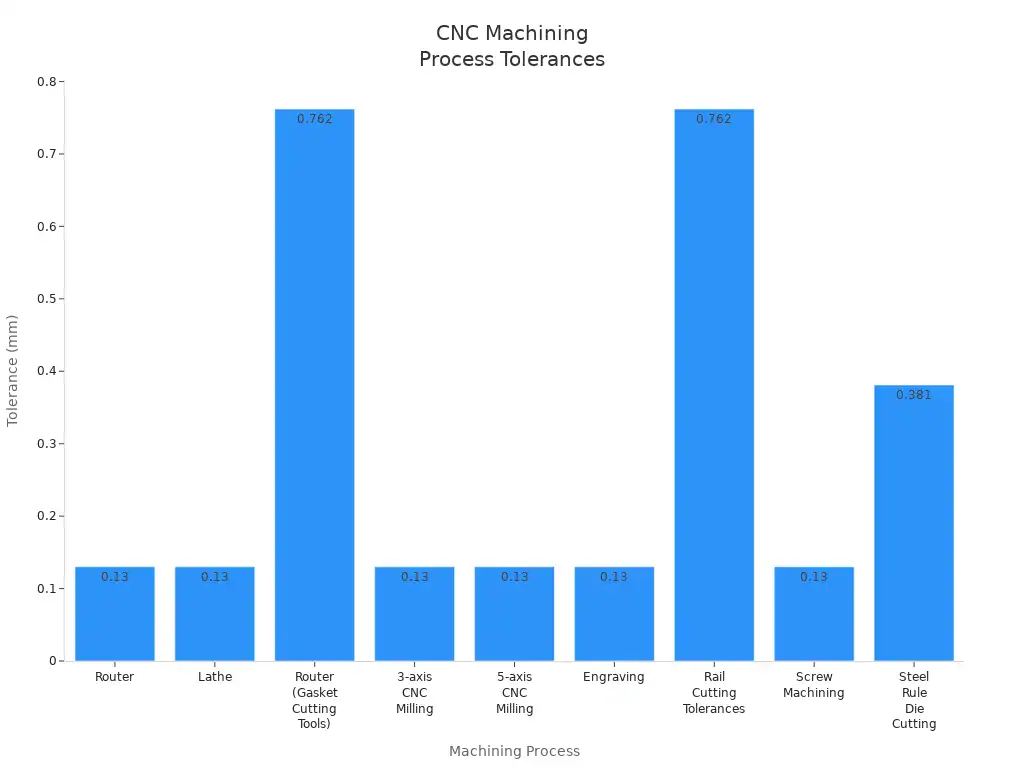
You can get very tight tolerances with special tools and machines. You need precision tolerances for parts that must fit exactly or work very well. These tolerances are used for medical devices, planes, and computer chips.
Precision tolerances are used in these jobs:
- Automotive: Makes sure parts move right and work well.
- Aerospace: Needed for safety and good performance.
- Robotics: Helps robots move the same way every time.
- Medical: Keeps devices safe and clean.
- Semiconductor: Needed for tiny parts in computers.
- High-precision jobs: Needed for special machines.
Medical, aerospace, and defense need the tightest tolerances. These jobs need parts to be very safe and work right. You use precision tolerances for parts that must fit exactly and work well.
When to Use Each
You pick standard or precision tolerances based on what the part does. Use standard tolerances for simple shapes and parts that do not need to fit tightly. Standard tolerances are good for covers, brackets, plates, and surfaces that do not touch other parts. Use standard tolerances if small changes in size do not matter.
Use tight tolerances for parts that must fit together or line up. Precision tolerances are best for parts that need to be very exact. You need clear drawings, good setups, the right machines, and ways to check the parts for tight tolerances. Very tight tolerances may need boring, reaming, grinding, EDM, CMM checks, special setups, or keeping the temperature steady.
This table helps you pick the right tolerance:
| Tolerance Level | Best Used For | Buyer’s Note |
|---|---|---|
| General tolerance | Non-critical shapes and overall profiles | Good for simple covers, brackets, plates, and surfaces that do not touch other parts. |
| Standard CNC tolerance | Most working parts | Good when you do not need press fit, bearing fit, sealing, or exact alignment. |
| Tight tolerance | Parts that must fit or line up | Needs clear drawings, good setup, right machine, and checks. |
| Ultra-tight tolerance | Special high-precision parts | May need boring, reaming, grinding, EDM, CMM checks, steady temperature, or special setups. |
You need to think about how tolerances change quality and cost. Standard tolerances let you make parts faster and cheaper. You can make more parts easily with standard tolerances. Precision tolerances need more steps, more checks, and take longer. You must balance how tight the tolerance is with how easy and cheap it is to make.
New CNC machines help you make parts that are both exact and fast. Smart software helps cut parts better and faster. You can make tight tolerance parts and still finish quickly. Fast CNC methods help you make more parts without losing quality.
You must use GD&T to show tolerances for important sizes. GD&T helps you control size, limits, and how parts fit together. You can use GD&T to make sure parts work as planned. You need to work with machinists and engineers to pick the right tolerance for each part.
You need to know the difference between standard and precision limits. Knowing about CNC machining tolerances helps you make good choices. You can use standard tolerances for most parts and precision tolerances for important features. You must balance fit, function, how easy it is to make, and cost. CNC machining tolerances help you get good quality and performance for every job.
Tip: Always check what the part does before picking a tolerance. If you ask for very tight tolerances when you do not need them, it costs more and takes longer. Use standard tolerances for simple parts and save tight tolerances for important sizes.
Knowing about CNC machining tolerances helps you design parts that are easy to make. You can use common tolerances for most parts and save tight tolerances for special tools. You must use GD&T to control fit, size, and quality. Picking the right tolerance helps you get good parts and make them fast.
Tolerance Selection Factors
Material and Part Features
You must think about what your part is made of. Different materials act differently when you use cnc machining. Metals like aluminum are stable and can handle tight tolerances. Plastics can bend or change size from heat and cutting. This makes it harder to keep tight tolerances with plastics.
| Material | Typical linear tolerance benchmark | Tight linear tolerance benchmark | Why it shifts |
|---|---|---|---|
| Aluminum | ±0.1 mm | ±0.025 mm | Machines cleanly; tight work still needs control |
| Rigid plastics | ±0.1 mm | ±0.05 mm | Deformation and temperature effects dominate |
You should also check the shape of your part. Thin walls can shake or bend while machining. This makes it hard to keep the right size. Sharp corners are hard to make with normal tools. You may need extra steps for sharp corners. Try to keep metal walls thicker than 0.8 mm. This helps avoid problems. Complicated shapes or deep pockets are harder to machine with tight tolerances.
- Thin walls can shake or break, causing size mistakes.
- Sharp inside corners need special machining or EDM.
- Complicated features make it harder to keep precision.
Surface Finish and Measurement
Surface finish is important for machining tolerances. If your part needs to be smooth, you must use slower speeds and finer tools. This makes it harder to keep tight tolerances. It also takes more time to machine. If you want both a smooth finish and tight tolerances, plan for longer work and more checks.
To check tight tolerances, you need good measuring tools. On-machine probes help fix tool paths during cnc machining. This keeps sizes steady. For the best precision, you use cmm machines, laser interferometers, or white-light systems. These tools can measure very small changes. Quality control systems like SPC watch tolerances during production. They help catch problems early.
Note: Surface finish changes how you measure parts. High-precision finishes need careful handling and special tools, especially on important surfaces.
GD&T Considerations
GD&T stands for Geometric Dimensioning and Tolerancing. It helps you show complex tolerances on drawings. GD&T uses symbols to show size, shape, position, and direction. This helps everyone know what you want for fit and function.
- GD&T lets you set tolerances for form, like straightness or flatness.
- It helps you control how features match, like parallelism or perpendicularity.
- GD&T symbols make it easier for machinists and inspectors to check parts.
| Symbol | Type of Tolerance | Definition | Application | Example |
|---|---|---|---|---|
| ⊥ | Straightness | Keeps a line or axis straight within a zone | Shafts, rails | Shaft axis within 0.05 mm straightness |
| ⏥ | Flatness | Keeps a surface even | Mating surfaces | Bed flatness 0.02 mm |
| ◯ | Roundness | Keeps a circle round | Bearings, gears | Bearing roundness 0.03 mm |
| ⌭ | Cylindricity | Keeps a cylinder uniform | Pistons, shafts | Shaft cylindricity 0.02 mm |
Using GD&T helps you talk clearly and avoid mistakes. It makes sure your cnc machining tolerances fit your design and quality needs.
Practical Guidelines for Specifying Tolerances
Avoiding Over-Specification
You can make cnc part design better by not asking for tight tolerances everywhere. Only use strict tolerances for parts that really need them to work. Put tolerances in the right places instead of using the same one for every part. Use standard machining tolerances for parts that are not important for how things work. Make tolerances tighter only when it is needed. Use GD&T for things like flatness, position, or concentricity instead of always making size tolerances very tight. Do not use a long chain of linear dimensions. Use datums to help stop errors from adding up. Think about EDM machining tolerances only for special shapes. Ask your suppliers for DFM feedback early to make sure the tolerances you want can be made.
Costs go up a lot because you need special tools and more checking: Typical Tolerance: Uses regular carbide tools that are cheap and last a long time. Tight Tolerance: Needs special, high-precision tools, mirror-finish endmills, and diamond abrasives. These tools cost much more, wear out faster, and need to be replaced often, which costs extra money.
| Tolerance Range | Description | Cost Impact |
|---|---|---|
| ±0.10 mm (standard machining tolerances) | Good for most cnc parts | Lowest cost |
| ±0.05 mm (precision cnc machining tolerances) | Good for parts that must fit together | Moderate cost |
| ±0.01–0.02 mm (tight tolerance machining) | Needed for shafts, bores, and sealing parts | High cost |
| ±0.005 mm and below (ultra-tight) | Needs special setups or EDM machining tolerances | Extremely high cost |
Engineer-Machinist Collaboration
You get better results when you work with machinists early. Talk about how to hold the part and the order to machine features. Find out which sizes are most important and how to make sure tolerances are met. Learn GD&T so you can show what you want on the drawings. Talk clearly so everyone knows what the design needs and what tolerances to use. Look for problems in making the part while you are still designing it.
| Best Practice | Description |
|---|---|
| Learning GD&T | Makes sure drawings turn into finished parts the right way. |
| Clear Communication | Helps everyone understand what the design needs and what tolerances to use. |
| Early Identification of Issues | Lets you find problems before making the part. |
| DFM Tolerance Guidelines | Description |
|---|---|
| Use tight tolerances only when needed | Do not ask for tight tolerances on parts that do not need them. |
| Think about what the machines can do | Pick tolerances that the machines can actually make. |
| Make sure features can be reached | Design parts so they can be made and checked easily. |
| Use the same tolerances for similar parts | This makes it easier to make the parts and lowers mistakes. |
| Check how tolerances add up | Make sure all the parts will fit together when assembled. |
Balancing Function and Cost
You need to think about both how the part works and how much it costs when picking machining tolerances. Choose tolerances based on what the part needs to do and what it is made of. Tighter tolerances make machining cost more because you have to go slower and check more often. Set tolerances early in the design so you do not spend too much money. When tolerances get tighter, costs go up because it takes longer, needs more checks, more setups, and more parts might not pass inspection. If you use tight tolerances where they are not needed, prices can go up and it can take longer to get your parts.
- Machining goes slower because you have to take lighter cuts.
- Tools wear out faster when making very precise cuts.
- You have to check the parts more often, which takes more time.
- Special tools are needed to keep everything lined up right.
- More parts might not meet the tolerance and get thrown away.
You can make cnc machining tolerances better by focusing on the most important sizes, working with machinists, and thinking about both how the part works and how much it costs. This helps you get good quality and fewer mistakes.
You now understand the main differences between standard and precision tolerances. Standard tolerances are good for most parts and help save money. Precision tolerances make parts fit exactly but take more time and care. When you pick tolerances, think about how the part works and how much it costs. Talk to your machinist early to make good choices.
- Work with your team to pick the right tolerance for each part
- Think about the material, how smooth the part should be, and what tools you need to check it
- Follow tips from this CNC machining overview to get better results
Working together early helps you make better parts and avoid problems.