
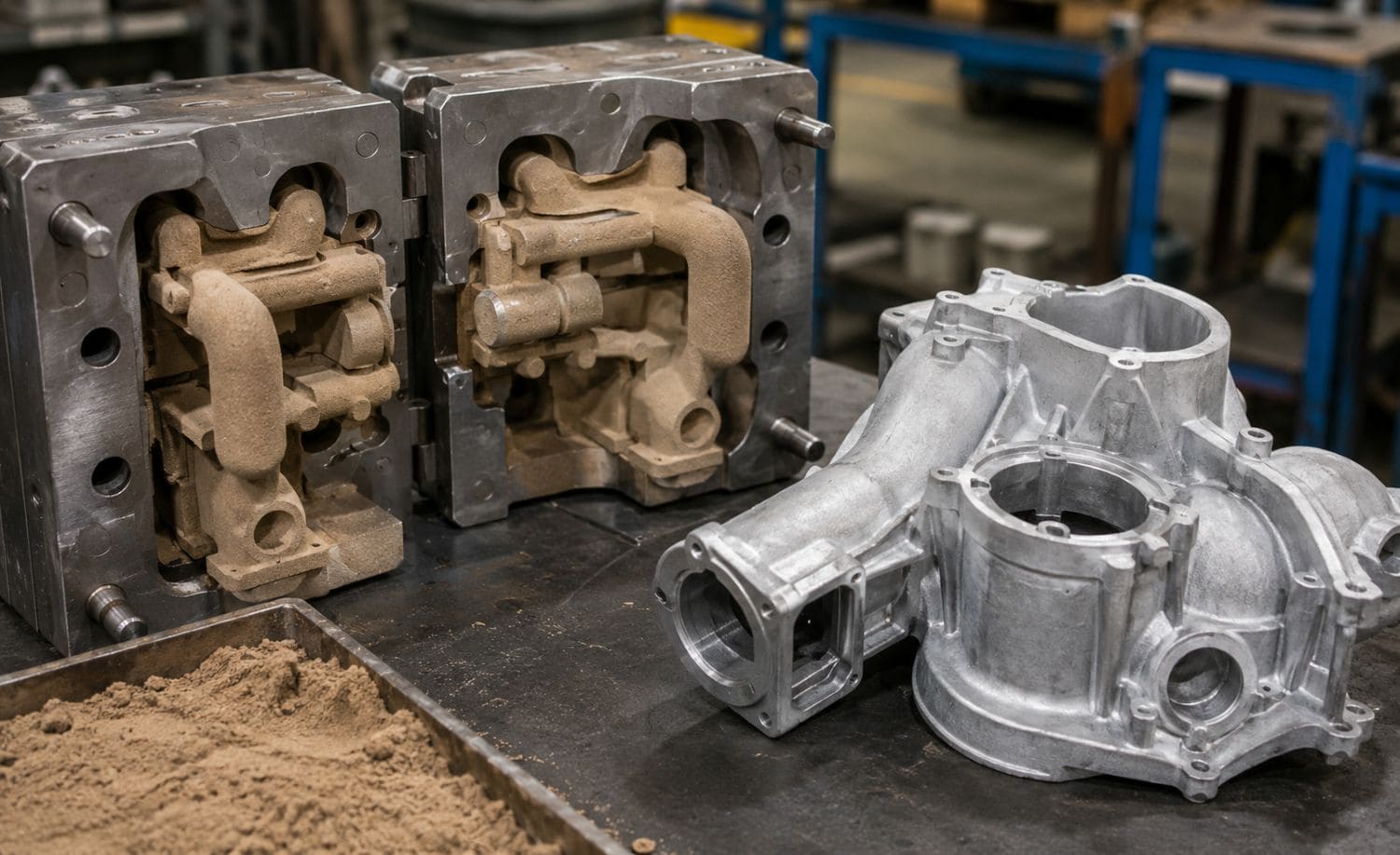
Complex magnesium parts often need sand cores to form internal passages, hollow sections, and undercuts.
Those cores must stay accurate during molding and pouring. Then they must break down after the casting cools.
That is why Oil Sand Cores for Magnesium Alloy Castings are still useful for many complex parts. A good core gives stable dimensions. A poor core adds gas, shifts position, breaks during handling, or becomes expensive to remove.
When comparing a supplier’s magnesium sand core, ask how it is baked, vented, and checked before the mold closes.
Why Oil Sand Cores Are Used
Oil sand is widely used for complicated castings. It has good dry strength after baking, useful permeability, and good collapsibility after pouring.
Once metal is poured, the oil binder breaks down. The core loses strength, which helps the casting shrink without being held back. It also makes core removal easier. A well-made magnesium casting core protects internal geometry without making shakeout unnecessarily difficult.
What Customers See When the Core Is Not Right
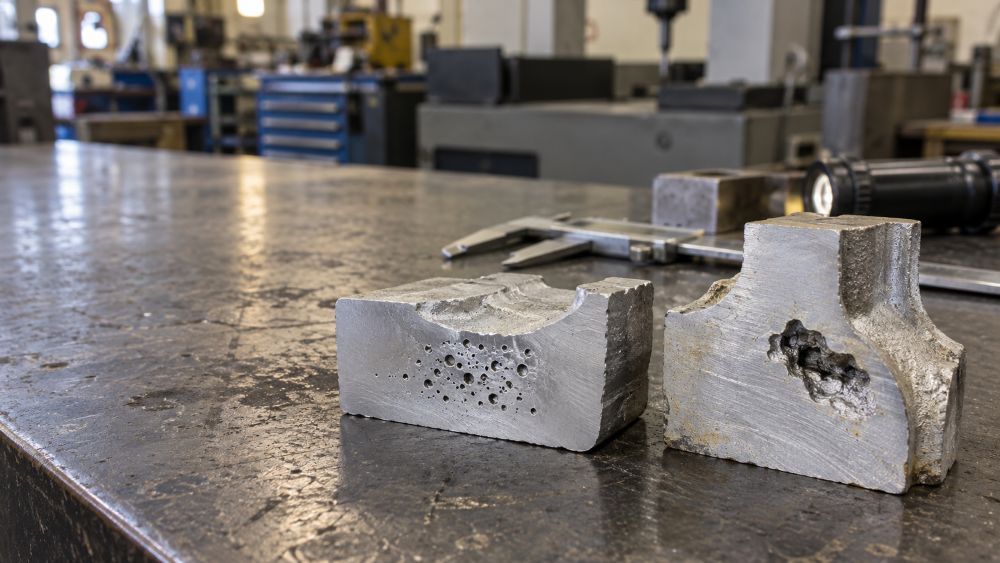
- Gas porosity near internal cavities
- Core shift and uneven wall thickness
- Sand inclusion inside a passage
- Hard-to-clean internal channels
- Cracks caused by poor collapsibility
- Extra cleaning and scrap cost
The Oil Creates the Core Bond
During baking, unsaturated bonds in vegetable oil react with oxygen and polymerize. The oil forms a film around sand grains and gives the oil bonded sand core dry strength.
Linseed oil, tung oil, and modified rice-bran oil are described as common binders. Tung oil dries well but costs more. Linseed oil is commonly used for aluminum and magnesium work.
Iodine Value Helps Compare Drying Oils
A higher iodine value usually means more unsaturation and better hardening potential during baking.
| Vegetable oil | Iodine value in source |
|---|---|
| Linseed oil | 170–210 |
| Perilla oil | 196–200 |
| Tung oil | 150–200 |
| Cottonseed oil | 105–110 |
| Peanut oil | 83–106 |
| Sesame oil | 80–90 |
Oil selection also depends on price, core thickness, strength target, production rhythm, and shakeout requirement.
Enough Oil to Coat Every Grain
Too little oil leaves some grains poorly coated and lowers dry strength. Too much oil raises cost, gas generation, and baking time.
The goal is a complete, even oil film. If oil is too viscous, a suitable solvent can help it spread evenly.
Choose Clean, Uniform Silica Sand
The source recommends high-SiO2 silica sand with uniform grain size and low clay contamination.
For magnesium and aluminum oil sand cores, 50/100 or 70/140 silica sand is commonly used. Round, smooth sand has less surface area and can reach higher strength with the same oil addition.
Drying Is Where the Core Gains Strength
The main curing reaction begins around 110–140°C and becomes more active above about 170°C. Typical baking is 180–220°C for 2–4 hours. The source gives 250°C as the maximum baking temperature.
Too little heat leaves the core weak. Too much heat can burn or embrittle it. Fresh air is needed during oil curing.
Sand Core Baking: Source-Based Drying Data
| Core thickness | Linseed-oil core | Hold | T99-1 core | Hold |
|---|---|---|---|---|
| Under 40 mm | 200–220°C | 0.5–1.0 h | 220–240°C | 0.5–1.5 h |
| 40–80 mm | 200–220°C | 1.0–2.5 h | 220–240°C | 1.0–2.5 h |
| Over 80 mm | 200–220°C | 2.0–4.0 h | 220–240°C | 2.0–4.0 h |
Thin, uniform cores can use a higher temperature and shorter cycle. Thick or uneven cores need a lower, longer cycle to heat evenly.
Wet Strength Before Baking
Without additives, the source gives oil-sand wet strength at about 0.03 × 10⁵ N/m². This is low enough for handling damage to become a real risk.
Water, clay, starch, or sulfite pulp waste liquor can improve wet strength. Each has a trade-off in dry strength, permeability, storage life, or gas generation.
Where water is needed, the source gives a moisture range of 1.5–3.0%. Each 1% clay addition can reduce dry strength by an amount comparable to losing about 0.15–0.25% oil.
Mix in the Right Order
- Add base sand, clay, sulfur, boric acid, and solid binders.
- Dry-mix for 3–5 minutes.
- Add water and liquid binders; mix for 4–6 minutes.
- Add liquid binder and oil; mix for 5–10 minutes.
Total mixing time should be about 12–20 minutes. Water comes before oil when clay is present, so the clay can wet evenly before oil coats the grains.
Storage Matters
Store mixed oil sand in a dedicated box under damp burlap. The source recommends a 1.5–2 hour rest before use.
Sand containing water-soluble binders should not be stored for long because moisture loss changes its properties.
What Customers Should Ask
- Which binder is used for the internal core?
- What sand grain size is used?
- How is dry strength checked after baking?
- What schedule fits this core thickness?
- How is gas controlled near internal passages?
- Which wet-strength additives are used?
- How long can the mixed sand be stored?
- How is core position checked before closing?
Conclusion
Oil sand cores are a practical choice for magnesium castings with complex internal geometry. The essentials are clean round silica sand, a complete oil film, low but useful wet-strength additives, a validated baking cycle, and sensible storage.
Those controls protect internal dimensions, lower gas defects, simplify cleaning, and help keep casting cost predictable.
Technical and safety note: This article is translated from supplied historical technical pages. Oil binders, solvents, sulfur materials, dust, and hot ovens can create fire, fume, and exposure hazards. The data are reference information, not stand-alone instructions. Modern work requires current safety data, ventilation, regulations, and qualified foundry supervision.