
A sand core can look fine when it leaves the core box and still fail during pouring. The usual reason is simple: it was not baked evenly.
For complex magnesium castings, oil sand core baking affects core strength, gas release, dimensional stability, and how easily the core comes out after casting.
This is a practical extension of our Oil Sand Cores for Magnesium Alloy Castings guide. Here, the focus is only on baking.
What Baking Must Do
Baking removes moisture, cures the oil binder into a strong film around the sand grains, and reduces gas when magnesium alloy enters the mold.
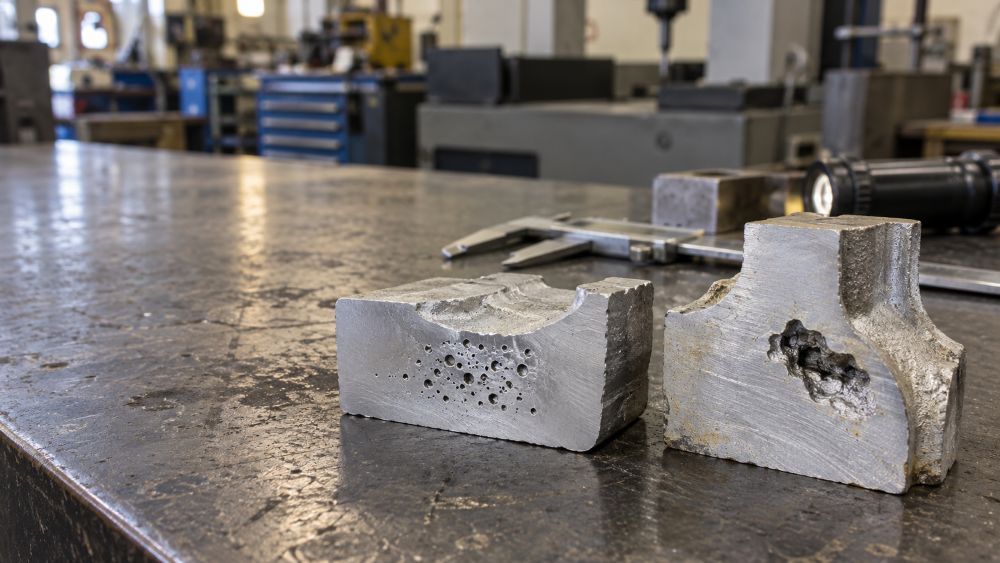
If one of these steps is incomplete, the foundry may see weak cores, gas defects, sand erosion, or difficult shakeout.
Heat Slowly at the Start
Raise temperature slowly at the start. This gives water inside the core time to move outward. If the surface dries too fast, moisture can stay inside and cause blistering, local burning, or low center strength.
Thick cores, uneven sections, and cores with wet-strength additives need extra attention.
When the Oil Starts to Cure
The supplied technical data places the start of the main oil reaction at about 110–140°C. The reaction becomes stronger above about 170°C.
Fresh air matters at this stage. The oil needs oxygen to form the hardened bond that gives the core dry strength.
Source-Based Temperature and Time Data
Use core thickness as the starting point. Thin, uniform cores can run hotter for less time. Thick or uneven cores need more time so the center reaches a stable condition.
| Core thickness | Linseed-oil core temperature | Hold time | T99-1 core temperature | Hold time |
|---|---|---|---|---|
| Under 40 mm | 200–220°C | 0.5–1.0 h | 220–240°C | 0.5–1.5 h |
| 40–80 mm | 200–220°C | 1.0–2.5 h | 220–240°C | 1.0–2.5 h |
| Over 80 mm | 200–220°C | 2.0–4.0 h | 220–240°C | 2.0–4.0 h |
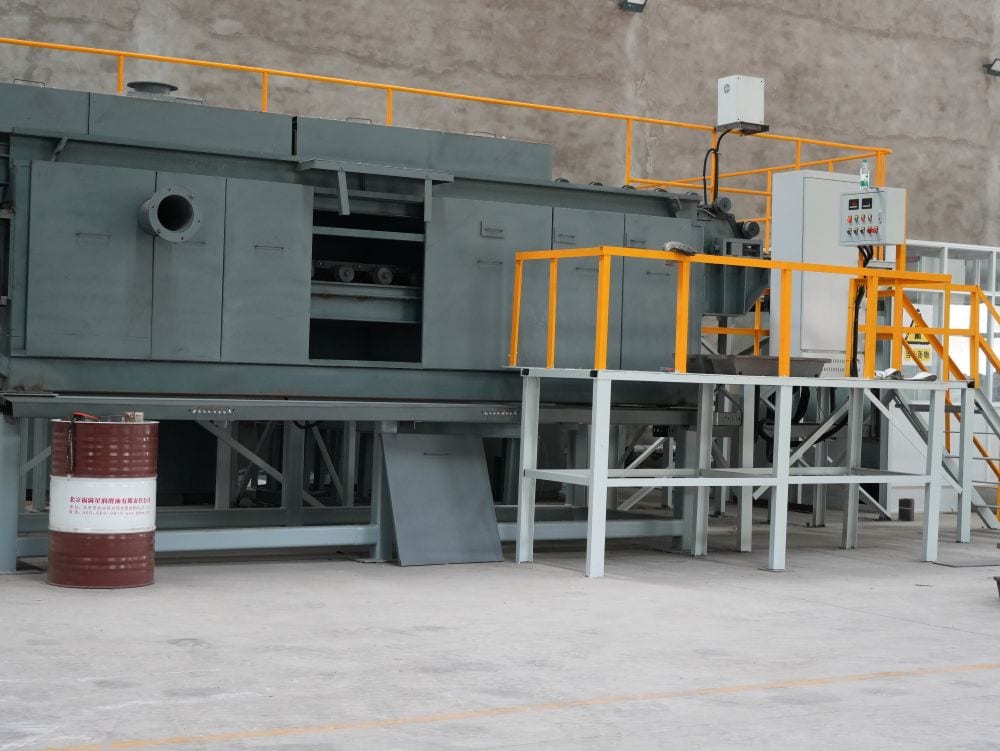
The source gives 250°C as the upper baking limit. The key is not just the setpoint; heat must reach the core center evenly.
A Simple Three-Stage Method
Stage 1: Warm up. Heat evenly and remove water. Do not judge this stage only by the surface color.
Stage 2: Cure the oil. Maintain air flow as the core moves through the curing range.
Stage 3: Hold and cool. Hold long enough for the center to cure, then cool in a controlled way. Residual heat continues to remove moisture.
Why Weak Cores Happen
- Too much moisture before baking
- Heating too fast for the core thickness
- A short cycle that leaves the center under-cured
- Poor oven air circulation
- Uneven oil distribution from poor mixing
- Handling before the core cools and stabilizes
If the center is weak, lengthen the cycle or improve heat circulation before increasing binder addition.
Why Cores Burn or Become Brittle
Over-baked cores can become dark, brittle, warped, or difficult to remove after pouring. The usual causes are too high a setpoint, too long at high temperature, or using a thick-core cycle for thin cores.
The source gives a general range of 180–220°C for 2–4 hours. Use that as a starting reference, not as a replacement for a thickness-based schedule.
Check Before Molding
- Inspect for scorching or surface defects.
- Confirm the core is dry and consistent.
- Check dry strength on a representative sample.
- Keep vents and passages clear.
- Check dimensions after cooling.
Customer Value
A properly baked core holds the cavity where it belongs and gives off less moisture and gas during pouring.
That means more stable wall thickness, cleaner internal passages, fewer porosity-related rejects, and less cleanup after casting.
For broader guidance on sand choice, oil addition, wet strength, and storage, see Oil Sand Cores for Magnesium Alloy Castings.
Technical and safety note: This source-based data is reference information, not a universal production recipe. Oil binders, solvents, dust, and ovens create fire and exposure risks. Validate every cycle under current safety, ventilation, emissions, and foundry-control requirements.