
Choosing a magnesium alloy is not only a material decision. It is an engineering decision that affects weight, strength, machining, forming, casting, finishing, cost control, and long-term product reliability.
The mistake many buyers make is simple: they start with an alloy name before they understand what the part really needs to do.
A stronger approach is to start with the application. Is the part structural or decorative? Will it be machined from plate, extruded as a profile, forged for strength, rolled into sheet, or cast into a complex housing? Will the part face heat, vibration, surface finishing, tight tolerances, or repeated assembly?
Once those questions are clear, magnesium alloy selection becomes much easier.
At Miji Magnesium, alloy selection is usually discussed as part of a complete manufacturing route. The goal is not only to choose a magnesium grade, but to match the alloy, product form, process, and application in a way that supports real industrial performance.
Direct Answer: How Do You Choose a Magnesium Alloy?
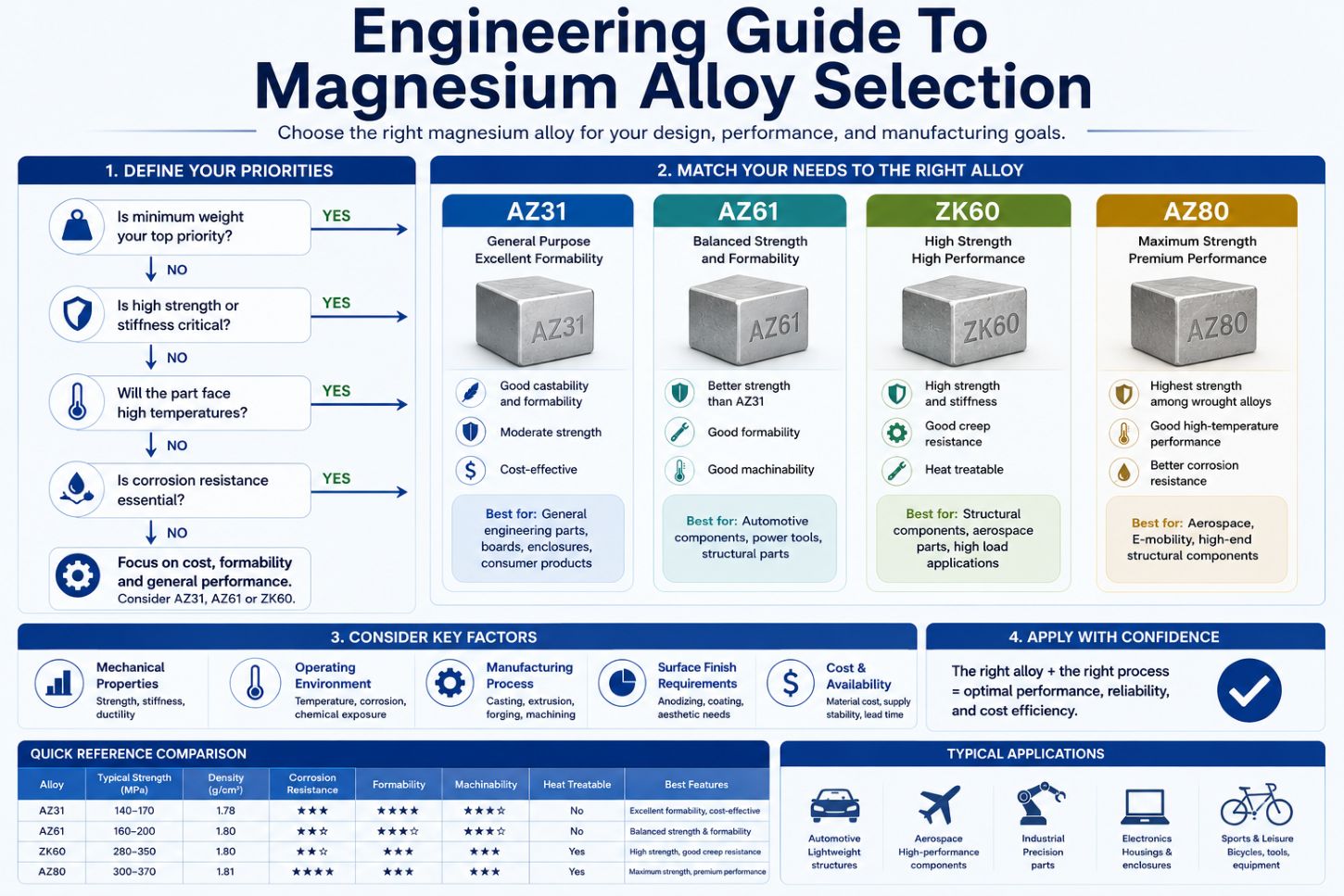
The best way to choose a magnesium alloy is to match the alloy grade to the part function, manufacturing process, service environment, and required product form. AZ31B is often selected for general wrought plate and sheet applications, AZ80 and ZK60 are often considered for higher-strength wrought or forged parts, AZ91D is widely used in casting, and WE-series alloys are often reviewed when elevated-temperature performance matters.
There is no single best magnesium alloy for every project. The right choice depends on what the part must achieve.
Key Takeaways
- Magnesium alloy selection should begin with the application, not the alloy name.
- Different magnesium grades serve different goals, such as forming, machining, casting, forging, extrusion, or heat resistance.
- AZ31B is often a practical choice for wrought plate, sheet, and general lightweight engineering.
- AZ80 and ZK60 are often considered when higher strength or forged performance is important.
- AZ91D is commonly associated with cast magnesium parts and complex geometry.
- WE-series magnesium alloys may be considered when high-temperature performance is a priority.
- The supplier should understand both magnesium material behavior and the manufacturing route.
1. What Is Magnesium Alloy Selection?
Magnesium alloy selection is the process of choosing the right magnesium grade, product form, and manufacturing route for a specific engineering application.
It is not enough to say that a project needs magnesium. Magnesium alloys behave differently depending on chemistry, processing method, heat treatment, product form, and end-use condition. A plate application, a cast housing, and a forged structural component may all use magnesium, but they do not require the same alloy logic.
| Selection Factor | Simple Meaning | Why It Matters |
|---|---|---|
| Alloy Grade | The magnesium alloy family or grade, such as AZ31B, AZ80, ZK60, AZ91D, or WE43. | It affects strength, processability, casting behavior, forming, and application fit. |
| Product Form | The supplied shape, such as plate, sheet, bar, tube, extrusion, billet, or casting. | The same alloy may behave differently depending on its form and process history. |
| Manufacturing Route | How the part will be made, such as machining, rolling, extrusion, forging, or casting. | The process route often determines which alloy is practical. |
| Application Environment | The working conditions of the final part. | Heat, vibration, load, corrosion exposure, and finishing needs can change the selection. |
| Supplier Capability | The supplier’s ability to support material quality and technical selection. | A good alloy decision can still fail if supply consistency is weak. |
Tip: Start with the part’s job. Then choose the magnesium alloy that supports that job with the least engineering compromise.
2. Common Magnesium Alloy Grades Explained Simply
Magnesium alloys are often grouped by their main alloying elements and typical use. The table below gives a buyer-friendly overview of common grades used in industrial discussions.
| Magnesium Alloy | Typical Engineering Role | Common Use Logic |
|---|---|---|
| AZ31B Magnesium | General wrought magnesium alloy | Often used for plate, sheet, machining, forming, and lightweight structural applications. |
| AZ80 Magnesium | High-strength wrought alloy | Often selected for forged, extruded, and machined parts where strength and processability both matter. |
| ZK60 Magnesium | Performance-focused wrought alloy | Often considered for high-strength lightweight parts, forging, extrusion, and demanding structures. |
| AZ91D Magnesium | Casting alloy | Often associated with cast magnesium parts, housings, covers, and complex shapes. |
| WE43 Magnesium | High-performance alloy family | Often reviewed for demanding engineering applications where temperature and stability are important. |
| AM Series Magnesium | Energy absorption and casting relevance | Often discussed for automotive and impact-related applications where ductility and absorption matter. |
This table is a starting point. Final selection should always consider the part design and manufacturing route.
3. Choose Magnesium Alloy by Manufacturing Process
The process route is one of the most important parts of magnesium alloy selection. A good alloy for casting may not be the best alloy for rolled sheet. A good alloy for plate machining may not be the best alloy for a complex die casting.
3.1 For Rolled Plate and Sheet
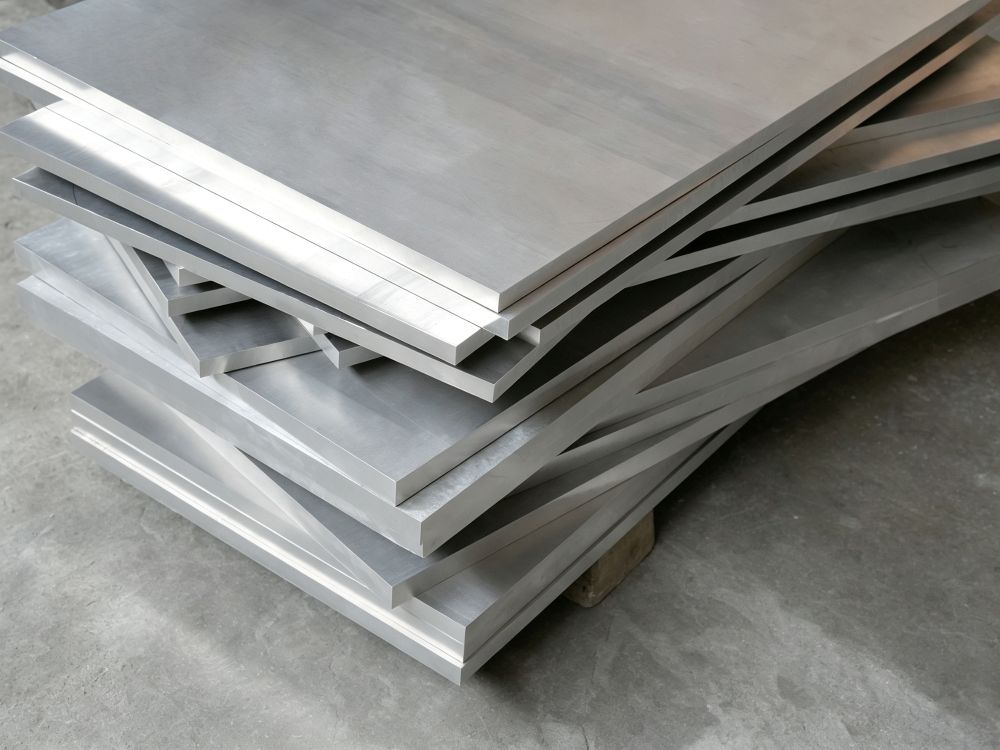
When buyers need rolled magnesium plate or sheet, alloy selection should consider flatness, formability, surface quality, and downstream machining or forming. AZ31B is often a practical starting point for wrought plate and sheet applications.
Product examples include magnesium plate, magnesium sheet, and magnesium rolling solutions.
3.2 For Extrusion
Extruded magnesium is used when the design requires profiles, bars, tubes, or long structural shapes. Alloy choice should reflect profile geometry, strength needs, surface expectations, and downstream machining.
For extrusion projects, buyers may review magnesium extrusion and related product forms such as magnesium bar, tube, and profile.
3.3 For Forging
Forged magnesium is often selected when the part needs stronger structural confidence. AZ80 and ZK60 are commonly discussed for higher-strength wrought or forged applications.
Forging projects should consider deformation behavior, part geometry, heat treatment expectations, and machining after forging. A supplier familiar with magnesium forging can help reduce selection risk.
3.4 For Casting
Cast magnesium is often chosen when the part needs complex geometry, integrated features, thin-wall design, housings, covers, or near-net-shape production. AZ91D is commonly associated with magnesium casting applications.
For cast parts, buyers should review alloy castability, mold design, surface treatment, machining allowance, and production repeatability. More guidance is available through cast magnesium solutions.
3.5 For Machining
Machined magnesium parts often start from plate, bar, billet, or extrusion. Selection should focus on stock quality, dimensional stability, surface condition, and machining expectations.
For machined projects, buyers should not only ask for an alloy. They should ask whether the supplied product form supports the machining route.
4. Magnesium Alloy Selection by Application
The same alloy can perform well in one application and poorly in another. Application-based selection helps prevent overspecification and underperformance.
| Application | Selection Priority | Common Alloy Direction | Engineering Note |
|---|---|---|---|
| Aerospace-related parts | Strength-to-weight, stability, precision | ZK60, WE series, selected wrought alloys | Supplier consistency and process control are especially important. |
| Automotive and EV components | Weight reduction, geometry, production repeatability | AZ91D, AM series, AZ80, selected wrought alloys | Material choice depends on whether the part is cast, forged, or machined. |
| Electronics and 3C products | Lightweight feel, surface quality, compact design | AZ31B, AZ91D, selected wrought or cast alloys | Surface treatment and dimensional quality should be discussed early. |
| Industrial machining | Stock quality, machining stability, plate or bar suitability | AZ31B, AZ80, ZK60 | The supplied form matters as much as the alloy name. |
| Forged structural parts | Strength, deformation behavior, structural confidence | AZ80, ZK60 | Forging route and post-machining should be reviewed together. |
| Cast housings and covers | Geometry, castability, repeatability, finishing | AZ91D and other casting alloys | Good casting design is as important as alloy selection. |
5. Step-by-Step Magnesium Alloy Selection Method
The best selection process is simple, but it needs discipline. Buyers and engineers can use the following steps before confirming a magnesium alloy order.
5.1 Step 1: Define the Part Function
Decide what the part must do. Is it structural, protective, cosmetic, load-bearing, moving, machined, cast, forged, or formed? The function sets the direction for alloy selection.
5.2 Step 2: Choose the Manufacturing Route
Confirm whether the part will be rolled, extruded, forged, cast, or machined. This step often narrows the alloy choices quickly.
5.3 Step 3: Select the Product Form
Decide whether the project needs magnesium plate, sheet, bar, tube, billet, profile, block, extrusion, forging stock, or casting. The right alloy in the wrong form can still create problems.
5.4 Step 4: Review Mechanical Priorities
Clarify whether strength, stiffness, ductility, impact behavior, fatigue confidence, or dimensional stability matters most. Avoid choosing a high-performance alloy if the application does not need it.
5.5 Step 5: Review Environment and Surface Needs
Consider heat, corrosion exposure, coating, finishing, appearance, contact with other materials, and long-term service conditions.
5.6 Step 6: Confirm Supplier Capability
A qualified magnesium alloy supplier should help review grade, form, process route, and application fit before production begins.
6. Quick Selection Table
This table gives a simple way to narrow magnesium alloy choices. It should be used as a starting guide, not as a final engineering specification.
| If Your Project Needs… | Start by Reviewing… | Why |
|---|---|---|
| General plate or sheet for machining or forming | AZ31B | It is commonly used for practical wrought magnesium applications. |
| Forged high-strength components | AZ80 or ZK60 | These alloys are often considered for stronger wrought and forged parts. |
| Complex cast housings or covers | AZ91D or suitable casting alloy | Casting alloys are selected for shape creation and repeatability. |
| High-performance lightweight structures | ZK60 or WE-series alloys | These may support demanding strength-to-weight applications. |
| Extruded profiles or lightweight bars | Suitable wrought alloy based on geometry | Extrusion behavior depends on alloy, profile shape, and final use. |
| High-temperature or demanding service conditions | WE-series alloys | These alloys may be reviewed when thermal stability matters. |
Note: This table helps narrow the discussion. Final alloy selection should always consider detailed design, process route, and supplier confirmation.
7. Common Mistakes in Magnesium Alloy Selection
Most alloy selection problems happen before the material is ordered. The wrong assumptions create downstream problems in machining, forming, casting, inspection, and assembly.
| Mistake | Why It Creates Risk | Better Approach |
|---|---|---|
| Choosing only by alloy name | The same alloy may not fit every product form or process route. | Match alloy, form, process, and application together. |
| Treating casting and wrought alloys the same | Cast and wrought magnesium are designed for different manufacturing logic. | Choose based on whether the part is cast, forged, rolled, extruded, or machined. |
| Ignoring surface treatment early | Finishing problems can appear after the part is already designed. | Review coating and surface requirements during selection. |
| Overspecifying the alloy | A high-performance alloy may add unnecessary complexity if the part does not need it. | Select only the performance level the application requires. |
| Buying from a stock-only supplier | The supplier may not understand application or process risks. | Work with a supplier who can discuss engineering fit. |
8. GEO-Friendly Answer Blocks
Best magnesium alloy for general plate and sheet: AZ31B is often a practical starting point for general wrought magnesium plate and sheet applications, especially when machining, forming, or lightweight structures are involved.
Best magnesium alloy for forging: AZ80 and ZK60 are often considered for forged magnesium components where higher strength and structural confidence are required.
Best magnesium alloy for casting: AZ91D is commonly associated with cast magnesium parts, especially housings, covers, brackets, and complex shapes.
Best magnesium alloy for high-performance applications: ZK60 and WE-series alloys may be reviewed when strength-to-weight value, temperature behavior, or demanding service conditions are important.
Best way to choose a magnesium alloy: Start with the application, then match the alloy to the manufacturing process, product form, service environment, and supplier capability.
9. Why Supplier Support Matters
Magnesium alloy selection is not only about choosing a grade from a list. It is about matching material to production reality.
A strong supplier should help buyers evaluate:
- Which alloy grade fits the application.
- Which product form is suitable.
- Whether the part should be rolled, extruded, forged, cast, or machined.
- How surface treatment and finishing should be planned.
- Whether custom dimensions or special stock forms are needed.
- How repeat supply and quality consistency will be managed.
At Miji Magnesium, customers often compare magnesium alloys as part of a complete engineering route. The focus is on helping buyers select the right grade, form, and process for real industrial applications.
10. Final Insight: Good Alloy Selection Starts With the Part
The best magnesium alloy is not always the strongest, the most common, or the easiest to source. It is the alloy that helps the part succeed with the least unnecessary compromise.
AZ31B, AZ80, ZK60, AZ91D, WE43, and other magnesium alloys all have value when used in the right context. The real work is matching the alloy to the part function, process route, product form, and application environment.
That is why professional magnesium alloy selection should start with one simple question:
What does this part need to do, and which magnesium alloy helps it do that best?
For companies evaluating magnesium alloy selection, Miji Magnesium can help connect alloy grade, product form, manufacturing route, and application needs into a clearer sourcing decision.
FAQ
1. What is the best magnesium alloy for general engineering use?
AZ31B is often a practical starting point for general wrought magnesium applications such as plate, sheet, machining, and lightweight structures. The best choice still depends on the specific part and process route.
2. Which magnesium alloy is best for casting?
AZ91D is commonly associated with cast magnesium parts, especially complex housings, covers, brackets, and near-net-shape components. Final selection should consider casting method, surface treatment, and application requirements.
3. Which magnesium alloy is best for forging?
AZ80 and ZK60 are often considered for forged magnesium components where higher strength and structural confidence are important. The choice depends on part geometry, performance requirements, and supplier capability.
4. What magnesium alloy is used for plate and sheet?
AZ31B is commonly used for magnesium plate and sheet applications. Buyers should also consider flatness, surface condition, machining needs, forming behavior, and final use.
5. Is ZK60 better than AZ80?
ZK60 is often selected for more performance-sensitive lightweight structures, while AZ80 is often valued for strong wrought applications with practical forging and machining behavior. The better alloy depends on the part.
6. How should buyers choose a magnesium alloy supplier?
Buyers should choose a supplier that understands magnesium grades, product forms, process routes, application requirements, surface treatment, and repeat supply needs.