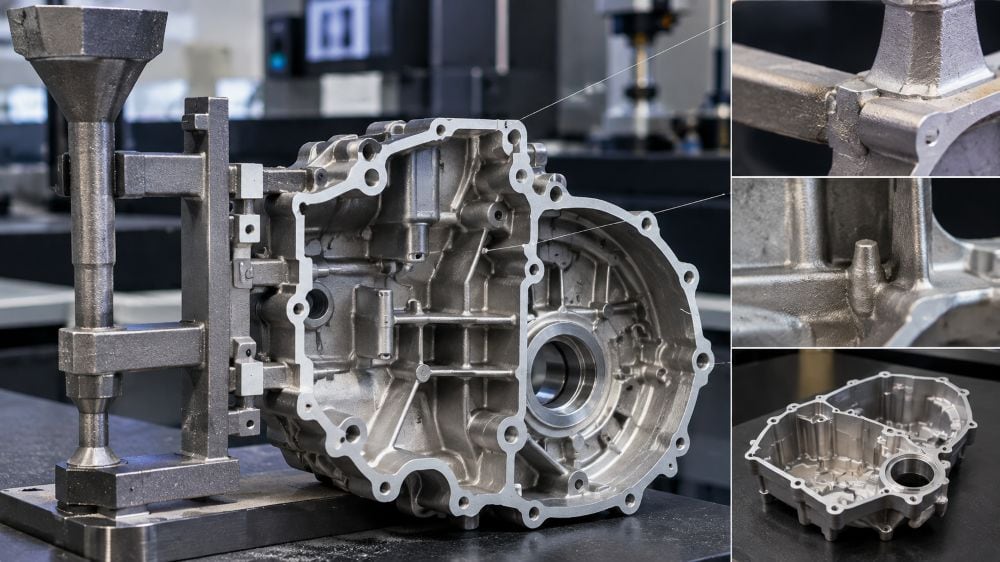

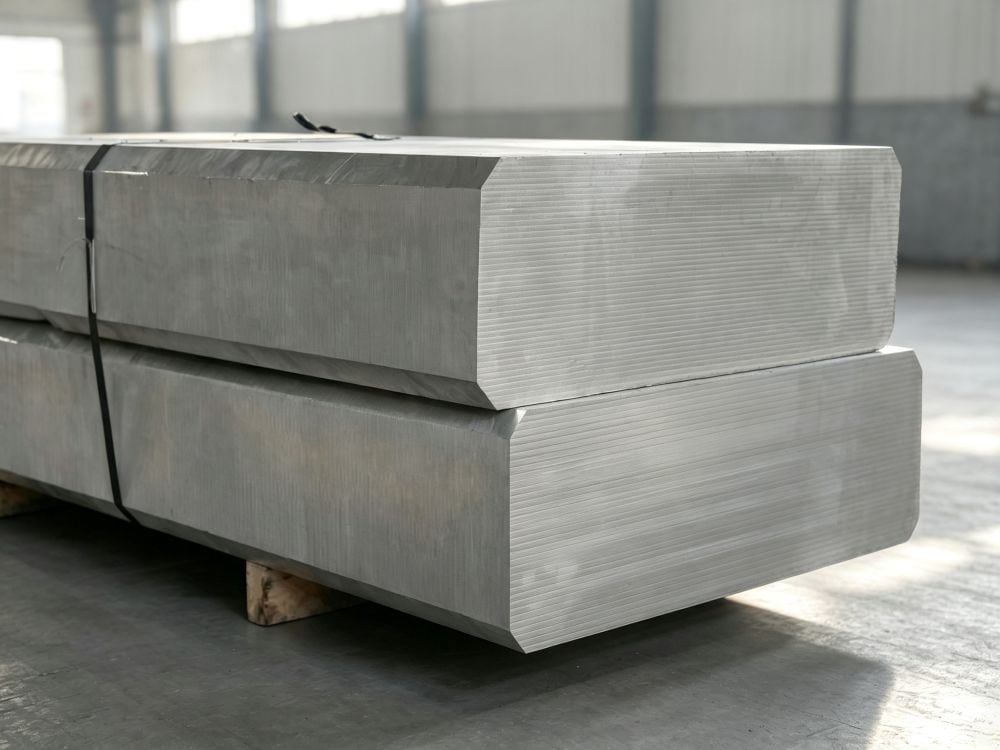
AZ31B is usually the easier starting point when a lightweight magnesium part needs sheet, plate, general-purpose extrusion, or meaningful forming work. AZ61A is commonly considered when the part is an extrusion or forging and needs more strength than AZ31B can provide in the specified form. The extra aluminum in AZ61A raises its strength, but it also makes severe room-temperature forming less forgiving. Neither grade is automatically the right choice. Product form, temper, section size, joining, corrosion protection, and the actual load path should settle the decision.
What changes between AZ31B and AZ61A
The names tell most of the story. Both are wrought magnesium-aluminum-zinc alloys. The “A” stands for aluminum and the “Z” for zinc. The numbers are a shorthand for the approximate aluminum and zinc levels.
AZ31B contains roughly 3% aluminum and 1% zinc. AZ61A contains roughly 6% aluminum and 1% zinc. In practical terms, AZ61A has about twice the aluminum content. That is why it is often brought into the discussion when a lighter structure needs more strength or hardness.
The last letter is an alloy registration suffix. It is not a temper, a heat-treatment instruction, or a guarantee that stock from two mills will behave exactly the same way. The purchase order still needs a specification, product form, temper or condition, and a current material certificate.
| Alloy | Aluminum | Zinc | Common wrought forms to discuss first | What usually drives the choice |
|---|---|---|---|---|
| AZ31B | about 3 wt.% | about 1 wt.% | Sheet, plate, extrusions, bar, tube, forgings | General-purpose magnesium work; formed or machined parts |
| AZ61A | about 6–6.5 wt.% | about 1 wt.% | Extrusions, tube, bar, sections, forgings | Higher strength in a wrought profile or forged component |
Composition names are nominal shorthand, not inspection limits. Material chemistry must come from the applicable specification and mill certification.
The difference is meaningful, but the alloy name alone does not tell the whole production story. AZ31B sheet in an annealed condition and AZ31B extrusion in an as-fabricated condition are not interchangeable design inputs. The same is true for AZ61A. Engineers sometimes compare a sheet data sheet for one grade with an extrusion data sheet for another and then wonder why the numbers do not line up.
Strength data needs the product form beside it
For a fair comparison, use the same form and the same standard. The table below uses minimum tensile and yield values listed for ASTM B107 extruded solid bars, rods, profiles, and wire in the 6.3–60 mm diameter or thickness ranges. It is useful for a first conversation about a solid extrusion. It is not a universal property table for sheet, tube, forgings, or finished parts.
| ASTM B107 extruded solid product form | AZ31B-F minimum tensile / yield strength | AZ61A-F minimum tensile / yield strength |
|---|---|---|
| 6.3–40 mm | 221 / 131 MPa | 255 / 145 MPa (6.3–60 mm range) |
| 40–60 mm | 214 / 131 MPa | 255 / 145 MPa (6.3–60 mm range) |
Those figures show the basic reason AZ61A is attractive: its specified strength can be higher in a comparable extrusion category. They do not say that every AZ61A profile will outperform every AZ31B part. Section shape, press reduction, grain direction, actual wall thickness, temper, machining removal, and test direction all matter.
The tradeoff is formability. MMPDS describes AZ61A as generally similar to AZ31B but notes that higher aluminum raises strength and slightly reduces ductility. In plain shop terms, AZ61A is not the grade to select casually if the project depends on aggressive bends, deep formed sheet features, or a late design change that calls for a lot of cold shaping. Severe forming is normally an elevated-temperature operation.
AZ31B is not easy in the way mild steel is easy. Magnesium’s crystal structure already limits room-temperature forming. It is simply the more familiar choice when the work starts with sheet or plate and the part needs a sensible amount of forming before machining or joining.
What the difference looks like in a real part
Take a small instrument enclosure with broad panels, several bends, and a few drilled mounting features. If it begins as sheet and the panels must be formed, AZ31B is generally the sensible alloy to evaluate first. The conversation should then focus on sheet temper, bend direction relative to rolling direction, corner radii, and coating—not on chasing the highest nominal strength number.
Now take a long structural rail with mounting pads, a controlled profile, and limited forming after it leaves the press. AZ61A may deserve a closer look. Extra strength can be useful when the cross-section cannot grow much, or when the design is trying to carry more load without giving up magnesium’s weight advantage.
That does not automatically make AZ61A the lower-cost choice. Material availability, extrusion die complexity, press capacity, straightening, scrap, inspection, and secondary machining can move the price in either direction. A profile that looks simple in CAD can be awkward to push through a die, especially if it has thin webs and uneven wall sections.
For forged parts, both alloys should be evaluated against the required specification and geometry. AZ61A is a recognized forging alloy, and its higher strength can be useful. But forgeability is not a simple strength ranking. The billet condition, forging temperature, reduction, die design, and post-forge requirements have a real effect on what comes out of the press.
Machining, joining, and corrosion are part of the material choice
Both AZ31B and AZ61A can be machined effectively with sharp tooling, clean chip evacuation, and a process built for magnesium safety. The usual machining questions are less about whether a cutter can remove the metal and more about the part after material removal: will a thin web move, will a machined pad remain flat, and are the critical surfaces supported properly during the operation?
If an extrusion will receive deep pockets, long slots, or tight hole-position tolerances, show that machining on the RFQ. It may affect the starting profile, the amount of stock left for machining, and how the part is held. Our overview of magnesium CNC machining explains the production factors that should be settled before the first setup.
Welding deserves the same early conversation. AZ31B and AZ61A can both be joined with suitable procedures, but the engineering requirement has to include post-weld condition and corrosion protection where relevant. MMPDS notes that AZ61A should be stress relieved after welding to avoid stress-corrosion cracking. That is not a detail to leave until after the drawing has been released.
Neither bare grade should be treated as a blanket answer for a wet, salty, or galvanically active environment. Surface treatment, sealing, fastener isolation, drainage, joint design, and the actual service environment often decide whether a magnesium part lasts. A coating callout without a clear service description is not much help to a supplier.
How to choose without turning the RFQ into a guessing game
Start with the part’s manufacturing route.
If the component is a formed sheet cover, a plate part, or a general fabrication where formability is part of the job, AZ31B is normally the first grade worth pricing. If the component is a strength-driven extrusion, tube, section, or forging with little severe forming after production, AZ61A may be the better candidate.
Then check the design features that actually cost money: minimum wall thickness, local thin webs, unsupported flats, bend radii, long straightness requirements, drilled-and-tapped features, and coating interfaces. A 3D model shows the shape; it does not always show which surface must remain flat after clamps are removed or which hole is a functional datum.
This is also where a combined process can make more sense than forcing one material form to do everything. A forged or extruded magnesium blank may need CNC work only on the mounting faces and precision bores. If the order volume is low or the geometry is heavily pocketed, machining from plate may be more practical. For a process-level comparison, see magnesium forging versus casting.
Before asking for final pricing, include these items with the drawing:
- AZ31B or AZ61A, plus the governing material standard and requested temper or condition
- Product form: sheet, plate, extrusion, tube, bar, or forging
- 2D drawing and 3D model
- Critical load areas, flatness requirements, and inspection datums
- Minimum wall thickness and any bend or forming requirements
- Machined surfaces, threads, tolerances, and cosmetic faces
- Welding, coating, corrosion exposure, and fastener-isolation requirements
- Prototype quantity, annual volume, packaging, material certification, and inspection needs
The useful question for a supplier is not simply “Which alloy is stronger?” It is “Which grade and product form can make this part reliably without creating a difficult forming, machining, or finishing problem later?” That gives both sides something concrete to review.
If you are comparing AZ31B and AZ61A for a new magnesium component, send Miji the drawing and material callout. A manufacturing review can flag whether the design is better suited to sheet, extrusion, forging, or machined stock before the order is placed.