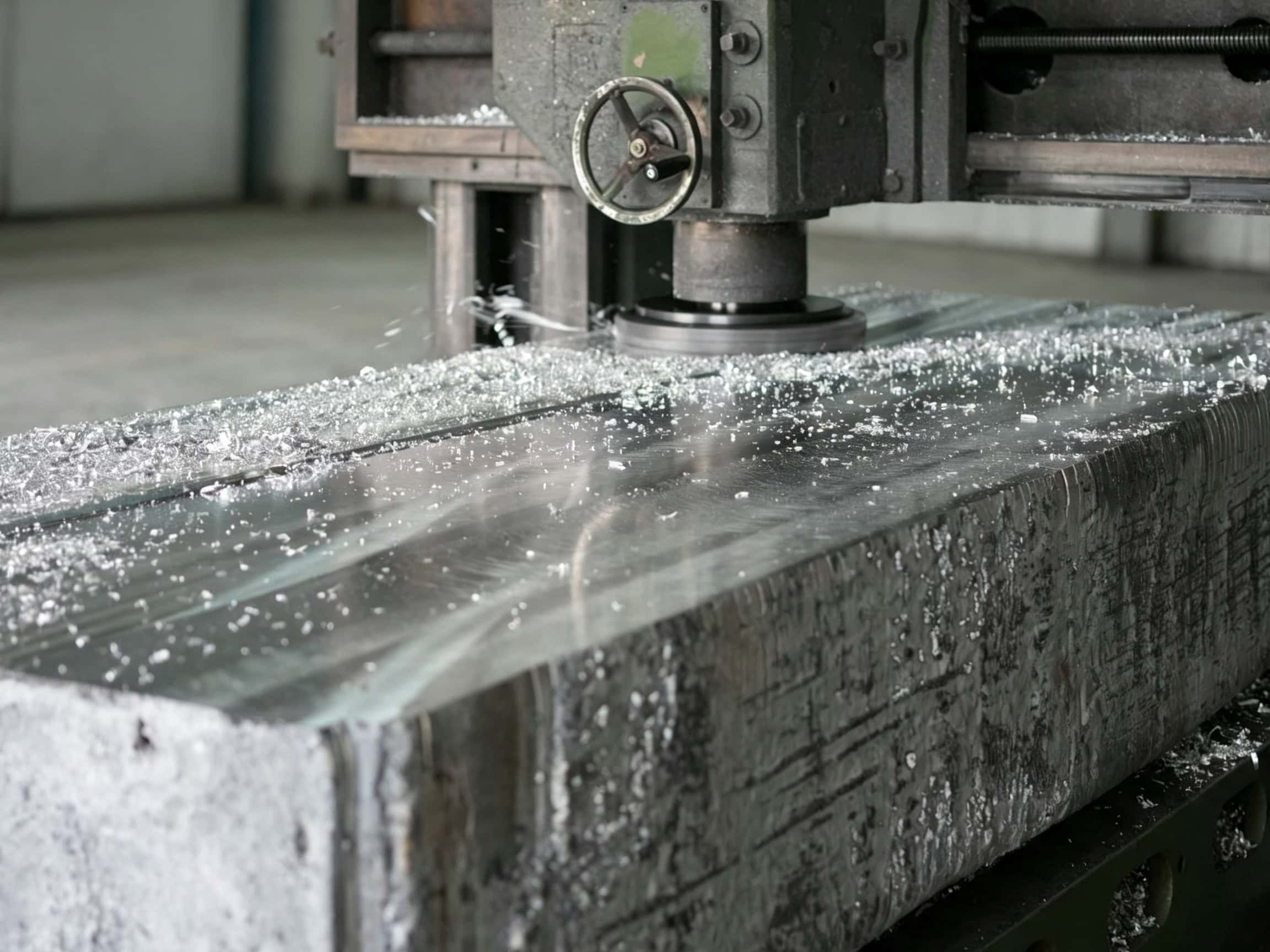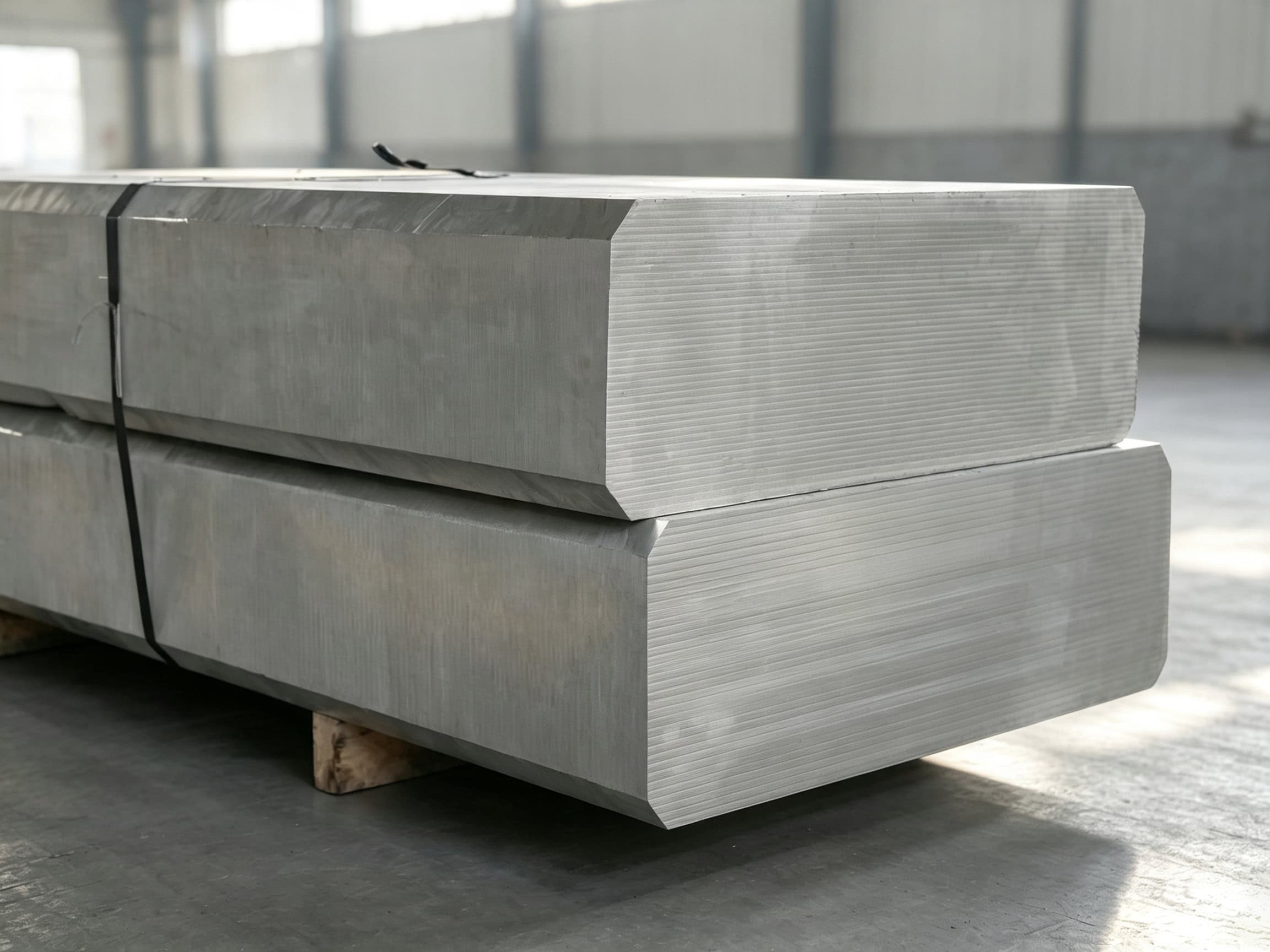

In electric vehicle (EV) engineering, every 100 kg of weight reduction matters. Specifically, it directly improves driving range by 6% to 8%. In addition, lighter vehicles require lower battery capacity. Therefore, automakers actively adopt Magnesium Alloys (AZ91D, AM60B, AM50A, and AE44). Today, these alloys serve in powertrain, chassis, and battery structures.
Magnesium has a density of only $1.78\text{ g/cm³}$. Consequently, it is 33% lighter than aluminum and 77% lighter than steel. Furthermore, it delivers high specific stiffness and outstanding die castability. It also provides natural electromagnetic shielding (EMI >60 dB) and superior vibration damping. Below, we examine magnesium applications across EV battery packs, drive units, and chassis frames.
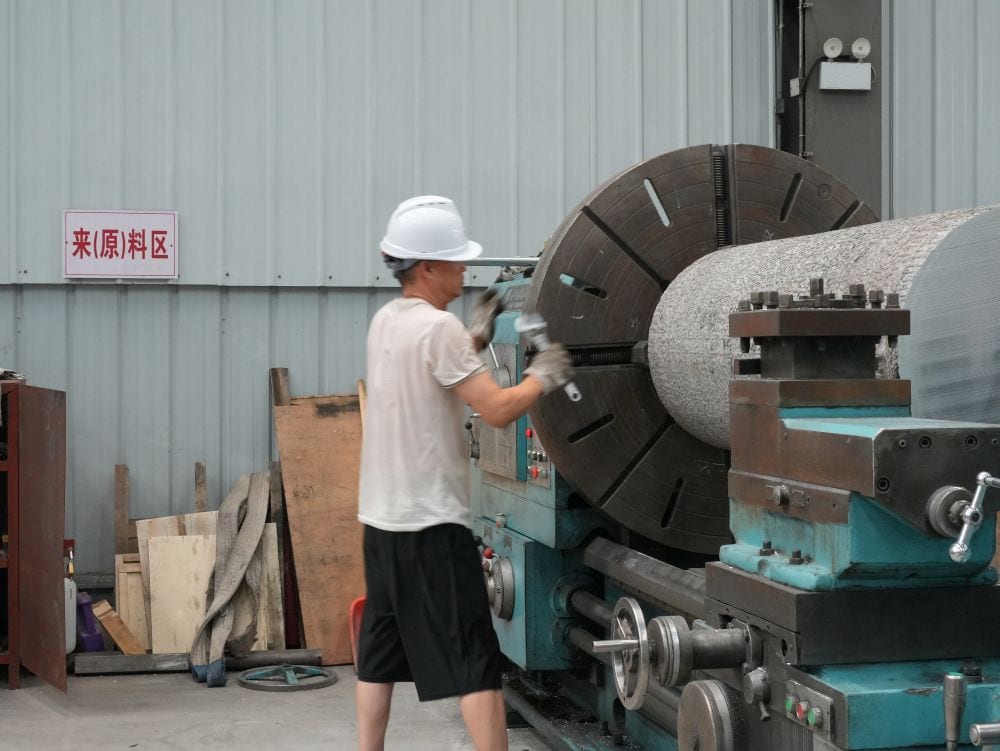
1. Key Automotive Magnesium Alloy Grades & Mechanical Comparison
Selecting the right alloy depends on the exact structural role. For example, engineers must balance room-temperature ductility and creep resistance. In addition, crash energy absorption remains essential.
| Alloy Grade | Primary Alloying Elements | Yield Strength (MPa) | Tensile Strength (MPa) | Elongation (%) | Key Automotive Applications |
|---|---|---|---|---|---|
| AZ91D | Mg-9Al-0.7Zn-0.2Mn | 150 – 165 | 230 – 260 | 3% – 5% | Transmission cases, EDU motor housings, inverter covers |
| AM60B | Mg-6Al-0.3Mn | 130 – 145 | 220 – 245 | 8% – 12% | Instrument panel beams, steering wheel cores, seat frames |
| AM50A | Mg-5Al-0.3Mn | 115 – 130 | 200 – 225 | 10% – 15% | Crash management boxes, front-end carrier modules |
| AE44 / MRI153 | Mg-4Al-4RE (Rare Earth) | 145 – 160 | 235 – 250 | 6% – 10% | High-temperature powertrain & battery structural frames (>150°C) |
| AZ31B (Wrought) | Mg-3Al-1Zn | 180 – 220 | 260 – 290 | 12% – 18% | Extruded battery pack side beams & stamped enclosure lids |
2. Magnesium EV Battery Enclosures: Weight Savings, Thermal & EMI Protection
Battery packs account for 25% to 35% of total EV curb weight. However, traditional steel trays add excessive dead weight. Therefore, replacing lids and frames with magnesium extrusions (AZ31B) and die castings (AM60B/AZ91D) yields three major advantages:
- Direct 35% Mass Reduction: A standard 75 kWh aluminum battery lid weighs about 22 kg. In contrast, a stamped magnesium lid weighs under 14.5 kg. As a result, automakers gain extra payload for battery cells.
- Superior EMI Shielding: High-voltage battery systems generate intense electromagnetic noise. However, magnesium naturally provides >60–85 dB attenuation. Thus, it eliminates heavy secondary shielding foils.
- Thermal Conductivity & Safety: Magnesium has a thermal conductivity of $96-120\text{ W/m·K}$. Consequently, it dissipates hotspot heat effectively during fast charging. Furthermore, Micro-Arc Oxidation (MAO) ceramic coatings resist direct flame exposure (>1000°C for 5+ minutes).
3. Electric Drive Unit (EDU) & Inverter Housings
In 3-in-1 electric drive units, motor speed reaches 15,000 to 20,000 RPM. Therefore, suppressing high-frequency gear whine is a primary engineering goal:
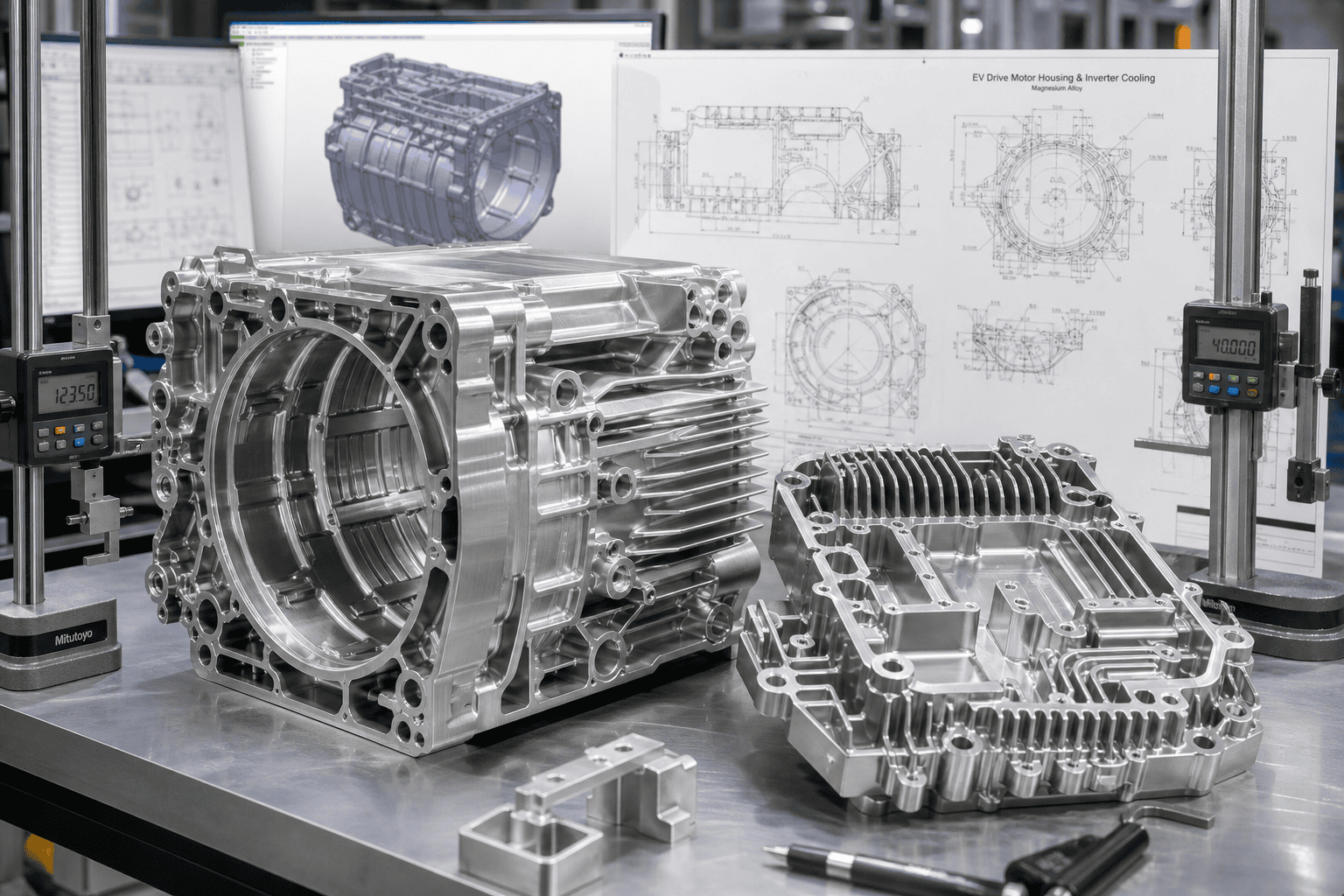
- NVH Harmonic Damping: Magnesium has a damping capacity 10 times higher than aluminum. As a result, it absorbs motor harmonics and lowers cabin acoustic noise.
- Thin-Wall Precision Casting: AZ91D offers outstanding molten fluidity. Therefore, engineers can design thin walls down to $2.0\text{ mm}$ with cast-in cooling passages.
- High-Speed CNC Milling: Magnesium cuts at speeds above $1,500\text{ m/min}$. Consequently, it cuts machine cycle times by 40% compared to cast aluminum.
4. Chassis, Cross-Car Beams & Crash Management Structures
In body-in-white (BIW) design, magnesium alloys deliver high energy absorption during collisions:
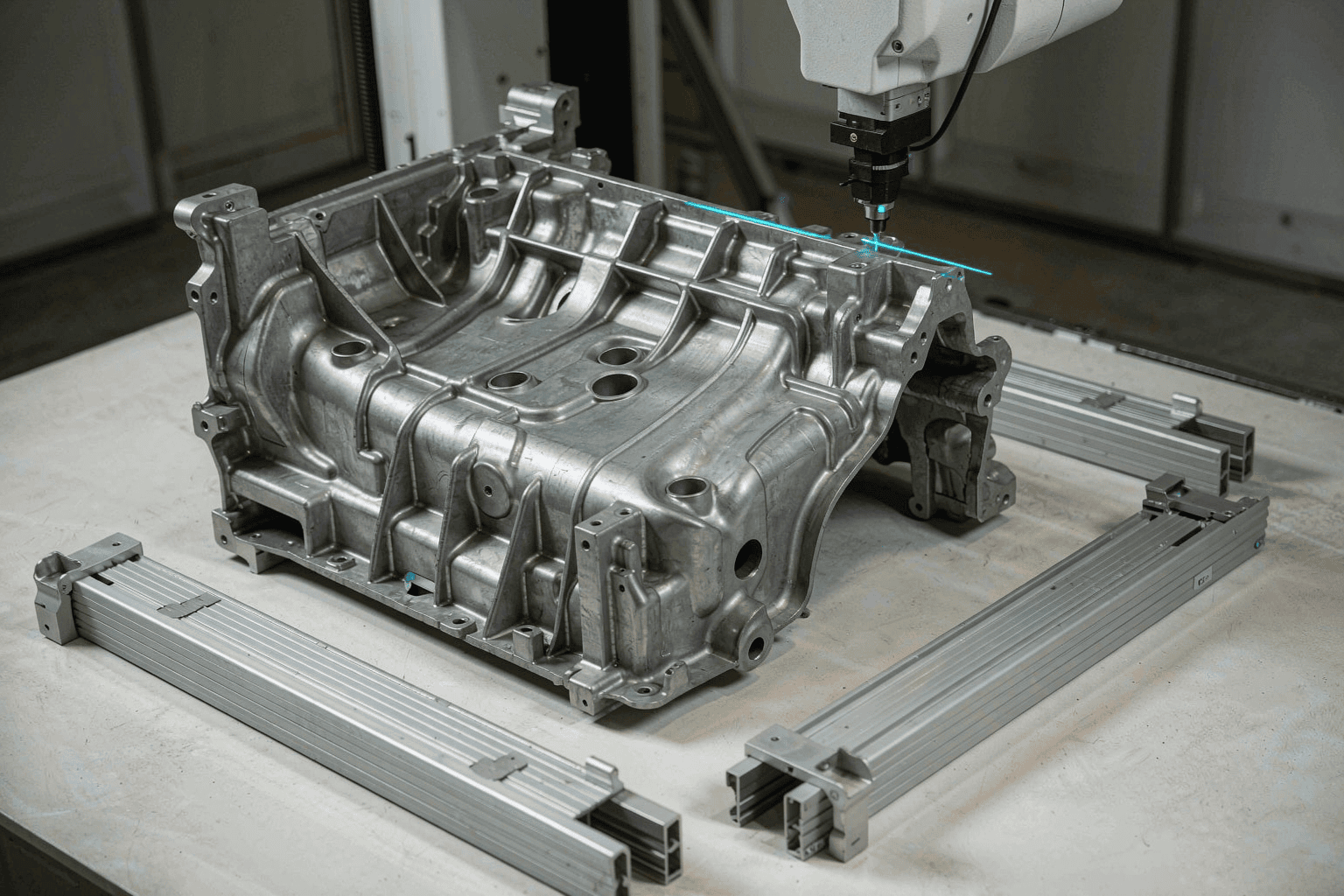
- Single-Piece Cross-Car Beams: Die-casting the entire beam in ductile AM60B replaces 20+ steel stampings. Consequently, it cuts part weight by 45% while boosting stiffness.
- Subframe & Shock Towers: Rare-earth magnesium alloys (AE44) achieve high fatigue strength under road loads. Thus, they reduce unsprung mass and sharpen vehicle handling.
5. Automotive Surface Treatment: Overcoming Corrosion in Harsh Environments
To guarantee 15+ years of service life across road salt and humidity, Miji Magnesium implements multi-layer protection:
- Micro-Arc Oxidation (MAO / PEO): MAO forms a ceramic barrier layer ($15-25\,\mu\text{m}$). As a result, it withstands >1000 hours of ASTM B117 salt spray testing.
- Cathodic Electro-Deposition (E-Coat): Automotive-grade epoxy coating seals blind holes and complex channels uniformly.
- Galvanic Isolation: Using zinc-nickel fasteners and non-conductive washers prevents galvanic corrosion when joined with steel or aluminum.
6. Partner with Miji Magnesium for EV Lightweighting Solutions
Miji Magnesium provides end-to-end prototyping and mass production for global EV OEMs and Tier-1 suppliers. Furthermore, all facilities follow ISO 9001:2015 and IATF 16949 quality standards.
Our capabilities include die casting, precision extrusion, custom 5-axis CNC machining, and EN 10204 3.1 MTC inspection reports.
Get a 24-Hour DFM Review & Prototype Quote: Submit your 3D CAD files (STEP, IGES, DXF) at Precision CNC Machining Service or explore our certified stock at Magnesium Alloy Plates, Extruded Magnesium Bars, and Magnesium Extrusions.