
To choose copper sheet, start with the job the finished part must do. C110 is the usual choice for general electrical parts. C101 fits higher-purity electrical and thermal work. C122 is often selected for brazed or welded thermal assemblies. Then choose thickness from current, heat load, forming radius, flatness, stiffness, and machining allowance. Specify the actual dimension, temper, surface condition, and tolerance; the word “sheet” or “plate” alone is not enough for a reliable quote.
Before you choose a grade or thickness, see what copper sheets are used for. That core guide explains the main electrical, thermal, architectural, and industrial applications.
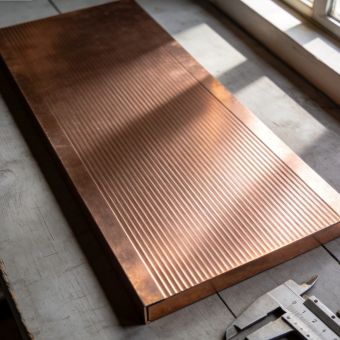
Start With the Final Part Function
| Application | What copper does well | Typical form or requirement |
|---|---|---|
| Busbars and power hardware | Carries high current with low resistance | C110 or C101; flat stock with controlled thickness and burr condition |
| Connectors and electrical contacts | Conducts current and forms reliably | Sheet, strip, or precision-cut blanks; temper matters |
| Heat spreaders and cold plates | Moves heat quickly away from hot components | Flat, clean stock; planarity and machining stock may matter |
| Heat exchangers | Transfers heat and can be joined into assemblies | C122 is often considered for brazed or welded thermal work |
| Roofing, flashing, and cladding | Resists weather and forms easily | Sheet selected for forming, appearance, and long-term exposure |
| CNC-machined parts | Combines conductivity with machinable stock geometry | Plate or bar with enough machining allowance and defined temper |
| Decorative panels and fabrication | Provides a durable, distinctive surface | Sheet selected for finish, thickness, and forming route |
The right form is tied to the job. A thin electronic shielding part may start as foil or strip. A bus component or machined heat spreader may need sheet or plate. Start with the final part function, then choose the material form.
Electrical and Electronic Applications
Copper is the default choice when a part needs to move current efficiently. Copper sheet is used for busbars, grounding plates, terminals, switchgear components, transformer connections, battery interconnects, electrical enclosures, and EMI shielding.
For these applications, conductivity is only one requirement. Buyers should also define temper, thickness tolerance, flatness, edge condition, surface cleanliness, and whether the material will be punched, bent, plated, brazed, or machined.
An electrical part can fail inspection even when the copper grade is correct. Sharp burrs, surface oxidation, warped stock, or the wrong temper can create downstream problems in forming, plating, contact resistance, and assembly.
For very thin, flexible conductors, shielding, PCB-related materials, and battery-current collectors, see our copper foil products. Foil is not simply “thin plate”; it is selected for a different production route and level of flexibility.
Heat Exchangers and Thermal Management
Copper moves heat quickly. That makes it useful for heat spreaders, cold plates, cooling blocks, heat exchanger components, radiators, condensers, thermal straps, and electronics cooling hardware.
The design question is usually not whether copper transfers heat well. It is whether the selected grade, thickness, join method, and surface condition fit the assembly. A thin formed fin, a machined cooling plate, and a brazed tube assembly do not need the same material route.
For a machined thermal part, define the flatness after machining, channel geometry, pressure-test requirement, joining process, and any plating or corrosion-control needs. Those details decide how much stock is needed and whether sheet or plate is the better starting form.
Roofing and Architectural Applications
Copper sheet is widely used for roofing, flashing, gutters, wall cladding, trim, and decorative panels. It forms well and develops a natural patina in outdoor exposure.
Architecture work has different priorities than electrical work. The buyer usually cares about forming behavior, surface finish, color consistency, panel size, oil-canning risk, fastening design, and compatibility with adjoining metals. Thickness selection should account for wind load, panel geometry, forming, and installation method.
Copper is durable in many outdoor environments, but it should not be specified in isolation. The roof or facade design needs to consider drainage, run-off onto other metals, expansion and contraction, and the local environment.
Industrial and CNC-Machined Copper Parts
Copper plate is commonly machined into conductive blocks, electrical contacts, electrodes, heat sinks, thermal inserts, current-carrying brackets, wear plates, and custom industrial parts.
Pure copper can be machined, but it is softer and more prone to built-up edge than free-machining copper alloys. This does not make it a poor choice. It means the drawing and material specification need to match the function. When conductivity is the priority, C110 or C101 may be worth the extra machining attention. When cycle time and chip control are the main concern, another copper alloy may be a better fit.
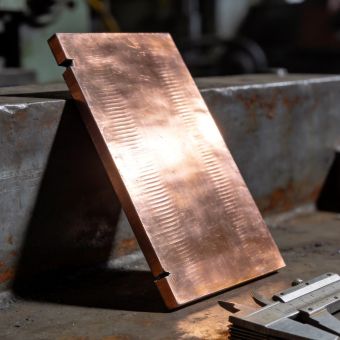
For a CNC quote, include the 2D drawing, 3D file, grade, temper, final surface requirements, conductivity needs, quantity, and inspection points. If a part must remain flat after machining, say so clearly. Copper’s thermal behavior and residual stress can matter on wide, thin components.
Choosing Between C101, C110, and C122
These grades solve different problems. The grade should follow the final application rather than a general preference for “pure copper.”
| Grade | Common reason to choose it | Good fit | Important note |
|---|---|---|---|
| C101 | High-purity, oxygen-free copper with excellent conductivity | High-performance electrical or thermal work, vacuum-sensitive and high-purity applications | Usually chosen when oxygen content and conductivity are critical requirements |
| C110 | Electrolytic tough pitch copper with high conductivity and broad availability | Busbars, connectors, general electrical parts, heat spreaders, fabricated components | A practical default for many electrical and thermal applications |
| C122 | Phosphorus-deoxidized copper with good joining behavior | Brazed or welded thermal assemblies, heat-transfer products, fabricated tubing-related work | Do not treat it as the automatic first choice for maximum electrical conductivity |
Do not use the grade name alone on a purchase order. Add the product form, temper, standard or agreed specification, dimensions, tolerance, surface condition, and required documentation.
How to Choose Copper Thickness
There is no universal “correct” copper thickness. The right thickness depends on the load and how the part will be made.
| Design question | Why it changes thickness selection |
|---|---|
| How much current will the part carry? | Cross-section affects resistance and temperature rise |
| How much heat must the part spread or transfer? | More section can improve heat flow, but adds weight and cost |
| Will the part be bent, stamped, or deep drawn? | Thinner material forms more easily; temper and bend radius still matter |
| Will the part be CNC machined? | Stock must leave enough material for final dimensions, flatness, and cleanup |
| Does the part span an open area or carry mechanical load? | Stiffness may control the selection more than conductivity |
| Is surface appearance critical? | Thicker stock can behave differently during forming and finishing |
For conductivity-driven parts, engineers often calculate the required cross-section first, then confirm that the selected thickness and width are practical for fabrication. For machined parts, begin with the final drawing and add only the machining stock that the process needs.
Copper Sheet vs. Copper Plate: Do Not Rely Only on the Name
The terms sheet and plate are often separated by thickness, but the exact cutoff varies by market, standard, and supplier. In an RFQ, the safest approach is to specify the actual thickness in millimeters or inches instead of relying on the word alone.
In practice, sheet usually points to material intended for cutting, bending, stamping, rolling, and architectural fabrication. Plate usually suggests heavier stock used for machining, structural or industrial components, thicker heat spreaders, and current-carrying hardware.
For a detailed comparison, read copper sheet vs. copper plate. It explains the practical difference in thickness, fabrication route, and end use.
What to Include in a Copper Sheet or Plate RFQ
An accurate quote starts with a complete requirement. Send the following whenever possible:
- Grade: C101, C110, C122, or another named alloy
- Form: sheet, plate, strip, foil, blank, or cut part
- Thickness, width, length, and dimensional tolerance
- Temper or hardness requirement
- Flatness, edge condition, surface finish, and protective packaging needs
- Whether the material will be bent, stamped, welded, brazed, plated, or CNC machined
- Electrical conductivity, thermal performance, material certificate, or inspection requirements
- Quantity, target delivery date, and destination
For narrower material intended for terminals, spring contacts, stamped components, and continuous processing, compare copper strip. Strip width, coil ID, temper, and edge condition can be more important there than plate flatness.
Request a Copper Material or Machining Quote
Send the drawing, grade, dimensions, tolerance, quantity, and final use. If the job includes CNC machining, add the file format, surface finish, inspection requirements, and any electrical or thermal performance target.
FAQ
What are copper sheets used for?
Copper sheets are used in electrical components, busbars, connectors, heat spreaders, heat exchangers, roofing, flashing, cladding, decorative panels, and fabricated industrial parts. The best grade and thickness depend on conductivity, heat transfer, forming, weather exposure, and machining needs.
Is C110 copper good for electrical parts?
Yes. C110 is a common choice for busbars, terminals, connectors, grounding hardware, and general conductive components because it combines high conductivity with broad availability and practical fabrication behavior.
When should I use C101 instead of C110?
Use C101 when high purity and very high conductivity are critical to the application, especially where oxygen content matters. C110 is often the practical choice for general electrical and thermal parts.
Is C122 suitable for busbars?
C122 is commonly considered for brazed or welded thermal assemblies because it is phosphorus-deoxidized. For a busbar or high-conductivity electrical application, confirm the conductivity target before selecting C122.
What thickness copper sheet should I buy?
Choose thickness from the current load, heat load, stiffness, forming method, machining allowance, and final drawing tolerance. There is no one thickness that fits every copper application.
What is the difference between copper sheet and copper plate?
The exact thickness boundary varies by supplier and standard. Sheet is commonly used for forming and fabrication, while plate is typically heavier stock for machining and industrial components. Always specify the actual thickness in the RFQ.
Can copper plate be CNC machined?
Yes. Copper plate can be CNC machined into conductive blocks, contacts, heat sinks, thermal inserts, and custom industrial parts. Tooling, feeds, chip control, and material grade should be planned around copper’s soft, conductive nature.
What should I send for a copper quote?
Send the grade, product form, thickness, width, length, tolerances, temper, surface condition, quantity, certificate requirements, and final application. Add drawings and machining details when a finished part is required.
Final Takeaway
Copper sheet works because it conducts electricity and heat, resists many outdoor environments, and can be formed or machined into useful parts. The best result comes from selecting the grade, thickness, temper, and product form for the actual job—not from ordering “copper plate” as a generic material.