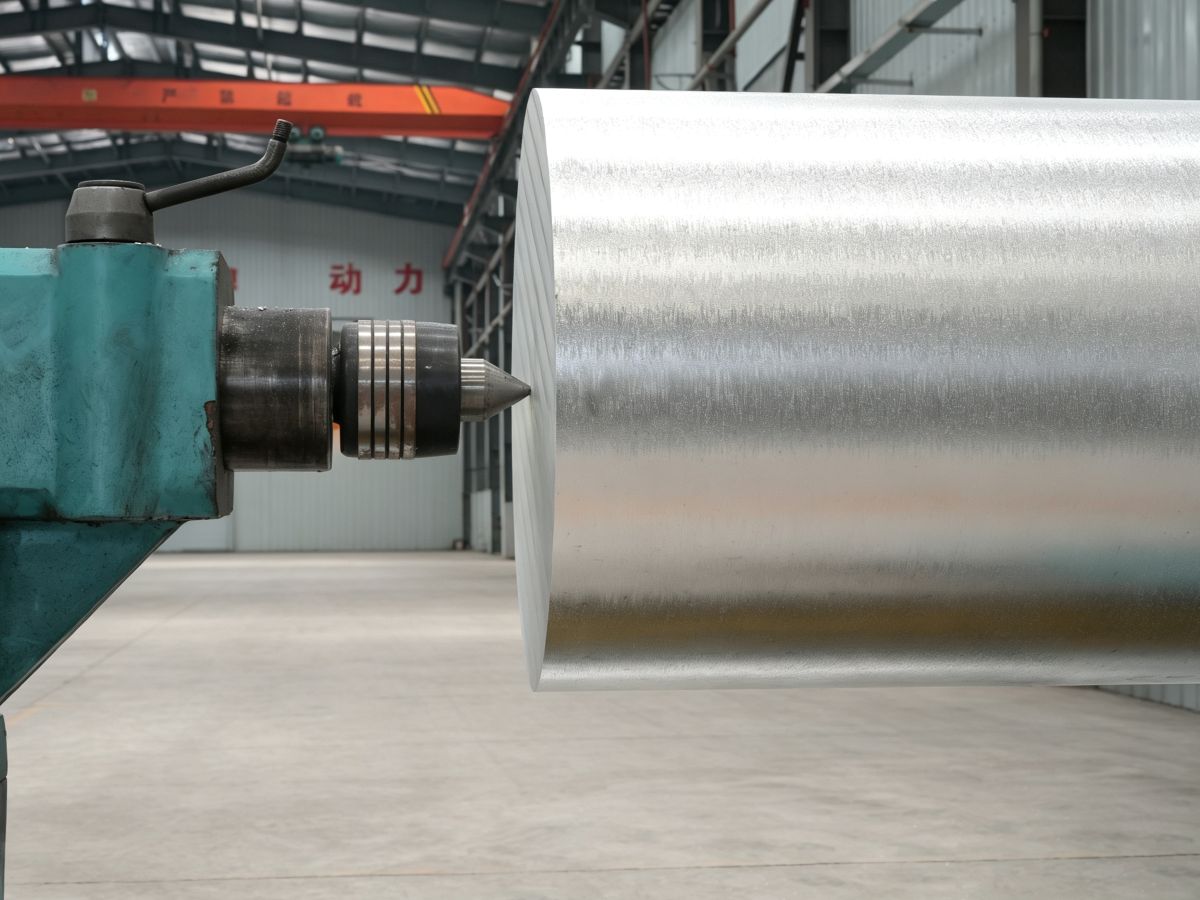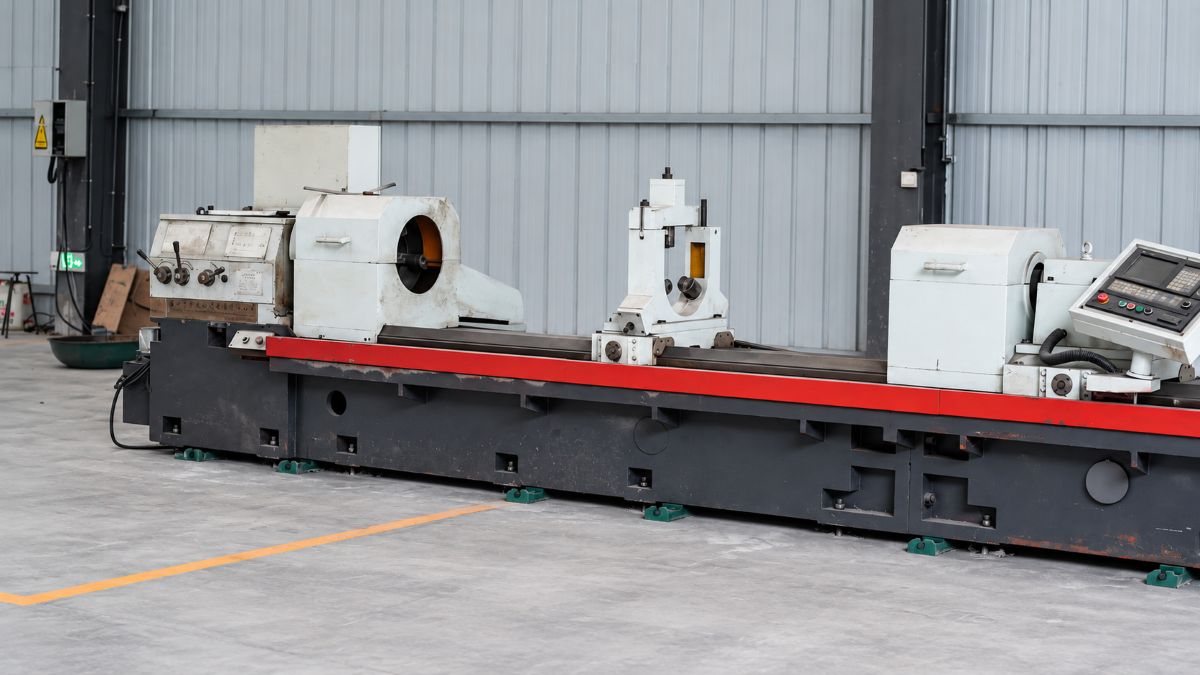

A C11000 copper round bar can look perfectly simple on a quotation sheet: grade, diameter, length, quantity. But in real production, that is rarely enough. The wrong temper can affect bending or machining. Poor straightness can disrupt turning. An unclear surface condition can create plating or electrical contact problems. Missing conductivity or chemical documentation can slow down inspection. For industrial buyers, C11000 copper round bar is not just a piece of red metal. It is a conductive, thermal, mechanical, and fabrication material that must match the final application from the start.
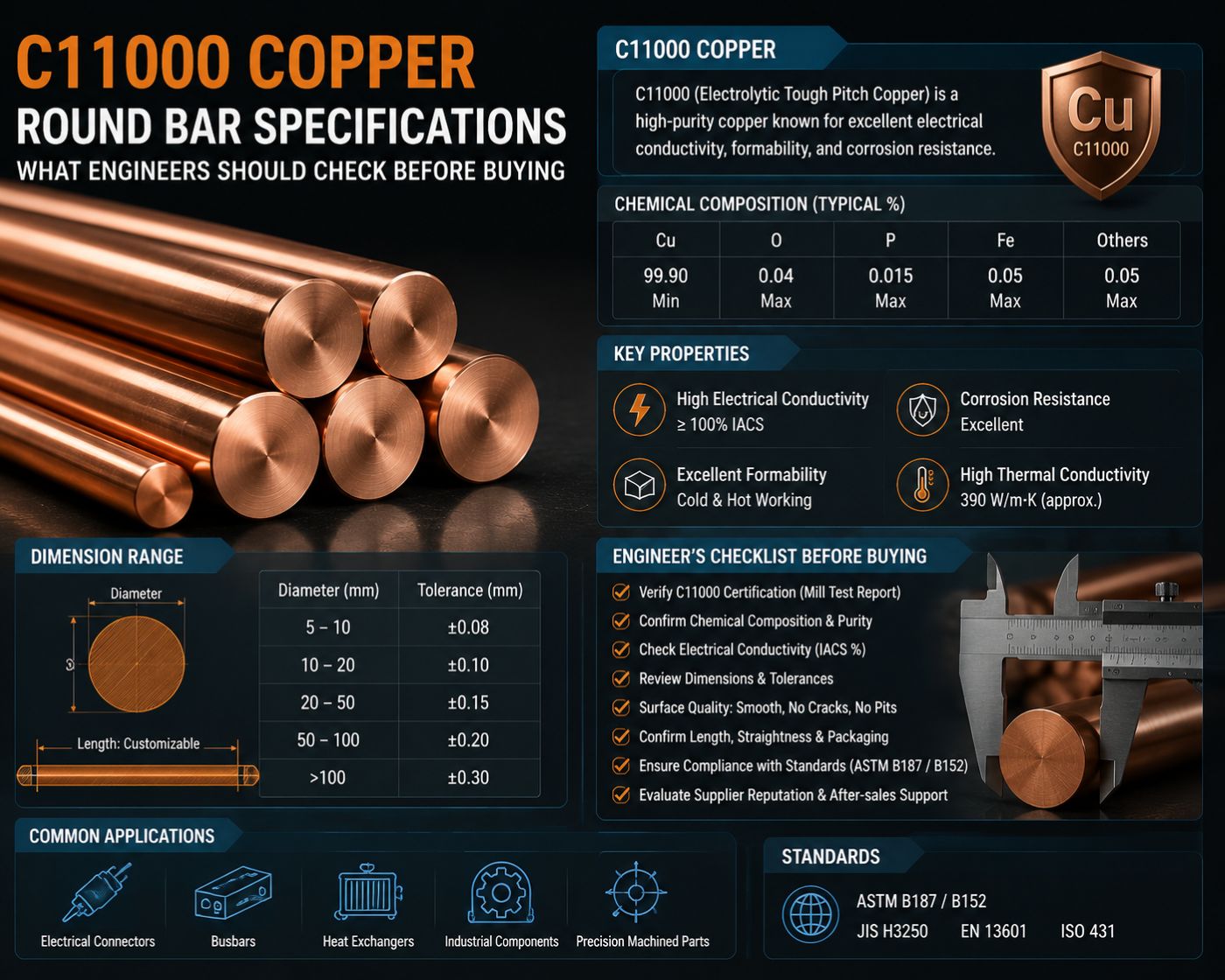
Direct Answer: C11000 copper round bar, also called ETP copper round bar or electrolytic tough pitch copper bar, is a high-conductivity copper product commonly specified for electrical connectors, terminals, bus components, grounding parts, heat-transfer parts, anodes, fasteners, and machined conductive components. Key specifications include UNS C11000 grade, ASTM B187/B187M or related standard, copper purity, conductivity, temper, diameter tolerance, straightness, cut length, surface condition, and material certification.
Article Outline
- What C11000 copper round bar is
- Core C11000 copper round bar specifications
- Standards, tempers, and material certification
- Electrical, thermal, and mechanical properties
- Diameter, tolerance, straightness, and surface requirements
- Applications by industry
- C11000 vs other copper grades
- Buyer checklist and common sourcing mistakes
Key Takeaways
- C11000 copper round bar is widely used when high electrical conductivity and good thermal conductivity are the main priorities.
- ASTM B187/B187M is a common reference standard for copper bus bar, rod, and shapes for electrical and general applications.
- C11000 is usually selected for conductivity, corrosion resistance, formability, solderability, and general fabrication readiness.
- Buyers should not specify only diameter and length. Temper, tolerance, straightness, surface condition, and certification matter.
- C11000 is not the best choice for every machined part. If high-speed machining is the main goal, tellurium copper may be worth comparing.
- A reliable supplier should help match copper grade, bar size, temper, tolerance, and final application instead of only quoting stock availability.
1. What Is C11000 Copper Round Bar?
C11000 copper round bar is a solid round bar made from electrolytic tough pitch copper, often called ETP copper. It is one of the most widely used commercial copper grades because it combines high electrical conductivity, strong thermal transfer, good corrosion resistance, and practical fabrication behavior.
In industrial sourcing, the phrase “C11000 copper round bar specifications” usually means more than the grade name. Buyers are normally trying to confirm whether the material can meet a drawing, pass incoming inspection, machine correctly, conduct current efficiently, transfer heat reliably, or support downstream forming, soldering, brazing, or plating.
For related product sourcing, Miji Magnesium lists Copper Rod among its non-ferrous metal product categories, including C11000 copper rod for electrical, industrial, and precision applications.
2. C11000 Copper Round Bar Specification Snapshot
| Specification Item | Typical Requirement | Why It Matters |
|---|---|---|
| Material Grade | UNS C11000 / ETP Copper / Electrolytic Tough Pitch Copper | Confirms the copper family and intended high-conductivity use. |
| Common Standard | ASTM B187/B187M or ASME SB187 for copper rod, bar, and shapes | Defines requirements for electrical and general-purpose copper products. |
| Copper Content | Typically minimum 99.90% copper including silver | Supports high conductivity and general material reliability. |
| Electrical Conductivity | Often around 101% IACS at room temperature for C11000 reference data | Important for bus components, connectors, terminals, and conductive hardware. |
| Density | About 8.91 specific gravity | Useful for weight calculation and material planning. |
| Temper | Commonly hard or annealed conditions depending on specification and use | Affects strength, forming behavior, machining response, and assembly fit. |
| Surface Condition | Mill finish, polished, cleaned, or customized by agreement | Important for plating, soldering, electrical contact, and appearance. |
| Certification | Material test certificate, chemical composition, conductivity, or inspection report when required | Reduces risk during incoming inspection and quality approval. |
3. Why C11000 Copper Is Chosen for Round Bar Applications
3.1 High Electrical Conductivity
The main reason engineers choose C11000 copper round bar is electrical performance. It is commonly used for terminals, connectors, conductive pins, switch components, grounding parts, electrical hardware, and current-carrying components. When current transfer is central to the design, C11000 often becomes one of the first copper grades considered.
3.2 Strong Thermal Conductivity
Copper also transfers heat efficiently. C11000 round bar can be used for thermal pins, heat-transfer components, cooling-related parts, electrodes, fixtures, and industrial systems where heat movement affects performance.
3.3 Good Formability and Fabrication Behavior
C11000 copper can be bent, formed, soldered, drilled, punched, swaged, and fabricated when the correct temper and process route are selected. This makes it useful not only as raw stock, but also as a starting material for custom manufactured components.
3.4 Corrosion Resistance in Many Environments
Copper naturally develops protective surface films in many atmospheric environments. This helps C11000 round bar serve in electrical, construction, industrial, and mechanical applications. However, corrosion behavior still depends on moisture, chemicals, temperature, contact with other metals, and surface condition.
4. ASTM B187 and Other Standards Buyers Should Know
ASTM B187/B187M is commonly referenced for copper bus bar, rod, and shapes. The standard covers copper products for electrical bus applications as well as general rod, bar, and shape applications. It also includes requirements related to dimensions, mechanical properties, electrical resistivity, chemical composition, and inspection.
| Standard or Designation | Where It Fits | Buyer Note |
|---|---|---|
| UNS C11000 | Material grade designation | Use this to identify the alloy clearly in drawings and purchase orders. |
| ETP Copper | Common material name | Useful for communication, but UNS number is clearer for procurement. |
| ASTM B187/B187M | Copper bus bar, rod, and shapes | Common reference for C11000 copper round bar and related conductive products. |
| ASME SB187 | ASME version of copper bus bar, rod, and shapes specification | May appear in engineering projects with ASME documentation requirements. |
| ASTM B124/B124M | Copper and copper-alloy forging rod, bar, and shapes | More relevant when hot forging behavior is part of the manufacturing route. |
| SAE J463 / SAE J461 | Wrought copper alloy references | May appear in automotive or engineering material systems. |
5. Chemical and Physical Properties of C11000 Copper Round Bar
C11000 is valued because it is a high-purity copper with a controlled oxygen content. The oxygen content is part of why C11000 is known as electrolytic tough pitch copper. This grade is excellent for many electrical and thermal applications, but it is not always the right choice for reducing-atmosphere welding or certain hydrogen-sensitive environments. In those cases, oxygen-free copper such as C10100 or C10200 may need to be considered.
| Property | Typical C11000 Direction | Engineering Meaning |
|---|---|---|
| Copper Purity | High-purity copper, commonly specified around minimum 99.90% copper including silver | Supports high conductivity and general performance consistency. |
| Electrical Conductivity | Very high; Copper.org reference data lists 101% IACS at room temperature | One of the strongest reasons to choose C11000 for conductive parts. |
| Thermal Conductivity | High thermal conductivity | Useful for heat-transfer parts, electrodes, fixtures, and cooling-related components. |
| Specific Gravity | About 8.91 | Useful for estimating component weight and shipment planning. |
| Machinability | Lower than free-machining copper alloys | Good planning is needed for turning, drilling, threading, and chip control. |
| Solderability | Excellent in common fabrication references | Useful for electrical assemblies and connector-related parts. |
| Cold Work Capacity | Excellent | Supports forming, bending, heading, and related fabrication operations. |
6. Round Bar Dimensions: What to Specify Beyond Diameter
Many copper round bar inquiries are incomplete because buyers only send the diameter. That may be enough for rough stock purchase, but it is not enough for precision industrial use. If the bar will be machined, assembled, plated, inserted, pressed, or used in an electrical system, the purchase order should be more specific.
6.1 Diameter and Tolerance
Diameter affects machining stock allowance, final part fit, and material yield. Tight tolerance may be required for automatic turning, precision pins, bushings, terminals, and inserted conductive components. If the drawing has a final machined diameter, confirm whether the supplied bar should be oversized, finished, drawn, or cut-to-size.
6.2 Straightness
Straightness is often overlooked until production begins. Poor straightness can affect lathe feeding, turning accuracy, drilling alignment, automation, and assembly. If the bar will be used in long lengths or automatic machining, straightness should be included in the inquiry.
6.3 Cut Length
Copper round bar may be supplied in mill lengths, stock lengths, or custom cut lengths. Cut-to-size supply can reduce internal processing time, but the buyer should define length tolerance, burr condition, saw marks, end condition, and packaging.
6.4 Surface Condition
Surface condition affects electrical contact, plating, soldering, cosmetic appearance, and machining setup. If the part will be plated, polished, soldered, or used as a contact surface, surface scratches, oxidation, oil, and handling marks should be discussed before shipment.
7. C11000 Copper Round Bar Applications
| Application Area | Common Parts | Why C11000 Works |
|---|---|---|
| Electrical Power | Bus components, current-carrying hardware, connectors, terminals | High conductivity and stable electrical performance. |
| Electronics | Conductive pins, contacts, grounding parts, shielding components | Good conductivity, solderability, and fabrication flexibility. |
| Industrial Equipment | Machined rods, shafts, sleeves, fixtures, conductive inserts | Useful balance of thermal transfer, conductivity, and corrosion resistance. |
| Heat Transfer | Thermal pins, cooling elements, heat-transfer inserts | High thermal conductivity helps move heat efficiently. |
| Automotive and EV | Electrical connectors, grounding components, battery-related conductive parts | Conductivity and corrosion resistance support reliable electrical systems. |
| Construction and Grounding | Grounding rods, conductive hardware, architectural details | Durability and corrosion resistance in many atmospheric applications. |
8. C11000 vs Other Copper Grades
C11000 is popular, but it is not automatically the correct grade for every copper round bar project. Grade selection should be based on conductivity, machining, oxygen sensitivity, joining method, strength, and final environment.
| Grade | Common Name | Best-Fit Use | When to Choose It |
|---|---|---|---|
| C11000 | ETP Copper | Electrical connectors, bus parts, terminals, conductive rods, thermal parts | Choose when high conductivity and broad availability matter most. |
| C10100 | Oxygen-Free Electronic Copper | High-purity electronics, vacuum, premium conductive components | Choose when purity and oxygen control are critical. |
| C10200 | Oxygen-Free Copper | Brazing-sensitive, vacuum, or hydrogen-sensitive applications | Choose when oxygen content is a concern. |
| C12200 | Phosphorus-Deoxidized Copper | Tube, thermal, brazing, plumbing-related or fabrication use | Choose when deoxidized copper behavior is preferred. |
| C14500 | Tellurium Copper | Machined electrical components, threaded parts, turned connectors | Choose when machinability is more important than maximum conductivity. |
9. Machining C11000 Copper Round Bar
C11000 copper can be machined, but it is not the easiest copper grade for high-speed production. Pure copper can feel gummy compared with free-machining copper alloys. If the part requires deep drilling, fine threads, close-tolerance turning, clean chip formation, or high-volume CNC production, the machining plan should be reviewed carefully.
9.1 When C11000 Machines Well
C11000 performs well when the part does not require aggressive chip-breaking behavior, when the tooling is sharp, when feeds and speeds are controlled, and when surface finish expectations are realistic. It is commonly used for custom conductive parts where electrical performance is more important than machining speed.
9.2 When to Consider Another Copper Grade
If the project mainly requires high-speed turning, clean threads, small features, or automated machining efficiency, tellurium copper may be considered. The tradeoff is that free-machining copper alloys may not provide the same maximum conductivity profile as C11000. The correct choice depends on the final part function.
10. Buyer Checklist for C11000 Copper Round Bar
- Specify UNS C11000, ETP copper, or the required equivalent clearly.
- Confirm the reference standard, such as ASTM B187/B187M or ASME SB187.
- Define diameter, diameter tolerance, length, length tolerance, and straightness.
- Confirm temper, such as hard, soft annealed, or supplier-recommended condition.
- State whether the bar will be machined, bent, soldered, brazed, plated, polished, or assembled.
- Request conductivity data if the application is electrical or power-related.
- Request chemical composition or material test certificate if documentation is required.
- Clarify surface condition, oxidation control, packing method, labels, and export packaging.
- Share the final application so the supplier can flag risks before shipment.
11. Common Mistakes When Buying C11000 Copper Round Bar
| Mistake | Why It Creates Risk | Better Approach |
|---|---|---|
| Ordering only by diameter | The bar may arrive with the wrong temper, tolerance, straightness, or surface condition. | Specify grade, standard, size, tolerance, temper, and application. |
| Assuming all copper bars conduct the same | Different copper grades and alloying elements affect conductivity. | Confirm C11000 or the required conductivity level. |
| Ignoring machinability | C11000 can be more difficult to machine cleanly than free-machining copper alloys. | Tell the supplier if the bar will be CNC turned, drilled, or threaded. |
| Using C11000 in oxygen-sensitive environments without review | ETP copper may not be ideal for some reducing-atmosphere or hydrogen-sensitive applications. | Compare oxygen-free copper grades when needed. |
| Skipping material certification | Incoming inspection may be delayed or rejected. | Request MTC, composition, conductivity, or inspection report in advance. |
| Forgetting packaging requirements | Copper surfaces can oxidize, scratch, or stain during storage and transport. | Define surface protection and packaging before shipment. |
13. Why Source C11000 Copper Round Bar from Miji Magnesium
Miji Magnesium supplies non-ferrous metal materials for industrial buyers, including copper rod products. For C11000 copper round bar, the value is not only supplying material. The important part is helping buyers clarify grade, standard, diameter, temper, tolerance, surface condition, and application requirements before procurement.
If your project also requires other copper forms, Miji’s copper category includes Copper Sheet/Plate, Copper Tube, Copper Pipe, Copper Strip, and Copper Foils. This helps engineering teams compare the correct copper form before locking the purchasing route.
Need C11000 Copper Round Bar for an Industrial Project?
Send your required grade, diameter, length, tolerance, temper, surface condition, certification needs, and application details to Miji Magnesium. Our team can help you review whether C11000 copper round bar is the right material route for your electrical, thermal, machining, or industrial application.
Request C11000 Copper Rod Support
14. Final Insight: Specifications Protect the Buyer
C11000 copper round bar is a strong material choice when electrical conductivity, thermal transfer, corrosion resistance, and fabrication readiness matter. But the grade name alone is not enough. A serious specification should protect the buyer from wrong temper, poor tolerance, unsuitable surface condition, missing certification, or machining problems.
The best purchasing question is not simply “Do you have C11000 copper round bar?” The better question is: Can this C11000 copper round bar meet the electrical, dimensional, mechanical, surface, and documentation requirements of the final part?
That is the difference between buying copper stock and sourcing copper material with engineering confidence.
FAQ
1. What is C11000 copper round bar?
C11000 copper round bar is a solid round bar made from electrolytic tough pitch copper. It is widely used for electrical, thermal, grounding, machining, connector, and industrial applications.
2. What does C11000 mean?
C11000 is the UNS designation for electrolytic tough pitch copper, also called ETP copper. It is a high-conductivity copper grade commonly used in electrical and industrial applications.
3. What standard applies to C11000 copper round bar?
ASTM B187/B187M is commonly used for copper bus bar, rod, and shapes, including C11000 copper products for electrical and general applications. The required standard should always be confirmed in the purchase order.
4. What is C11000 copper round bar used for?
C11000 copper round bar is used for bus components, terminals, connectors, grounding parts, heat-transfer parts, conductive pins, anodes, fasteners, fixtures, and custom machined copper components.
5. Is C11000 copper round bar suitable for CNC machining?
Yes, C11000 copper round bar can be CNC machined, but it requires proper tooling and cutting strategy. If machinability is the main priority, a free-machining copper alloy may be worth comparing.
6. Is C11000 the same as oxygen-free copper?
No. C11000 is electrolytic tough pitch copper. Oxygen-free copper grades such as C10100 or C10200 are different and are often used when oxygen content is a critical concern.
7. What information should I send for a C11000 copper round bar quote?
Send the grade, standard, diameter, length, tolerance, temper, surface condition, quantity direction, certification requirements, and final application. If the bar will be machined, plated, bent, soldered, or brazed, mention that early.
8. Where can I buy C11000 copper round bar?
You can source C11000 copper round bar from Miji Magnesium Copper Rod. Buyers should confirm grade, size, tolerance, temper, documentation, and application needs before ordering.