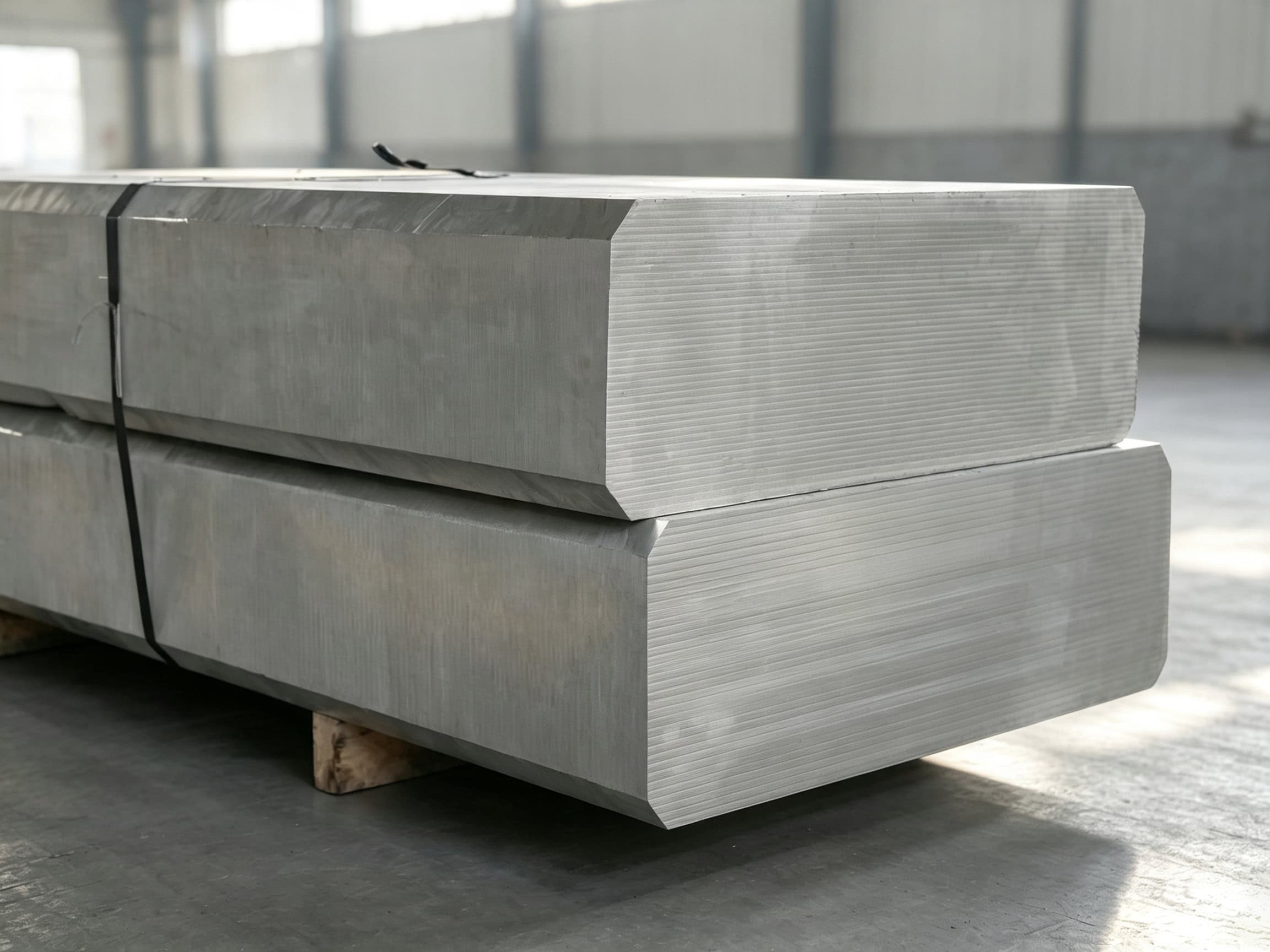

Executive Summary: AZ80A magnesium alloy (UNS M11800) is the highest-strength wrought and forged magnesium grade in commercial production. Combining ~8.5% aluminum and 0.5% zinc with artificial precipitation hardening (T5/T6 temper), AZ80A achieves tensile strengths up to 380 MPa and yield strengths up to 275 MPa. This guide details ASTM chemical specifications, mechanical property benchmarks, heat treatment protocols, CNC machining parameters, and export quality control standards for aerospace, automotive, and high-performance engineering applications.
1. What is AZ80A Magnesium Alloy?
When mechanical designers and aerospace engineers need to achieve aggressive lightweighting without sacrificing structural rigidity or tensile load capacity, AZ80A magnesium alloy is the standard structural benchmark. Unlike general-purpose wrought grades such as AZ31B, which are optimized for cold/warm sheet forming and weldability, AZ80A is specifically formulated for high-stress extrusions, heavy closed-die forgings, and precision CNC machined structural housings.
With a density of just 1.80 g/cm³, AZ80A provides a specific strength (strength-to-weight ratio) that substantially outperforms standard 6061-T6 aluminum (2.70 g/cm³) and mild steels. Its high aluminum content promotes significant precipitation hardening (forming fine Mg17Al12 intermetallic phases) during artificial aging, delivering superior fatigue endurance and exceptional compressive yield strength.
2. Chemical Composition & ASTM Standards
AZ80A is standardized under major international specifications, including ASTM B107 / B107M (Extruded Bars, Rods, and Shapes) and ASTM B91 (Forgings). Strict elemental control is maintained to ensure consistent mechanical response and corrosion resistance:
| Element | ASTM B107/B91 Standard (wt%) | Typical Batch Analysis (%) | Primary Metallurgical Function |
|---|---|---|---|
| Magnesium (Mg) | Balance (~90.0 – 91.5%) | Remainder | Matrix metal providing extreme lightweight base |
| Aluminum (Al) | 7.80 – 9.20% | 8.45% | Major strengthener via solid solution & precipitation hardening |
| Zinc (Zn) | 0.20 – 0.80% | 0.52% | Increases room-temperature strength and grain refinement |
| Manganese (Mn) | 0.12 – 0.50% | 0.22% | Scavenges iron impurities to maintain high corrosion resistance |
| Silicon (Si) | Max 0.10% | 0.015% | Controlled impurity |
| Copper (Cu) | Max 0.05% | 0.003% | Strictly controlled to prevent galvanic micro-cells |
| Nickel (Ni) | Max 0.005% | < 0.001% | Harmful impurity limited to trace levels |
| Iron (Fe) | Max 0.005% | 0.002% | Controlled below tolerance limit to ensure saltwater durability |
3. Mechanical Properties: AZ80A-F vs AZ80A-T5 vs AZ80A-T6
The mechanical performance of AZ80A depends heavily on its temper condition. The three most common tempers in commercial use are:
- AZ80A-F (As-Fabricated): Direct from hot extrusion or forging without subsequent heat treatment. Offers balanced ductility and strength.
- AZ80A-T5 (Artificially Aged): Cooled from elevated temperature shaping and artificially aged at ~175°C (347°F) for 16 hours. Maximizes yield strength and hardness while maintaining stable dimensions.
- AZ80A-T6 (Solution Heat Treated & Artificially Aged): Homogenized at ~415°C (779°F), quenched, and artificially aged. Delivers peak tensile load capacity.
| Alloy & Temper | Tensile Strength (UTS) | Yield Strength (0.2% Offset) | Elongation at Break (%) | Brinell Hardness (HB) | Fatigue Strength (5×10⁷ cycles) |
|---|---|---|---|---|---|
| AZ80A-F (Extruded) | 330 – 355 MPa | 215 – 240 MPa | 7 – 11% | 68 – 74 HB | 125 MPa |
| AZ80A-T5 (Extruded/Forged) | 350 – 380 MPa | 240 – 275 MPa | 5 – 8% | 75 – 82 HB | 140 MPa |
| AZ31B-F (Extruded) | 260 MPa | 200 MPa | 12 – 15% | 49 HB | 95 MPa |
| ZK60A-T5 (Extruded) | 345 MPa | 280 MPa | 8 – 12% | 75 HB | 130 MPa |
| 6061-T6 Aluminum | 310 MPa | 275 MPa | 12% | 95 HB | 96 MPa |
4. Precision CNC Machining Guidelines for AZ80A
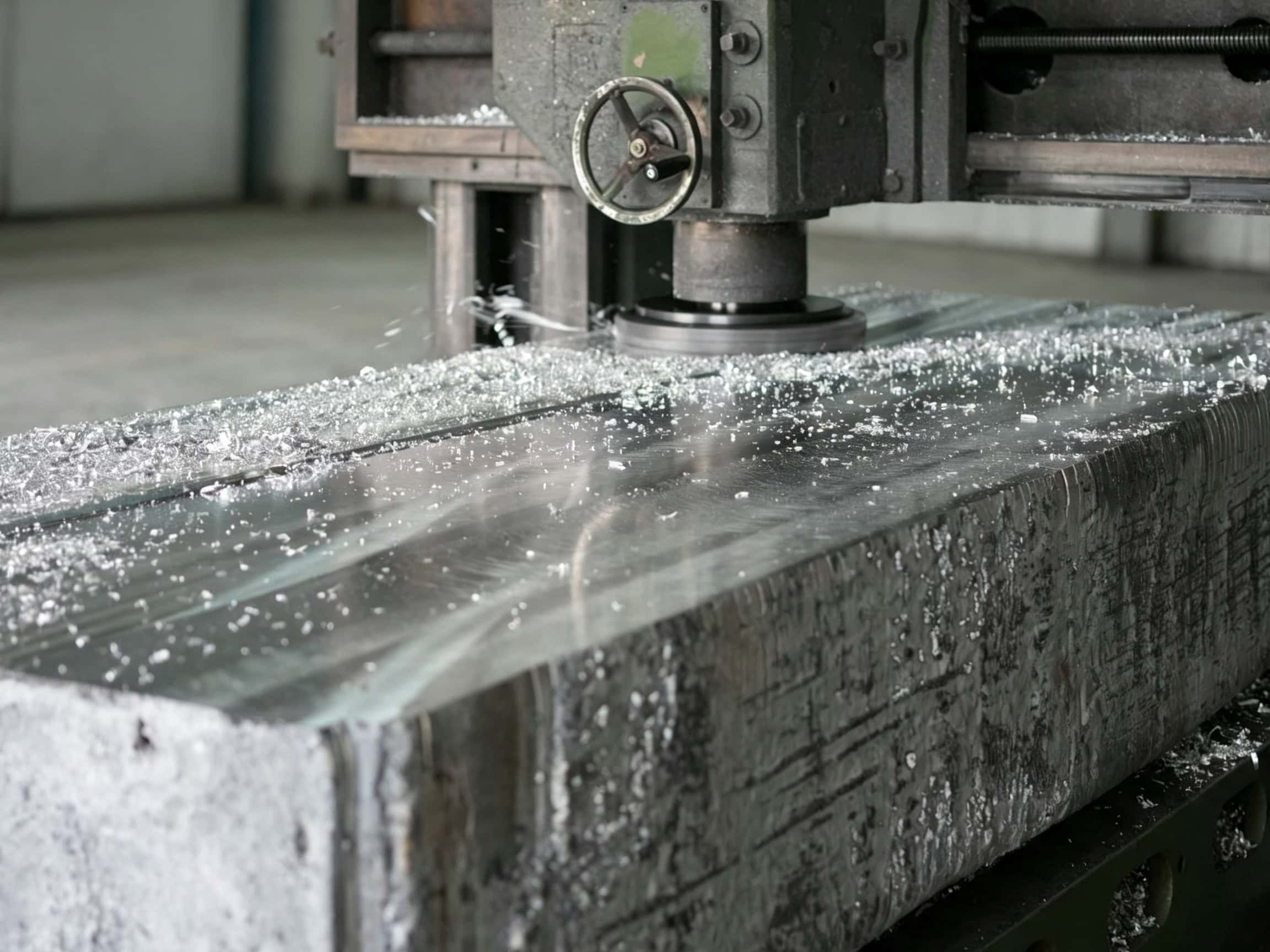
Like most magnesium alloys, AZ80A exhibits exceptional machinability (machinability index of 500% relative to 100% for B1112 free-cutting steel). It requires roughly one-sixth of the cutting power needed for steel and half that required for aluminum. However, its higher aluminum content and hardness require specific tooling and coolant protocols:
Key Tooling & Cutting Parameters:
- Tool Geometry & Substrates: Use polished uncoated carbide (C-2 grade) or Polycrystalline Diamond (PCD) inserts. Maintain positive rake angles (10° to 15°) and relief angles (8° to 12°) with polished chip breakers to prevent chip packing.
- Cutting Speeds & Feeds: High cutting speeds with heavy feed rates are recommended. Avoid light rubbing cuts (depth of cut < 0.05 mm), which generate fine pyrophoric dust rather than coarse, safe metal chips.
- Rough Turning: Cutting speed Vc = 300 – 800 m/min, Feed f = 0.25 – 0.50 mm/rev, Depth ap = 2.0 – 6.0 mm.
- Finish Milling: Cutting speed Vc = 500 – 1200 m/min, Feed fz = 0.08 – 0.15 mm/tooth, Depth ap = 0.3 – 1.5 mm.
- Coolant & Safety Standards: Perform cutting dry or use high-flashpoint mineral-oil-based cutting fluids. Never use water-based soluble oils or synthetic coolants, which react with magnesium chips at elevated temperatures to liberate flammable hydrogen gas. Keep Class D fire extinguishers (dry powder / flux) accessible at every machining station.
5. Engineering Applications of AZ80A Magnesium
Due to its high strength, impact absorption, and fatigue endurance, AZ80A is specified in demanding structural applications across global industries:
🏎️ Motorsport & Forged Wheels
AZ80A-T5 is the standard material for forged monoblock racing wheels for Formula 1, MotoGP, and luxury supercars. It cuts unsprung rotational mass by 25-30% compared to forged aluminum, drastically improving suspension responsiveness and acceleration.
✈️ Aerospace Structural Brackets
Used for aircraft interior seat frames, helicopter transmission gearbox covers, avionics structural housings, and satellite sensor brackets where high vibration damping and lightweight rigidity are critical.
🤖 High-Speed Robotics & Defense
Precision-extruded AZ80A structural tubing and CNC machined robot arms reduce inertial forces, enabling faster cycle times, lower motor power consumption, and tighter positional repeatability in pick-and-place automation.
6. Quality Traceability & Export Sourcing Standards
At Miji Magnesium, every batch of AZ80A extruded bars, rods, and custom profiles undergoes rigorous testing in our accredited metallurgical quality control laboratory prior to international dispatch:
- Direct Optical Emission Spectrometry (OES): Full 12-element quantitative chemical breakdown verifying strict compliance with ASTM B107 / B91 limits.
- Tensile & Hardness Verification: Room-temperature mechanical testing (Yield, Tensile, % Elongation, Brinell HB) with certified load-strain curves.
- Ultrasonic Flaw Inspection (UT): Non-destructive 100% volumetric flaw detection ensuring zero internal shrinkage voids, cracks, or non-metallic inclusions.
- EN 10204 Type 3.1 Certification: Complete Mill Test Certificates (MTC) supplied with every production lot and shipment.
- Marine Export Packaging: Double-layer vacuum aluminum foil barrier, heavy-duty desiccant packs, VCI anti-corrosion film, and ISPM-15 fumigated solid wood crating for 100% moisture-free sea freight.
Need Custom AZ80A Magnesium Extrusions or CNC Components?
Miji Magnesium supplies direct-from-manufacturer ASTM-standard AZ80A magnesium bars, tubes, forgings, and finished 5-axis CNC machined parts. Upload your CAD/STEP drawings for rapid DFM evaluation.
Get Instant Quote & DFM Review (24h Turnaround)🔒 100% Confidential | Strict NDA Protection | EN 10204 3.1 MTC Included
7. Frequently Asked Questions (FAQ)
Q1: What is the main difference between AZ80A and AZ31B magnesium?
AZ80A contains ~8.5% aluminum, whereas AZ31B contains only ~3.0% aluminum. Consequently, AZ80A has much higher tensile strength (380 MPa vs 260 MPa) and yield strength (275 MPa vs 200 MPa), making it ideal for high-stress forgings and extrusions. In contrast, AZ31B is more ductile and easier to form into thin sheets and weld.
Q2: What is the standard T5 heat treatment cycle for AZ80A?
The standard T5 temper involves artificial aging directly following extrusion or hot forging. The typical thermal cycle is 175°C ± 5°C (347°F) for 16 hours, followed by still-air cooling. This promotes the fine precipitation of Mg17Al12 phases, stabilizing dimensions and elevating hardness to 75-82 HB.
Q3: What surface treatments are best for AZ80A components in outdoor/marine environments?
For maximum corrosion protection in marine or salt-spray environments, Micro-Arc Oxidation (MAO / PEO) or electroless nickel plating followed by epoxy / polyurethane sealing is recommended. Anodizing (Anomag or Dow 17) also provides excellent dielectric and corrosion barrier properties.